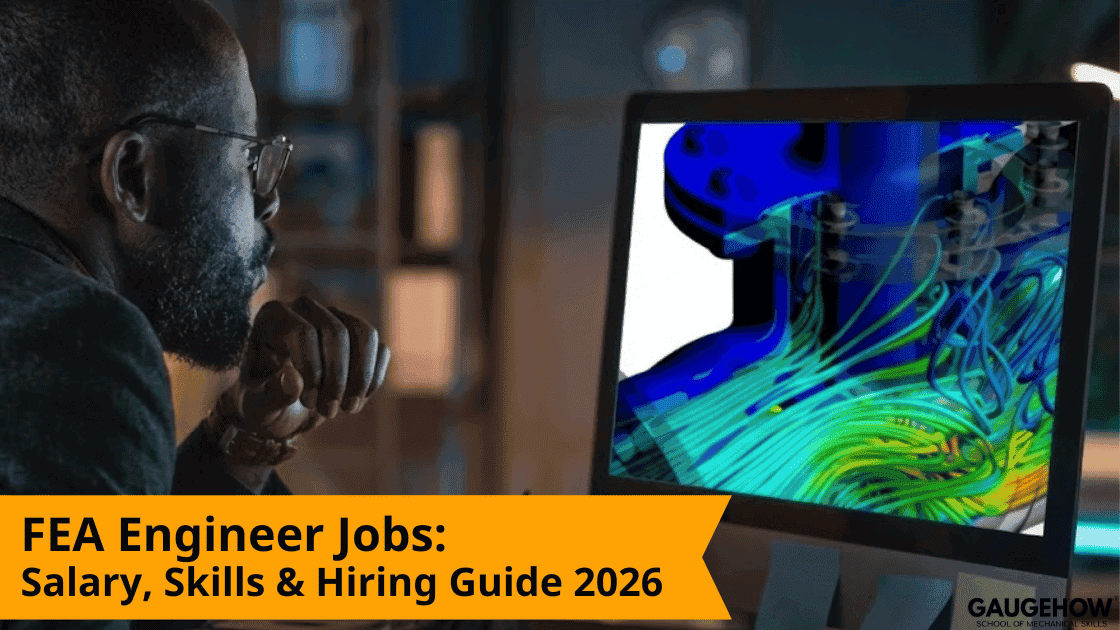
FEA Engineer Jobs: Salary, Skills & Hiring Guide 2026

Deepak S Choudhary
If you are trying to land FEA engineer jobs, you are being judged on one thing: whether you can simulate an engineer, not like a button pusher. This guide shows what hiring teams actually screen for, how pay trends work, what to put in a portfolio, and exactly how to search and apply faster.
What An FEA Engineer Actually Does
A FEA engineer turns a design question into a simulation decision, then proves that the decision is safe. In practice, that means defining the load path, choosing the right idealization, running sensitivity checks, and connecting results back to test or field data.
Most FEA engineer jobs follow the same loop. You start with CAD and requirements, then you build the model, then you validate the setup, and only then do you interpret plots. The strongest engineers spend less time “running cases” and more time designing checks that catch bad assumptions early.
The market is growing, but the bar is not getting softer. That is why. More programs now rely on simulation to reduce physical iteration, while tools and computing are more accessible.
A large market forecast still points to tight hiring because companies want people who can defend decisions in reviews, not just generate images, with a market size estimate reaching USD 6.89B in 2025 and USD 13.78B by 2030. (Mordor Intelligence)
Salary And Career Levels
A clean way to talk about pay is to anchor on a government benchmark, then adjust by domain and responsibility. Many titles that map to simulation work sit inside Mechanical Engineer or similar categories in official datasets, so treat these as solid anchors, not perfect labels.
Entry Level Simulation Engineer
At the entry level, your compensation follows your ability to build correct models fast. Hiring managers will pay more when you can explain element choice, boundary conditions, and simple verification without being prompted.
A useful U.S. anchor for the broader mechanical category is the median annual wage for Mechanical Engineers at the end of the sentence, $102,320.
Mid-Level FEA Ownership
Mid-level pay usually moves when you own correlation and sign-off style reviews. You are expected to design mesh and load sensitivity checks, and to explain why a model is “good enough” for the decision.
A practical way to interpret the lower end of that same U.S. distribution is the 10th percentile value at the end of the sentence, $68,740.
Senior Or Lead Simulation
Senior pay follows your ability to reduce risk and reduce test cycles. You are paid for judgment, clarity in reviews, and for preventing expensive wrong turns.
The upper end anchor of that same distribution lands at the end of the sentence, $161,240.
What Actually Moves Pay Faster
Pay jumps tend to follow three “review outcomes.” You correlate to test, you own an approval gate, or you reduce program time with credible simulation. Simulation is often justified by fewer prototypes and faster iteration, with SOLIDWORKS Simulation materials citing savings ranges like 30% to 60% in capital costs.
Skills That Get Interviews
Most FEA job screens are predictable. Your resume is scanned for proof of modeling judgment, not software logos. Then your interview is used to test whether your decisions are defensible.
Here is what actually separates candidates.
Core Technical Skills That Show Maturity
You must be able to explain how you choose constraints, contacts, loads, and material models. You also need to show how you protect yourself from pretty wrong results, especially using mesh convergence and sensitivity checks. Your strongest proof is when you can show test correlation thinking, even with a simple lab fixture.
In interviews, you will be tested on failure modes, not on menus. That is why you should practice explaining one nonlinear contact case and one fatigue workflow in plain language, including where assumptions break.
Tool Stack Without Being A “Tool Person”
Hiring teams want comfort across the stack: CAD to pre-processing to solving to post-processing, plus basic scripting for repeatability. You do not need every tool, but you need one main solver story and one validation story.
If you are learning on your own, you can use Abaqus Learning Edition for personal and educational use on Windows, with the structural model limit stated at the end of the sentence, 1000 nodes. (3DSwym Communities)
On the job side, you will still see workflows around ANSYS and NASTRAN in many listings, so you should be able to translate concepts across solvers.
Top Industries Hiring FEA Engineers
This section is designed to answer the real intent behind fea jobs searches: where the demand is, what the interviews look like, and what to build to prove fit.
Automotive And EV

What they simulate: crash pulses, durability, thermal-mechanical stackups, and noise vibration harshness, plus battery structures and pack cooling. Demand is supported by rising EV volumes, with global electric car sales topping 17 million in 2024. (IEA)
What they test you on: boundary conditions that match fixtures, contact and material choices, and whether you can explain why a result changes with assumptions. Interviews often include a short modeling exercise and a review-style defense.
Portfolio project idea: build a bracket or suspension component case study with load path explanation, then add a second run that shows what changes when a constraint is wrong.
Aerospace

What they simulate: stress margins, fatigue and damage tolerance, joints and fasteners, and thermal loads around equipment. Backlogs keep pressure on engineering throughput, with Airbus reporting a commercial aircraft order backlog of 8,665 at the end of September 2025. (Airbus)
What they test you on: your ability to justify simplifications, document assumptions, and explain review logic. You will be pushed on certification-style thinking and traceability.
Portfolio project idea: create a lug or bracket case with stress concentration discussion, then show a simple hand-check to validate the trend.
Electronics And Semiconductor Equipment
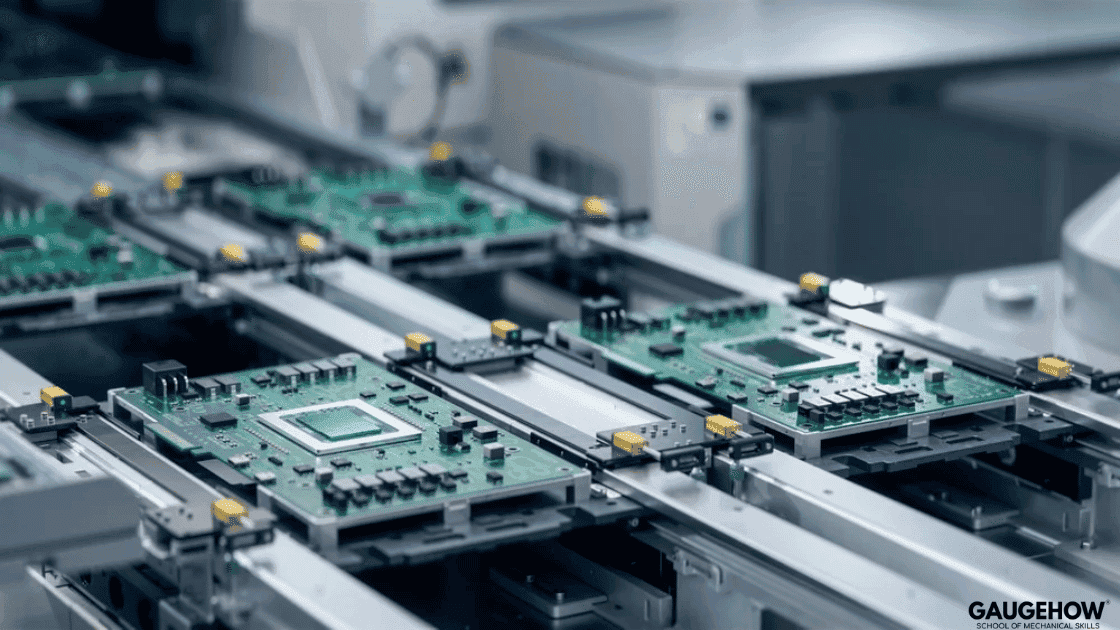
What they simulate: structural stiffness of frames, vibration and resonances, thermal gradients, and packaging reliability. Capex signals sustained engineering work, with SEMI forecasting semiconductor equipment sales reaching $125.5 billion in 2025. (SEMI)
What they test you on: coupled thinking across thermal and structural, clean load cases, and practical reliability reasoning. Thermal matters because elevated temperature is widely cited as a major driver of failures, with the U.S. Air Force figure reported as over 55% of electronics failures linked to temperature. (ScienceDirect)
Portfolio project idea: analyze a heat-sink clamp or enclosure under thermal expansion loads and show what design change reduces stress.
Energy And Power
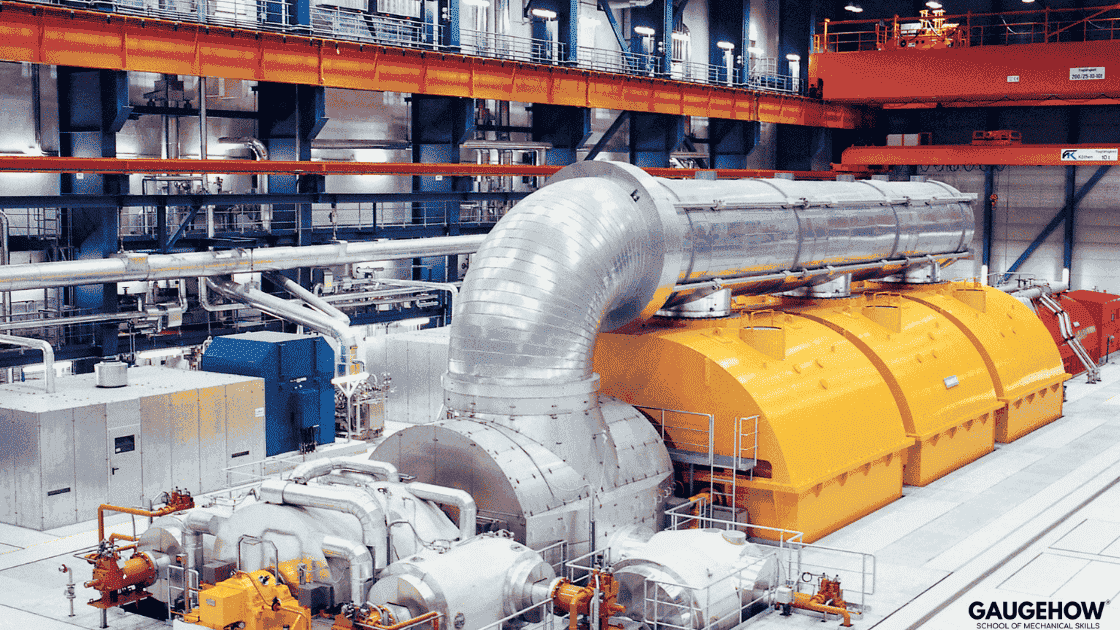
What they simulate: pressure equipment, rotating machinery components, supports, and high-cycle fatigue risks. Investment is expanding in electrification, with the IEA reporting that electricity sector investment is set to reach $1.5 trillion in 2025. (IEA)
What they test you on: conservative load cases, documentation, and whether your safety factors make engineering sense. Expect questions about standards-driven thinking.
Portfolio project idea: build a bolted flange or bracket case with a clear load path, then add a simple “what-if” sensitivity around friction or preload.
Industrial Machinery And Heavy Equipment
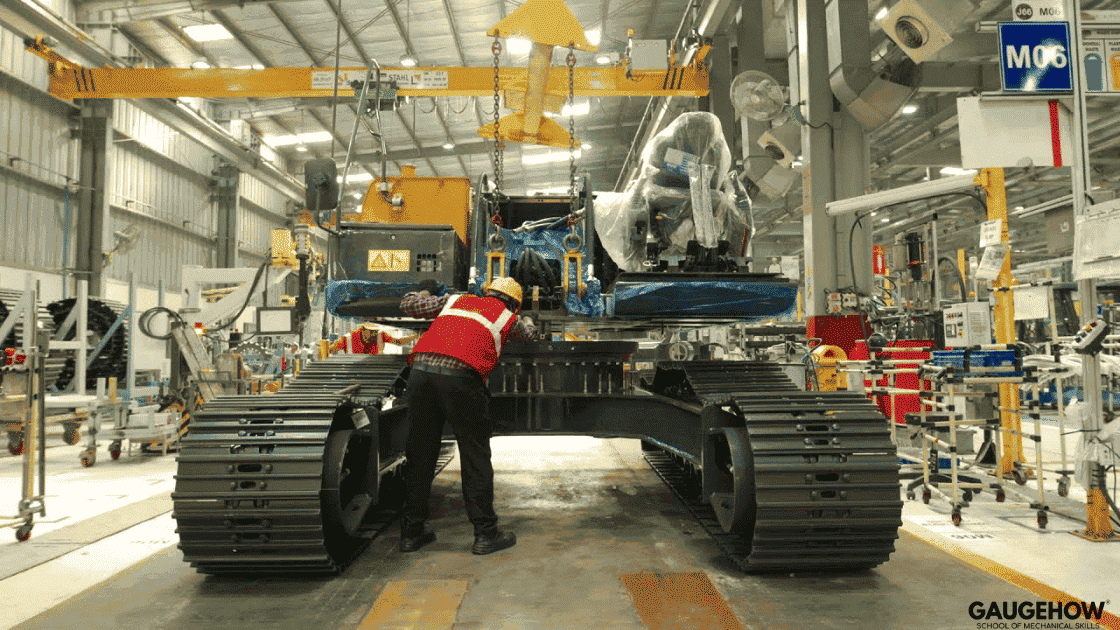
What they simulate: durability, overload events, weldments, castings, and hydraulic bracketry. The hiring logic is simple: avoid failures in the field and reduce redesign loops.
What they test you on: whether you understand fatigue drivers, how you decide mesh quality, and how you communicate risk to design teams without drama.
Portfolio project idea: pick a welded frame corner, run a static check, then propose a geometry change and show the stress reduction trend.
Hiring Process And Where To Apply
Treat hiring like a funnel. You win by removing ambiguity at each gate.
The Four Screens You Must Pass
Resume screen: your bullets must show decisions, checks, and outcomes, not tasks.
Work sample screen: You must show one case study that is review-ready.
Technical interview: You must explain assumptions, constraints, and validation logic.
Judgment screen: You must show you can prevent wrong conclusions.
Where To Apply
For volume, LinkedIn can be a live demand signal. Their job pages routinely show “1,000+” listings for finite element analysis roles in India, which is useful for trend checking even if the exact number changes daily.
If you want a second signal, SAE’s career center surfaces an “engineer” listings count that can help you sanity check demand direction, with 705 jobs shown in the listing page header.
Copy-Paste Job Searches
Use these exactly, then tune by industry and city:
"CAE" AND ("Abaqus" OR "ANSYS") AND "validation""structural" AND "nonlinear" AND "contact" AND "test correlation.""durability" AND "fatigue analysis" AND ("NASTRAN" OR "Abaqus")"NVH" AND "modal" AND "random vibration" AND "CAE""thermal" AND "stress" AND "electronics" AND "FEA""explicit" AND "crash" AND "contact" AND "LS-DYNA""bolt preload" AND "gasket" AND "contact" AND "simulation""Python" AND "post-processing" AND "FEA" AND "automation"
Top Hiring Companies By Industry Bucket
The best approach is to start with industry buckets, then verify current openings on job boards. For India-focused searching, LinkedIn listings commonly show employers like Tata Technologies, HCLTech, GE Aerospace, BorgWarner, and Larsen & Toubro in relevant result feeds. (LinkedIn)
FAQ
How Do I Become An FEA Engineer?
Start by learning finite element basics, then build one portfolio case you can defend. Add one sensitivity study and one check that catches modeling errors. Apply to junior roles and internships while improving your case study. Your goal is to show judgment, not just software use.
What Skills Are Required For FEA Engineer Jobs?
You need mechanics fundamentals, model setup discipline, and review-ready communication. Teams screen for boundary condition reasoning, contact choices, and practical verification. A clean portfolio often beats a long course list.
What Is The Average Salary For An FEA Engineer?
A reliable U.S. benchmark is the mechanical engineer pay distribution, because many simulation roles map there. The median annual wage is $102,320, with a 10th percentile of $68,740 and a 90th percentileof $161,240.
Are FEA Jobs Growing Or Shrinking?
Growth varies by region and industry, but U.S. mechanical engineering employment is projected to grow 9% from 2024 to 2034, with about 18,100 openings per year on average.
Is Abaqus Free For Learning?
There is a free Learning Edition for personal and educational use on Windows, and the structural model size limit is 1000 nodes. (3DSwym Communities)
References
U.S. Bureau of Labor Statistics, Mechanical Engineers OOH (Bureau of Labor Statistics)
IEA, Global EV Outlook 2025 (sales and 2025 outlook) (IEA)
Airbus, Nine-Month 2025 Results (order backlog) (Airbus)
SEMI, Equipment Sales Forecast (2025) (SEMI)
IEA, World Energy Investment 2025 (electricity investment) (IEA)
Mordor Intelligence, FEA Software Market Forecast (LinkedIn)
SOLIDWORKS Simulation PDF (cost-savings claim) (SOLIDWORKS)
ScienceDirect topic summary citing USAF temperature-related failures (ScienceDirect)
NAFEMS, Professional Simulation Engineer certification overview (NAFEMS)
Conclusion
If you want to win FEA engineer jobs, stop optimizing for “more software.” Optimize for trust. Build one review-ready case study, show how you prevent wrong conclusions, and use a scorecard to make your own gaps obvious before an interviewer does. That is how you turn FEA job searching into consistent offers, and it is how a FEA engineer earns responsibility faster.
CAD-CAM-CAE Work Platform
Find or Post CAD, CAM and CAE freelance projects, full-time jobs and Internships.
GaugeHow is the platform built for core engineering work. Whether you need a freelancer for a CAD project, a full-time hire, or an engineering intern,post it here and get matched with the right person.
Our Courses
Complete Course Library
Access to 40+ courses covering various fields like Design, Simulation, Quality, Manufacturing, Robotics, and more.