Digital Manufacturing Engineer Roadmap: A Step-by-Step Career Guide
Learn More in This Video
Subscribe to GaugeHow for More
Want to move into digital manufacturing but not sure where CAD, additive manufacturing, and connected systems all fit together? You are not alone.
Most mechanical engineers know traditional design and production well, but have never worked with a digital twin, an IIoT dashboard, or the connected workflows that modern factories now depend on.
This roadmap breaks the career down into clear, ordered stages. No vague advice like "learn digital manufacturing." Just the tools, workflows, and skills that actually show up in real job postings, in the order you should learn them.
What Does a Digital Manufacturing Engineer Actually Do?
A digital manufacturing engineer modernizes how physical parts get designed, produced, and monitored using digital tools and connected systems. In practice, this means:
Building and managing 3D models that move seamlessly from design to production
Deciding when a part should be additively manufactured versus traditionally machined
Connecting production equipment so data flows into monitoring and reporting systems
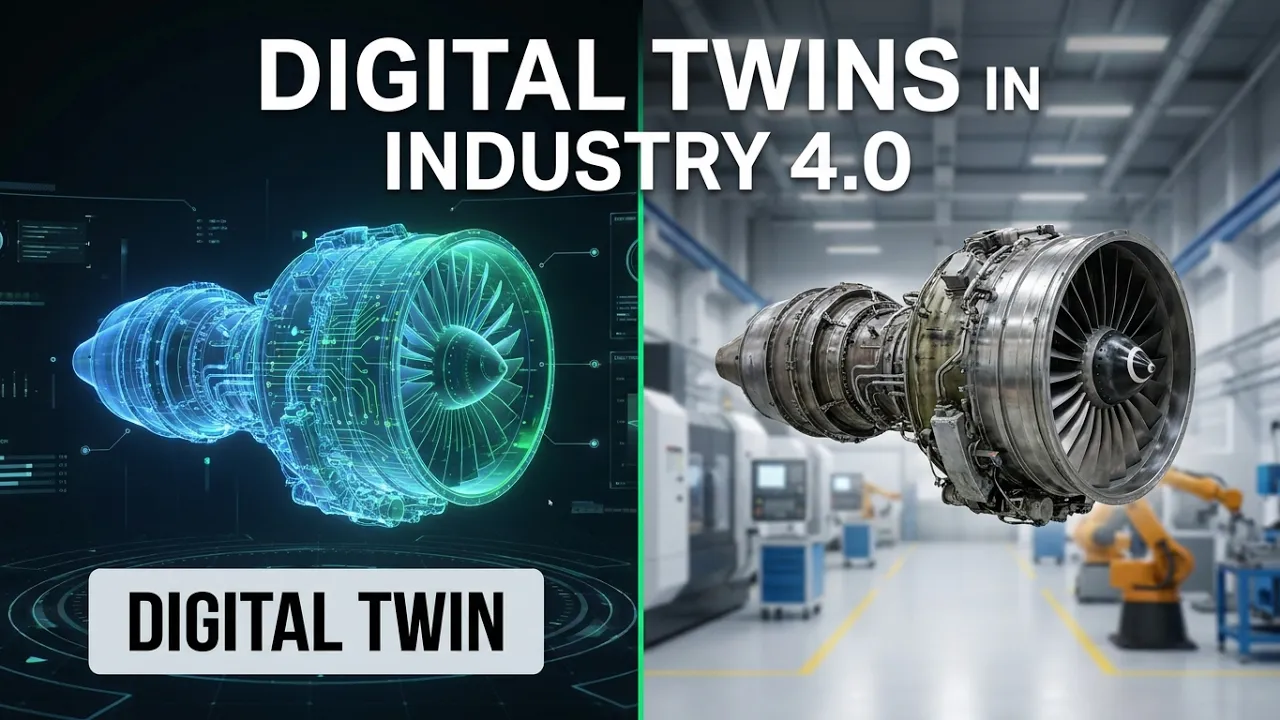
Using digital twins to validate a process or layout before it touches the physical floor
Working with automation and quality teams to close the gap between design and shop floor reality
Identifying where digital workflows can cut lead time or reduce manual error
It's a role that blends design engineering with a working understanding of connected, data-driven manufacturing. You do not need to write production software, but you need to be comfortable enough with digital workflows to work alongside the teams that build and maintain them.
Digital Manufacturing Engineer Roadmap: Step by Step
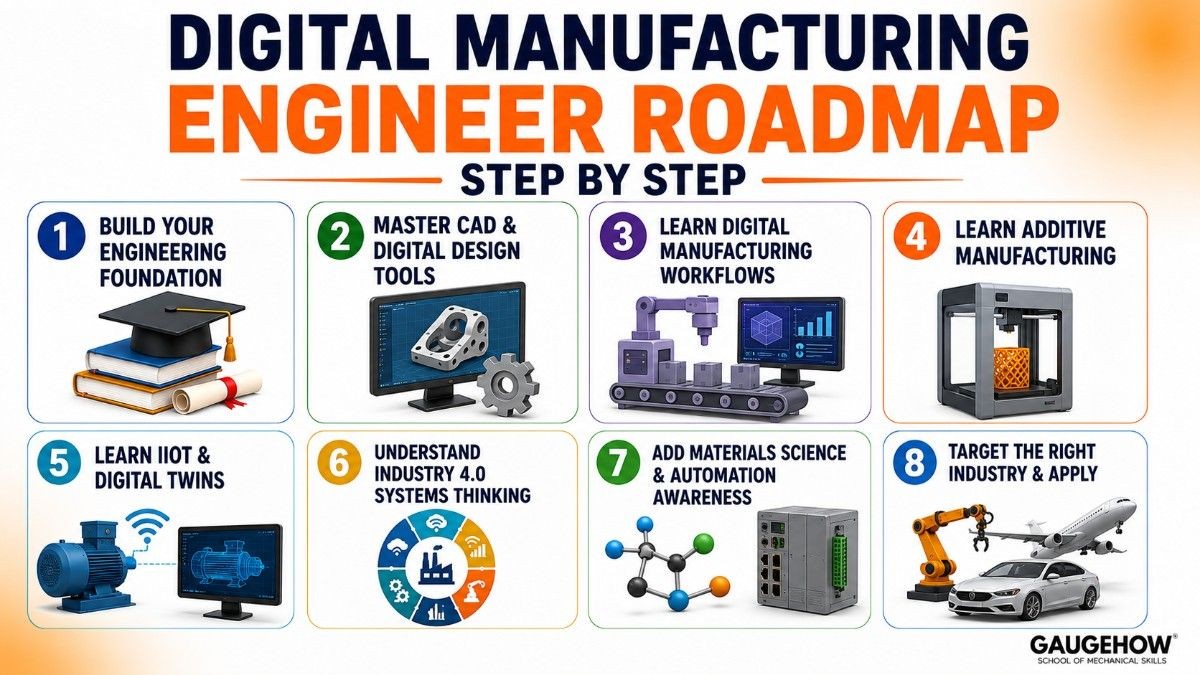
Step 1: Build Your Engineering Foundation
Most digital manufacturing roles ask for a bachelor's degree in mechanical, industrial, or manufacturing engineering.
If you are still studying, prioritize electives in manufacturing processes, materials science, and basic data concepts. If you already have the degree, this step is done. Move on.
Step 2: Master CAD and Digital Design Tools
Every digital manufacturing workflow starts with a 3D model that carries through from design to production. You need to be comfortable building and managing models that other digital tools can use directly, not just static drawings.
SolidWorks 2024 and Fusion 360 are both strong starting points, and if you ever need to reverse-engineer an existing part into a usable digital model, the Computer-Aided Reverse Engineering course covers exactly that skill.
Step 3: Learn Digital Manufacturing Workflows
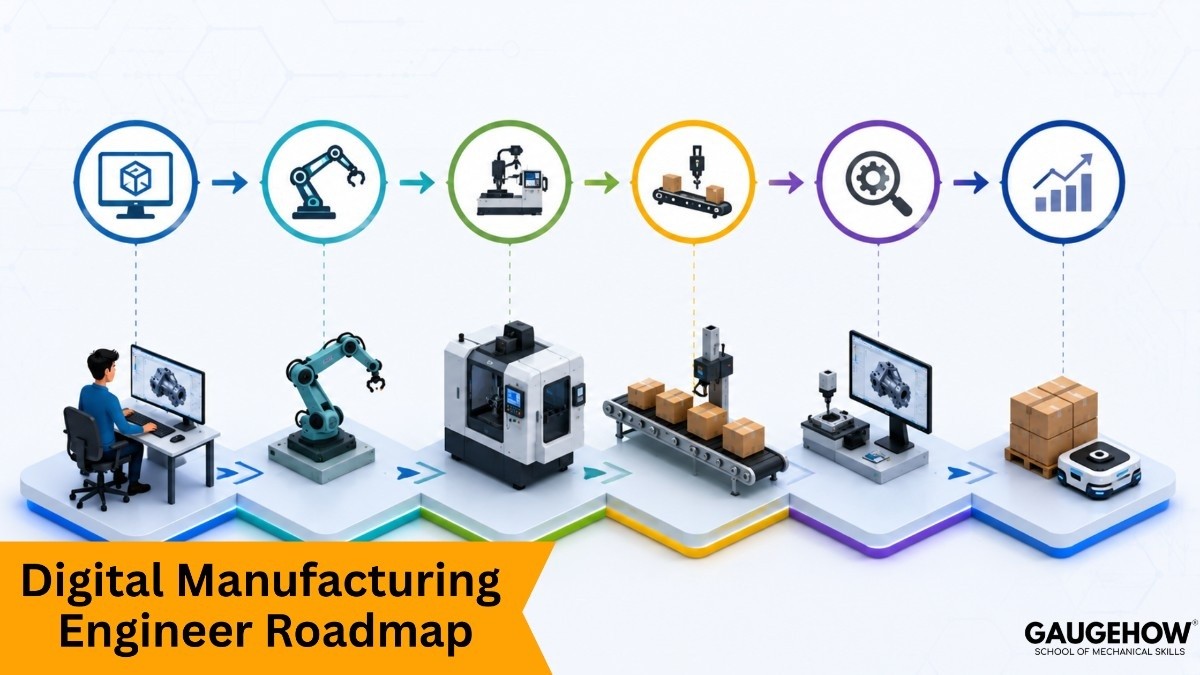
This is the core of the role. You need to understand how digital tools connect design, simulation, and production into one continuous workflow, rather than treating each stage as a separate, disconnected step.
The Digital Manufacturing course covers this exact foundation, showing how modern factories reduce lead time by keeping data connected end to end.
Step 4: Learn Additive Manufacturing
Knowing when to 3D print a part instead of machining it is a decision digital manufacturing engineers are expected to make confidently.
Understanding the strengths and limits of additive manufacturing, from rapid prototyping to low-volume production, is a skill that shows up constantly in this field. The 3D Printing / Additive Manufacturing course covers this exact decision-making skill set.
Step 5: Learn IIoT and Digital Twins
Connected manufacturing is where digital design work meets real-time data. You need to understand how equipment sensors feed into monitoring systems, and how a digital twin can simulate a process or layout change before it is ever applied on the physical floor.
The Industrial Internet of Things (IIoT) course and Digital Twins course both build this layer on top of your design and manufacturing foundation.
Step 6: Understand Industry 4.0 Systems Thinking
Once the individual pieces click, the next step is seeing how they connect into a full smart factory. This means understanding how data flows from a single digital workflow up to plant-wide decisions, and where digital manufacturing fits inside that bigger system.
The Introduction to Industry 4.0 course covers this system-level view, which usually separates a mid-level engineer from a senior one.
Step 7: Add Materials Science and Automation Awareness
Digital manufacturing decisions often come down to material behavior and how a part will be produced downstream. Understanding materials alongside basic automation concepts helps you make smarter calls about design for manufacturing.
The Smart Materials Science course and PLC Programming and Automation course both round out this practical side of the role.
Step 8: Target the Right Industry and Apply
Digital manufacturing hiring looks different by sector. Automotive plants want fast digital workflows tied to high-volume production. Aerospace wants traceability and documentation discipline layered on top of digital processes.
If you are exploring robotics-adjacent digital manufacturing work, the Robotics industry page is worth checking, and the Automotive industry page is useful for high-volume production environments.
Before interviews, review common technical questions so a digital workflow or additive manufacturing scenario does not catch you off guard. The Interview Q&A Hub has role-specific practice questions, and the Practice / MCQ Tests section is useful for a quick knowledge check before a technical round.
Digital Manufacturing Engineer Skills Checklist
Skill Area | Beginner | Job Ready |
|---|---|---|
CAD and digital design | Can open and modify a model | Can build a model ready for direct use in simulation or production |
Digital manufacturing workflows | Aware connected workflows exist | Can manage a design-to-production workflow without manual rework |
Additive manufacturing | Knows what 3D printing is used for | Can decide confidently between printing and traditional machining |
IIoT and digital twins | Aware connected sensors exist | Can use a digital twin to validate a process change |
Industry 4.0 systems thinking | Knows the terminology | Can explain how a digital workflow feeds plant-wide decisions |
Materials and automation awareness | Knows basic material categories | Can factor material and automation constraints into design decisions |
Digital Manufacturing Engineer vs Industry 4.0 Engineer vs CNC Programmer
These three roles overlap constantly, and many job postings blend them together.
Role | Main Focus | Typical Tools |
|---|---|---|
Digital Manufacturing Engineer | Modernizing how parts get designed and produced | CAD, additive manufacturing, digital workflows |
Industry 4.0 Engineer | Connecting shop floor data to plant-wide decisions | IIoT platforms, digital twins, dashboards |
CNC Programmer | Writing and proving out machine instructions | CAD, CAM, G-code, tool offsets |
A strong digital manufacturing engineer usually understands enough Industry 4.0 and production programming concepts to work across all three without needing a specialist for every small integration task.
For a course sequence built around this exact overlap, the Digital / Industry 4.0 Engineer career track is worth reviewing before you specialize further.
Frequently Asked Questions
Q: Do I need a specific degree to become a digital manufacturing engineer?
A: Most employers prefer a bachelor's degree in mechanical, industrial, or manufacturing engineering, though candidates from design or automation backgrounds are also hired regularly with the right hands-on project experience.
Q: Is coding necessary for this role?
A: Basic scripting and data handling skills are increasingly expected, especially for working with IIoT data or automating repetitive design and simulation tasks, though deep software development is usually handled by dedicated engineers.
Q: What is the difference between digital manufacturing and Industry 4.0?
A: Digital manufacturing focuses specifically on how physical parts get designed and produced using digital tools. Industry 4.0 is the broader framework connecting shop floor data, equipment, and decision-making across an entire plant.
Q: How long does it take to become job ready as a digital manufacturing engineer?
A: With an engineering degree already in hand, most people reach job ready in six months to a year by learning CAD, digital manufacturing workflows, additive manufacturing basics, and completing one hands-on project they can walk through in an interview.
Q: Which industries hire the most digital manufacturing engineers?
A: Automotive, aerospace, electronics, and general industrial manufacturing all hire heavily for this role, since each depends on faster, more connected design-to-production workflows.
Conclusion
Becoming a digital manufacturing engineer is less about mastering one specific software and more about connecting design, production, and data into one smooth, digital workflow. Follow the roadmap in order: engineering foundation, CAD and digital design, digital manufacturing workflows, additive manufacturing, IIoT and digital twins, Industry 4.0 systems thinking, then materials and automation awareness.
Ready to build the skill set? Start with the Digital / Industry 4.0 Engineer career track on GaugeHow to see the full course sequence mapped to this exact roadmap.
Mechanical Engineering Courses That Industry Actually Uses
Learn Tools of Design & CAD, Analysis & Simulation, Automation & Robotics, and Industry 4.0 used in modern factories.
Join 40+ Mech Courses like GD&T, Siemens NX, SolidWorks, CATIA V5, AutoCAD, ANSYS (FEA & Fluent), ABAQUS, Creo, Fusion 360, CNC Programming, Digital Twins, Python for Mechanical, and Industry 4.0.
Our Courses
Complete Course Library
Access to 40+ courses covering various fields like Design, Simulation, Quality, Manufacturing, Robotics, and more.