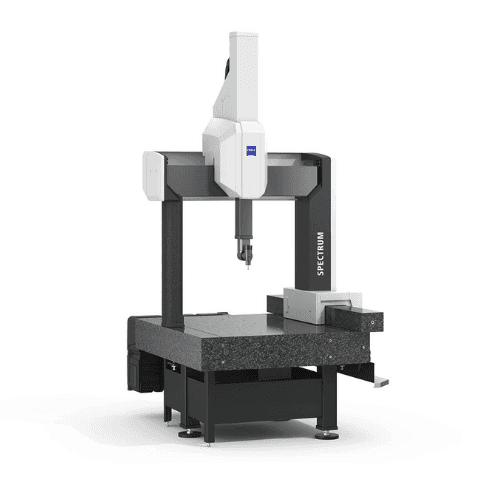
Computer-Aided Reverse Engineering
This course explains Computer-Aided Reverse Engineering and how physical components are analyzed and digitally reconstructed. You will understand the reverse engineering process, its methods, and its connection to forward engineering.
What You Will Learn
✓ Understand reverse engineering, its purpose, and complete process
✓ Learn computer-aided reverse engineering and computer-aided forward engineering
✓ Explore CMM reverse engineering, laser scanning, contact methods, and non contact methods
✓ Understand rapid prototyping, rapid tooling, and prototype processes
✓ Analyze case studies, part failure analysis, selection process, legal definition, barriers, and business application
This Course includes:
1 Week (2-3 Hours/Week)
Unlimited Lifetime Access
Downloadable PDF E-Books
Certificate of Completion
Quizzes & Knowledge Checks
Downloadable Resources & Notes

By Deepak and GaugeHow Teams
Beginner
Trusted By 23.5K+ Engineers
Learn 40+ Mech Tools
The Curriculum
Module 1: Introduction
Lessons:
Reverse Engineering
Why Reverse Engineering?
Process of Reverse Engineering
Computer-Aided Reverse Engineering
Computer-Aided Forward Engineering
Module 2: Methods
Module 3: Rapid Prototyping
Module 4: Case Study
Module 5: Other
Module 1: Introduction
Lessons:
Reverse Engineering
Why Reverse Engineering?
Process of Reverse Engineering
Computer-Aided Reverse Engineering
Computer-Aided Forward Engineering
Module 2: Methods
Module 3: Rapid Prototyping
Module 4: Case Study
Module 5: Other
Module 1: Introduction
Lessons:
Reverse Engineering
Why Reverse Engineering?
Process of Reverse Engineering
Computer-Aided Reverse Engineering
Computer-Aided Forward Engineering
Module 2: Methods
Module 3: Rapid Prototyping
Module 4: Case Study
Module 5: Other
Requirements
No prior reverse engineering experience required
What to expect from this course
The course covers CMM reverse engineering, laser scanning, contact and non contact methods, rapid prototyping, tooling, case studies, and business applications.
By the end, you will understand how reverse engineering supports product development, analysis, and innovation.
Clear explanation of reverse engineering workflow
Understanding of scanning and measurement techniques
Insight into rapid prototyping and tooling
Real case-based learning from automobile and Boeing examples
Awareness of legal and business considerations
This course is included in plans
Subscribe to GaugeHow’s All Courses Plan
Complete Course Bundle covering 40+ Mechanical Engineering Tools, with Lifetime access.
—OR—
Join this course only with 1-year access
Our Courses
Industry-Ready Mechanical Skills
40+ industry-focused courses covering CAD Design, FEA Simulation, CNC Programming, Robotics, Quality Control, and Smart Factory automation.
Everything Modern Engineers Need to Succeed.
Our Courses
Industry-Ready Mechanical Skills
40+ industry-focused courses covering CAD Design, FEA Simulation, CNC Programming, Robotics, Quality Control, and Smart Factory automation.
Everything Modern Engineers Need to Succeed.
Our Courses
Industry-Ready Mechanical Skills
40+ industry-focused courses covering CAD Design, FEA Simulation, CNC Programming, Robotics, Quality Control, and Smart Factory automation.
Everything Modern Engineers Need to Succeed.
Course Categories
Learn 40+ Mechanical Engineering Tools
On GaugeHow, the Mechanical Engineering Courses are grouped by real job tracks, so you can pick the skills recruiters expect for design, simulation, manufacturing, quality, automation, and smart factories.
CAD Courses: Product Design & Modeling
Build design output that teams can manufacture: 2D drafting, 3D modeling, assemblies, and drawings.
CAE Simulation: FEA, CFD & Multiphysics
Validate before you build. This track covers FEA and CFD simulation workflows used in CAE and R&D teams.
Quality, Metrology & Lean Manufacturing
Run stable production and prove quality with measurement discipline, root-cause thinking, and lean tools.
Industry 4.0 Course: Smart Manufacturing
Move from classical mechanical to factory tech: data, connectivity, and digital manufacturing concepts used in modern plants.
Course Categories
Learn 40+ Mechanical Engineering Tools
On GaugeHow, the Mechanical Engineering Courses are grouped by real job tracks, so you can pick the skills recruiters expect for design, simulation, manufacturing, quality, automation, and smart factories.
CAD Courses: Product Design & Modeling
Build design output that teams can manufacture: 2D drafting, 3D modeling, assemblies, and drawings.
CAE Simulation: FEA, CFD & Multiphysics
Validate before you build. This track covers FEA and CFD simulation workflows used in CAE and R&D teams.
Quality, Metrology & Lean Manufacturing
Run stable production and prove quality with measurement discipline, root-cause thinking, and lean tools.
Industry 4.0 Course: Smart Manufacturing
Move from classical mechanical to factory tech: data, connectivity, and digital manufacturing concepts used in modern plants.
Course Categories
Learn 40+ Mechanical Engineering Tools
On GaugeHow, the Mechanical Engineering Courses are grouped by real job tracks, so you can pick the skills recruiters expect for design, simulation, manufacturing, quality, automation, and smart factories.
CAD Courses: Product Design & Modeling
Build design output that teams can manufacture: 2D drafting, 3D modeling, assemblies, and drawings.
CAE Simulation: FEA, CFD & Multiphysics
Validate before you build. This track covers FEA and CFD simulation workflows used in CAE and R&D teams.
Quality, Metrology & Lean Manufacturing
Run stable production and prove quality with measurement discipline, root-cause thinking, and lean tools.
Industry 4.0 Course: Smart Manufacturing
Move from classical mechanical to factory tech: data, connectivity, and digital manufacturing concepts used in modern plants.
Testimonials
Join GaugeHow Today for Lifetime Access
Engineers at every level use GaugeHow to bridge theory and practice, build confidence, and master the skills companies actually need.
4.5/5 (Average of 587 Ratings)