Aerospace Engineering Jobs : Every Student Should Know About
Learn More in This Video
Subscribe to GaugeHow for More
Wondering what jobs aerospace engineering really offers? Explore top roles, salaries & fresher opportunities every student should know about in 2026.
overview
Thinking about a career in aerospace? Smart move.
But here's something most students don't realize aerospace engineering isn't just one job. It's a whole universe of roles, from designing aircraft wings to launching satellites into space.
The problem? Most students only know about one or two of them.
So let's fix that. This guide walks you through the top aerospace engineering jobs, what they pay, and how to land your first one.
Top Aerospace Engineering Job Roles
These are the core roles you'll find in the industry. Pick the one that excites you most.
Job Role | What They Do | Avg. Salary (India) |
|---|---|---|
Aerospace Design Engineer | Designs aircraft, spacecraft & parts using CAD | ₹6–12 LPA |
Propulsion Engineer | Works on engines, rockets & thrust systems | ₹7–14 LPA |
Structural Engineer | Ensures the airframe is strong & lightweight | ₹6–10 LPA |
Avionics Engineer | Handles electronics, navigation & control systems | ₹6–11 LPA |
Flight Test Engineer | Tests aircraft performance in real conditions | ₹7–13 LPA |
Systems Engineer | Integrates all parts into one working machine | ₹8–15 LPA |
Maintenance (MRO) Engineer | Repairs & maintains aircraft for safety | ₹5–9 LPA |
Research Scientist (ISRO/DRDO) | Develops new aerospace tech & missions | ₹7–12 LPA |
Salaries are approximate and vary by company, city, and experience. Top firms and abroad roles pay much more.
Don't feel pressure to pick now. Most students discover their favourite during internships and projects.
Aerospace Engineering Jobs for Freshers
Just graduated? Don't panic. There's a clear path in.
As a fresher, you'll usually start in entry-level roles like junior design engineer, graduate trainee, or test engineer.
Here's the honest truth: getting that first job takes effort. The typical search runs anywhere from 3 to 12 months.
But there's a shortcut internships. Students who intern during college get hired far faster.
A few fresher-friendly tips:
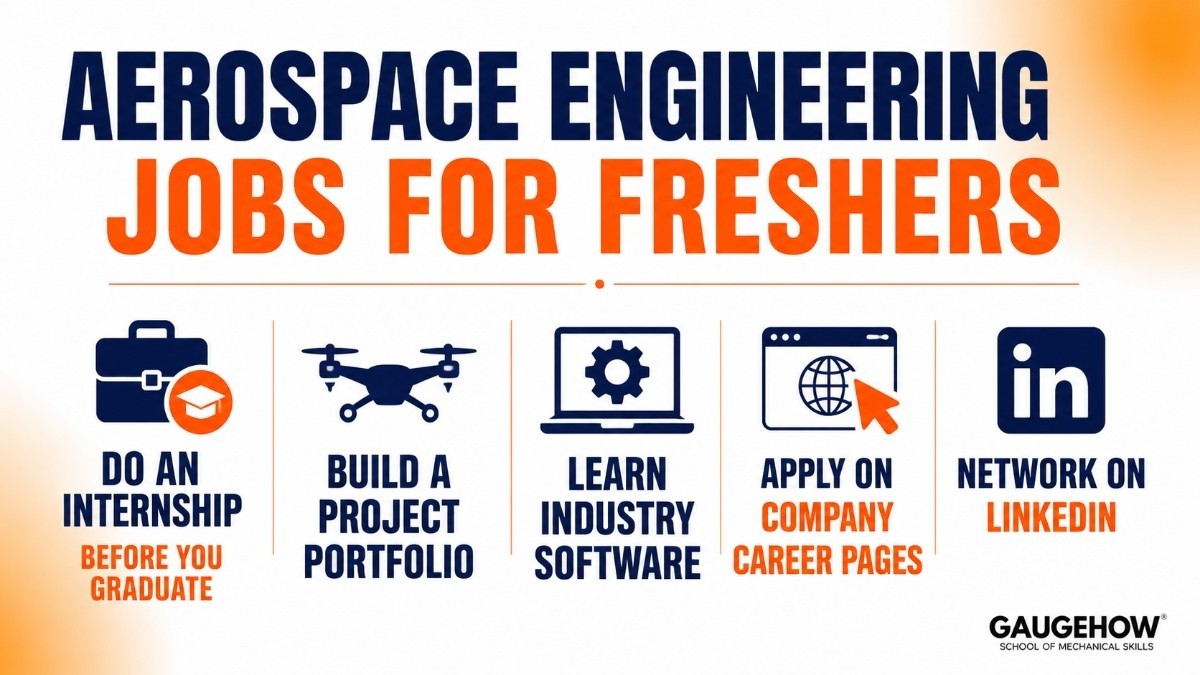
Do at least one internship or co-op before you graduate.
Build a project portfolio (drones, CAD models, simulations).
Learn industry software early.
Apply directly on company career pages, not just job boards.
Network on LinkedIn referrals open doors.
Top fresher recruiters in India include ISRO, HAL, DRDO, Tata Advanced Systems, and L&T.
What Is the Salary of an Aerospace Engineer?
Let's talk money. It's a fair question.
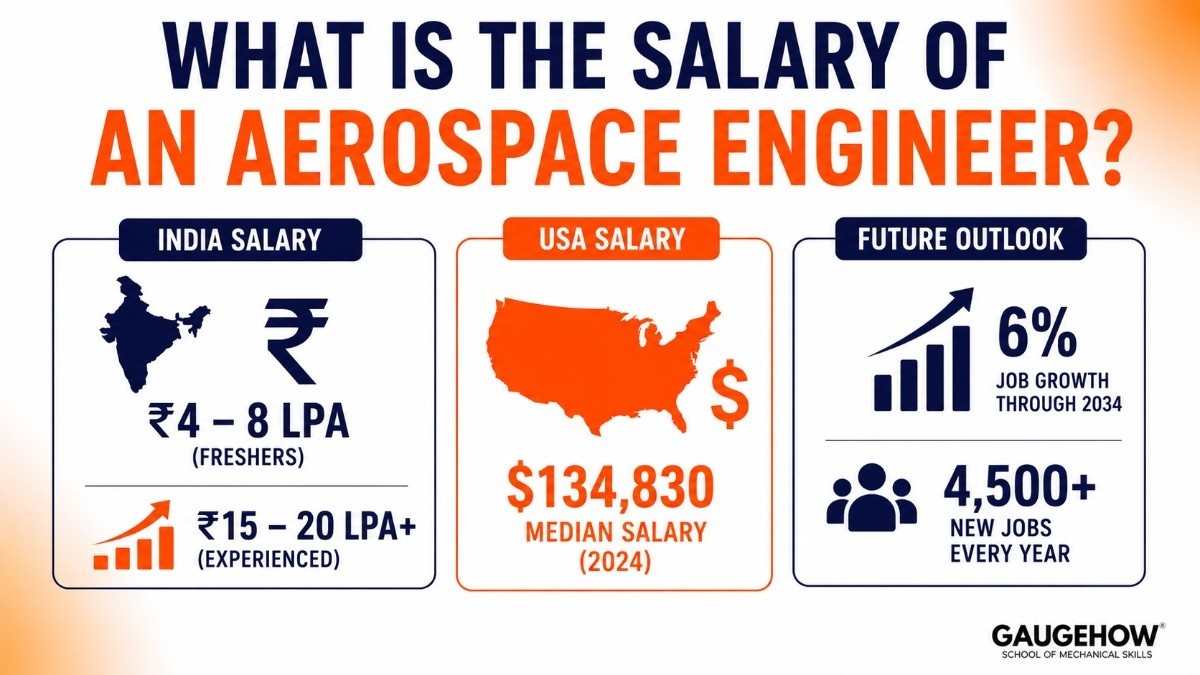
In India, freshers typically earn ₹4–8 LPA, while experienced engineers can cross ₹15–20 LPA, especially at top firms or abroad.
The numbers get bigger globally. In the U.S., the median salary for aerospace engineers was around $134,830 a year in 2024 well above the average for most jobs.
And the future looks bright. Aerospace engineering employment is projected to grow about 6% through 2034, faster than average, with roughly 4,500 new openings every year.
So yes the pay is good, and demand is steady. Just remember, salary should never be your only reason for choosing this path. Passion matters too.
Aerospace vs Mechanical Engineering Jobs
A lot of students ask: should I do aerospace or mechanical?
Both are great. They just open slightly different doors. Here's the comparison.
Factor | Aerospace Engineering | Mechanical Engineering |
|---|---|---|
Focus | Aircraft, spacecraft, satellites | Machines, engines, manufacturing |
Job range | Specialized (aviation & space) | Very broad (every industry) |
Job availability | Fewer, niche roles | More jobs, wider sectors |
Flexibility | Mostly aerospace sector | Works across many industries |
Best for | Space & flight lovers | Students wanting more options |
Quick takeaway:
Choose aerospace if you're passionate about flight and space. Choose mechanical if you want more flexibility and a wider job market.
Good news? A mechanical engineer can often work in aerospace too. The skills overlap a lot.
Alternative Careers in Aerospace
Here's a secret the industry doesn't advertise: you don't only have to be a "pure" aerospace engineer to work in aerospace.
In fact, aerospace has the highest ratio of engineers of any industry and many of them come from other backgrounds.
Some great alternative paths include:
Manufacturing Engineer — building aerospace components.
Systems Integration Engineer — connecting complex systems.
Quality & Compliance Engineer — ensuring safety standards.
Materials Engineer — developing lightweight, heat-resistant materials.
Drone / UAV Engineer — a fast-growing field.
Data Analyst / AI roles — aerospace now runs on data.
These roles are often easier to enter as a fresher, and they can lead into core design jobs later.
So if a "dream" role feels out of reach right now, these are smart stepping stones.
FAQ
Q: What jobs can aerospace engineers do? Design, propulsion, structural, avionics, testing, systems integration, and research roles at companies or space agencies.
Q: Is it hard to get an aerospace engineering job? It's challenging but doable. Internships, projects, and networking make a huge difference, with most freshers landing a role within 3–12 months.
Q: What is the salary of an aerospace engineer? In India, freshers earn around ₹4–8 LPA. In the U.S., the median is roughly $134,830 per year.
Q: Which is better aerospace or mechanical engineering? Aerospace is more specialized; mechanical offers wider options. Pick based on your interests and career goals.
Q: Are aerospace engineers in demand? Yes. The field is growing about 6% through 2034, with steady openings each year.
Q: Can I get an aerospace job after B.Tech? Absolutely. Many freshers join as graduate trainees or junior engineers, especially with internship experience.
Conclusion
Aerospace engineering opens up far more careers than most students imagine.
From designing rockets to testing fighter jets, from ISRO to Boeing, the options are exciting and the pay is solid.
If you're a fresher, start small. Grab internships, build projects, and don't ignore the alternative paths. They all lead somewhere good.
The key is simple: explore the roles, find what excites you, and build the skills for it.
Your future in aerospace starts with knowing your options. Now you do.
Resources
Explore these trusted sources to learn more about aerospace engineering careers, jobs, and salaries:
ISRO – Space missions, careers, and recruitment
DRDO – Defence research and engineering opportunities
HAL (Hindustan Aeronautics Limited) – Aerospace manufacturing and career opportunities
Boeing Careers – Global aerospace engineering jobs
Airbus Careers – Aviation and aerospace career opportunities
U.S. Bureau of Labor Statistics (BLS) – Aerospace engineer salaries and job outlook
Mechanical Engineering Courses That Industry Actually Uses
Learn Tools of Design & CAD, Analysis & Simulation, Automation & Robotics, and Industry 4.0 used in modern factories.
Join 40+ Mech Courses like GD&T, Siemens NX, SolidWorks, CATIA V5, AutoCAD, ANSYS (FEA & Fluent), ABAQUS, Creo, Fusion 360, CNC Programming, Digital Twins, Python for Mechanical, and Industry 4.0.
Our Courses
Complete Course Library
Access to 40+ courses covering various fields like Design, Simulation, Quality, Manufacturing, Robotics, and more.