Aerodynamics Interview Questions: Lift, Drag, Stall

Deepak S Choudhary
Learn More in This Video
Subscribe to GaugeHow for More
An Aerodynamics engineer predicts lift, drag, and moments from airflow.
This blog covers coefficients of lift, drag, and moment, AoA, stall, induced drag, and boundary-layer transition/separation. It adds Mach and shocks, RANS and y+, mesh convergence, grid independence, and wind-tunnel correction with uncertainty.
Aerodynamics engineering deals with the motion of air and the forces it creates on wings, bodies, and ducts. Aerodynamics engineers usually work in aircraft and UAV design, automotive aero, wind-energy, and turbomachinery teams, where they turn shapes into performance curves, load limits, and stability margins using CFD, wind tunnels, and flight data.
Why do pressure contours look perfect while the drag coefficient is off, stall shifts, or the shock sits in the wrong place?
In this blog, you will find the top aerodynamics interview questions that job seekers look for.
1. What do Coefficient of lift, drag, and Moment represent in an aero report?
They are non-dimensional lift, drag, and pitching moment. Each uses dynamic pressure and reference geometry, so you can compare across speeds, scales, CFD, and tunnel. Consistent reference definitions matter more than the formula.
2. How do you calculate Cl from test or CFD forces?

3. What is the “reference area” trap in aerodynamic coefficients?
Interview trap: the reference area, reference chord, and the chosen moment center must be declared. If you mix the planform area with the wetted area, or shift the reference point, your drag coefficient and pitching-moment coefficient change even though the flow physics did not.
4. Why can the Coefficient of Moment flip sign between two reports on the same wing?
Different sign conventions, axes, or reference points. A moment reported about the CG vs quarter-chord can flip the sign. Confirm the coordinate system and the reference length used in normalization.
5. What is the angle of attack, physically and in CFD setup terms?
Angle of attack is the incoming flow angle relative to the body axis. In CFD, set it via far-field velocity direction or geometry rotation, then verify force-axis definitions to avoid “lift in the wrong axis.”
6. How do you separate pressure drag and skin-friction drag in outputs?
Integrate pressure and shear separately on the surface. Pressure drag rises with separation and shocks, while skin friction tracks boundary-layer behavior. Reporting both shows which lever your design change pulled.
7. What is stall, and what proof do you show for stall prediction?
The stall is separation-driven lift loss beyond a critical AoA. Defend it using a lift break, surface Cp change, and wall shear going to zero or reversing, not just a dramatic contour plot.
8. Why do 2D airfoil results overpredict lift compared to a real wing?
2D misses tip vortices and downwash. A finite wing sees reduced effective AoA and added induced drag, so lift slope drops and drag rises compared to an infinite-span airfoil assumption.
9. How does aspect ratio affect induced drag?
Higher aspect ratio generally reduces induced drag for the same lift, because downwash per unit lift decreases. Micro-example: If AR doubles and efficiency stays similar, the induced-drag coefficient trends roughly halve.
10. What is induced drag, in one engineering sentence?
Induced drag is the drag cost of making lift on a finite wing. Trailing vortices create downwash that tilts the lift vector rearward, adding a lift-linked drag component.
11. What does the Oswald efficiency factor (e) tell you?
Oswald efficiency indicates how close your lift distribution is to the efficient elliptical case. Lower (e) means stronger vortex losses from the planform, twist, or interference, increasing induced drag at the same lift.
12. What is a boundary layer, and why does it dominate aero accuracy?
The boundary layer is the thin near-wall region where viscosity dominates. It sets shear stress, separation onset, and drag split, so most stall and drag errors trace back to boundary-layer treatment.
13. What triggers laminar-to-turbulent transition on an airfoil?
Reynolds number, surface roughness, freestream turbulence, and pressure gradients drive it. In transonic cases, shocks can trigger a rapid transition. Getting the transition wrong shifts the drag and can move the stall onset.
14. How do you identify separation cleanly in CFD or test analysis?
Wall shear is the primary signal. Separation starts when shear goes to zero and then reverses. Confirm with pressure recovery behavior and a growing wake, rather than relying on streamlines alone.
15. What does the skin-friction coefficient Cf tell you in practice?
Skin-friction coefficient Cf quantifies wall shear relative to dynamic pressure. Trends reveal viscous drag sources and early separation, because shear collapses and can change sign near detachment.
16. Why does an adverse pressure gradient promote separation?
A rising pressure steals momentum from the near-wall flow. If the boundary layer cannot overcome that adverse gradient, it decelerates, reverses, and detaches, raising pressure drag and destabilizing lift.
17. What is the critical Mach number, and why does it show up early on thick airfoils?
Critical Mach is the freestream Mach where local flow first reaches Mach 1 on the surface. Thick or highly cambered sections hit it earlier because they accelerate local flow more.
18. What is the drag divergence Mach number?
Drag divergence Mach is the point where drag climbs rapidly due to shocks and shock-induced separation. Treat it as a performance cliff that must be modeled comprehensively and checked against pressure distributions.
19. Why do shocks and wave drag raise the coefficient of drag so sharply in transonic flow?
Shocks create irreversible pressure losses, and the shock’s pressure jump can force separation. That combination adds wave drag and pressure drag, causing the familiar transonic drag rise even when lift looks steady.
20. How do you know your CFD captured a shock correctly?
Confirm shock location and strength on Cp, then verify stability under mesh refinement and time averaging. If the shock jumps with small setup changes, the solution is numerically fragile.
21. What is shock–boundary-layer interaction, and why is it a risk?
Shock–boundary-layer interaction couples a shock with the boundary layer, thickening it and often triggering separation. It can drive buffet, drag rise, and control issues in transonic configurations.
22. What is drag rise, and how is it connected to buffeting?
Drag rise is the rapid increase in drag near transonic speeds, typically from shocks and separation. Buffeting is the unsteady load response that can appear when shock motion couples with separation.
23. What is the difference between RANS, LES, and DNS?
RANS models all turbulence, LES resolves large eddies and models small scales, and DNS resolves everything. RANS is the workhorse for design cycles, while LES targets harder unsteady physics.
24. When do you use Spalart–Allmaras vs k–ω SST?
Spalart–Allmaras fits robust, attached external flows when cost matters. Choose k–ω SST when adverse pressure gradients and separation sensitivity dominate, because it usually handles near-wall behavior more reliably.
25. What is y+, and why do interviewers fixate on it?
y+ measures the first-cell distance from the wall in viscous units. Wrong y+ breaks your wall treatment, so shear, separation, and drag can be wrong even when residuals look excellent.
26. How do you pick the first-cell height to hit a y+ target?
First-cell height comes from your target y+ and an estimate of friction velocity. Micro-example: Doubling the first-cell height roughly doubles y+, which can push you into an invalid wall-treatment regime.
27. What mesh quality checks matter most before external aero CFD?
Mesh quality checks include skewness, non-orthogonality, boundary-layer growth rate, and wake resolution. Poor cells near leading edges, shocks, or separation zones usually corrupt forces before they corrupt plots.
28. How do you choose boundary conditions for external aerodynamics CFD?
Boundary conditions should reflect the physics: far-field or pressure-far-field for freestream, no-slip walls, and symmetry only when valid. The common failure is boundaries too close, biasing AoA and drag.
29. How do you size the far-field domain for external aero?
The far-field size should be large enough that pressure and streamlines around the body are unaffected. Verify by moving boundaries farther out; if forces change meaningfully, the domain is still too small.
30. What do you monitor besides residuals?
Beyond residuals, track lift, drag, moment, mass balance, and key surface probes like Cp. Residuals can drop while forces drift, especially in separated or mildly unsteady flows.
31. Residuals dropped, but forces drift. What do you trust?
Integrated forces and balance checks matter more than residuals alone. If mass flow is inconsistent or forces are still trending, the result is not ready, even if residual plots look “clean.”
32. What does “converged” mean for aerodynamic coefficients?
Convergence means coefficients are steady or statistically stationary, with stable balances. A solution is converged when extra iterations or averaging no longer change the coefficient of lift, drag, and moment coefficient beyond a small tolerance.
33. How do you run a grid independence study defensibly?
Grid independence needs at least three systematically refined meshes and an asymptote in the quantity of interest. Refine where gradients live, then report remaining numerical uncertainty, not just “mesh A vs B.”
34. How do you validate CFD aerodynamics results?
Validation relies on trusted data: wind tunnel polars, surface Cp, or well-documented benchmarks. Match trends first, then absolute values. If deltas sit inside uncertainty, do not claim a design win.
35. What is a wind tunnel used for in aerodynamic development?
Wind tunnels provide controlled, repeatable forces, moments, and pressures for correlation. Use them to validate CFD, map stall progression, and quantify uncertainty so design decisions stay defensible.
36. What corrections matter most from wind tunnel to free flight?
Key corrections are wall interference, blockage, tare/interference, Reynolds effects, and balance calibration. The goal is corrected coefficients with uncertainty bounds so that CFD and tunnel can be compared fairly.
37. What is wind tunnel blockage correction?
Blockage correction accounts for the model, reducing the effective flow area and altering local speed and pressure. Without it, loads and drag can be biased, especially at high lift or higher model blockage.
38. How do you defend uncertainty in the coefficient of lift and drag?
Uncertainty comes from balance accuracy, repeatability, and reference-condition errors. Propagate those into coefficients, then compare design deltas to combined uncertainty; if the delta is smaller, it is not decision-grade.
39. What is flutter, in aeroelastic terms?
Flutter is a dynamic aeroelastic instability where aerodynamic forces couple with structural modes. It matters because unsteady loads and stiffness changes can erase margins, even when steady aerodynamics look acceptable.
40. How do you explain a CFD-to-wind-tunnel mismatch in an interview?
A mismatch should trigger a structured check: geometry fidelity, reference definitions, boundary conditions, y+, mesh sensitivity, and tunnel correction/uncertainty. Then run one targeted validation case to isolate the dominant driver.
Conclusion
Aerodynamics sits at the center of how an aircraft really behaves, so this blog focuses on building a clean, usable understanding rather than dumping jargon.
The questions were chosen to cover the full arc, from fluid basics and key definitions to airfoils, wings, separation, compressibility, and how CFD fits into real design work. The main learning is simple: good engineers explain the “why” behind lift and drag in a way that matches what the flow is doing, not what a textbook diagram shows.
Carry that clarity into interviews, and the discussion naturally shifts from memorized answers to confident engineering reasoning.
FAQ
1. What is the lift coefficient?
Coefficient of lift is normalized by dynamic pressure and reference area:
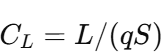
It lets you compare lift performance across speeds, scales, and test methods without mixing units.
2. What is the best turbulence model for external aerodynamics in CFD?
Pick based on separation and resources. k–ω SST is a common baseline for adverse pressure gradients. Spalart–Allmaras can be strong for attached flow when you need robustness and speed.
3. How do I know my mesh is good enough for lift and drag?
Show coefficient stability with refinement and verify near-wall treatment is consistent with your turbulence model. If forces move with mesh changes, you are still measuring numerical error.
4. What is the difference between critical Mach and drag divergence Mach?
Critical Mach is when sonic flow first appears locally. Drag divergence Mach is when drag rises rapidly due to shock losses and separation, typically at a higher Mach than critical.
5. What is the most common reason aerodynamic CFD is wrong?
Near-wall and separation handling. Wrong y+, poor boundary placement, and unvalidated turbulence or transition assumptions can make plots look smooth while forces and stall behavior are unreliable.