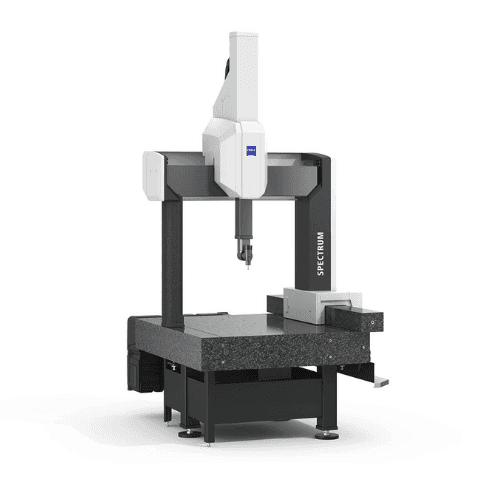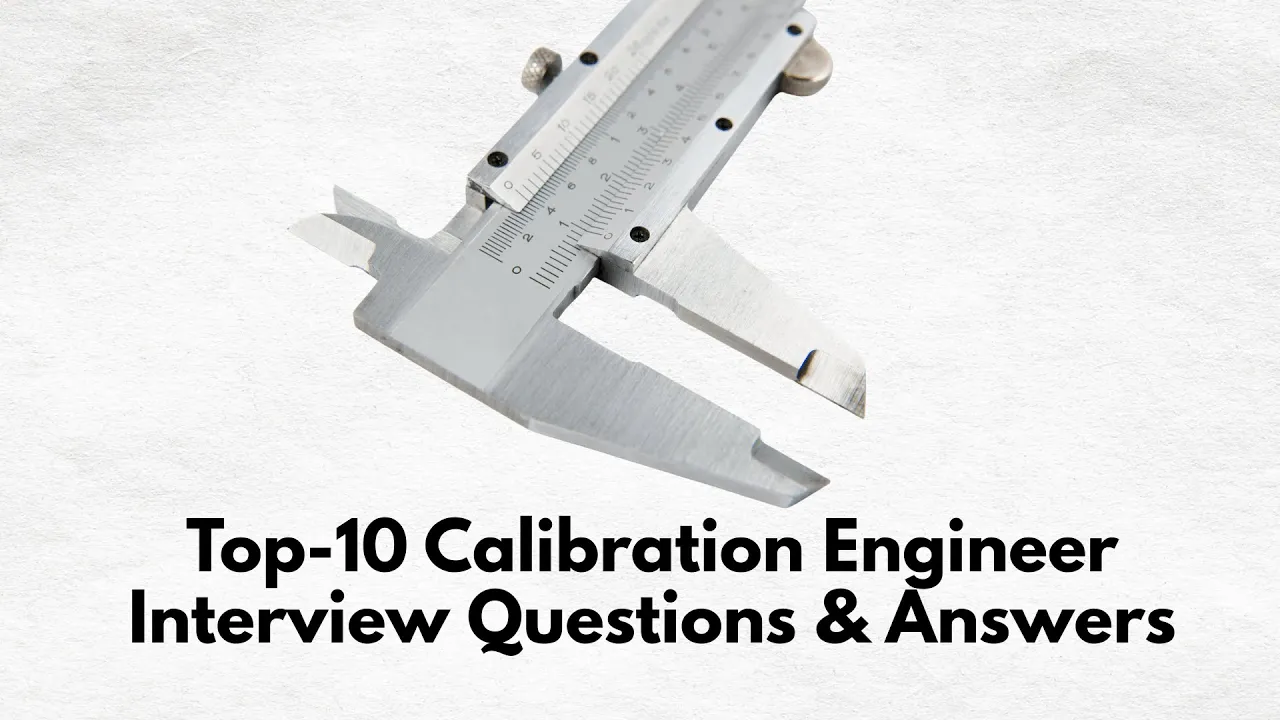
Top 10 Calibration Engineer Interview Questions & Answers
Jan 8, 2026

Calibration Engineering Interview QnA
author image Deepak choudhary

Deepak S Choudhary

🔧 Trusted by 23,000+ Happy Learners

Industry-Ready Skills for Mechanical Engineers

Upskill with 40+ courses in Design/CAD, Simulation, FEA/CFD, Manufacturing, Robotics & Industry 4.0.

1. What is calibration?

Answer:
Calibration is comparing a measuring instrument with a known standard to check and correct its accuracy.

2. Why is calibration important?

Answer:
Because wrong measurements can cause parts to be rejected, customer complaints, failed audits, and wasted money.

3. What is traceability in calibration?

Answer:
It means your measurement results can be traced back to national or international standards without breaks.

4. What is a calibration interval?

Answer:
It’s the fixed time period after which an instrument must be recalibrated to stay accurate.

5. What happens if an instrument is out of calibration?

Answer:
Stop using it. Find which products were affected. Tell the quality team. Recalibrate or replace the instrument.

6. Difference between calibration and verification?

Answer:

  • Calibration: Finds error and adjusts the instrument

  • Verification: Only checks if it meets limits (pass/fail)

7. What is measurement uncertainty?

Answer:
It’s the possible doubt or error range in a measurement result.

8. What standards are used in calibration labs?

Answer:
Most labs follow ISO/IEC 17025 for quality and technical competence.

9. What records are maintained in calibration?

Answer:
Calibration certificates, traceability records, interval history, and out-of-tolerance reports.

10. What instruments have you calibrated?

Answer (example):
Vernier calipers, micrometers, pressure gauges, dial indicators, torque wrenches, and temperature sensors.
Course Categories

Learn 40+ Mechanical Engineering Tools

On GaugeHow, the Mechanical Engineering Courses are grouped by real job tracks, so you can pick the skills recruiters expect for design, simulation, manufacturing, quality, automation, and smart factories.

CAD Courses: Product Design & Modeling

Build design output that teams can manufacture: 2D drafting, 3D modeling, assemblies, and drawings.

CAE Simulation: FEA, CFD & Multiphysics

Validate before you build. This track covers FEA and CFD simulation workflows used in CAE and R&D teams.

Quality, Metrology & Lean Manufacturing

Run stable production and prove quality with measurement discipline, root-cause thinking, and lean tools.

Course Categories

Learn 40+ Mechanical Engineering Tools

On GaugeHow, the Mechanical Engineering Courses are grouped by real job tracks, so you can pick the skills recruiters expect for design, simulation, manufacturing, quality, automation, and smart factories.

CAD Courses: Product Design & Modeling

Build design output that teams can manufacture: 2D drafting, 3D modeling, assemblies, and drawings.

CAE Simulation: FEA, CFD & Multiphysics

Validate before you build. This track covers FEA and CFD simulation workflows used in CAE and R&D teams.

Quality, Metrology & Lean Manufacturing

Run stable production and prove quality with measurement discipline, root-cause thinking, and lean tools.

Course Categories

Learn 40+ Mechanical Engineering Tools

On GaugeHow, the Mechanical Engineering Courses are grouped by real job tracks, so you can pick the skills recruiters expect for design, simulation, manufacturing, quality, automation, and smart factories.

CAD Courses: Product Design & Modeling

Build design output that teams can manufacture: 2D drafting, 3D modeling, assemblies, and drawings.

CAE Simulation: FEA, CFD & Multiphysics

Validate before you build. This track covers FEA and CFD simulation workflows used in CAE and R&D teams.

Quality, Metrology & Lean Manufacturing

Run stable production and prove quality with measurement discipline, root-cause thinking, and lean tools.