Mechanical Design Engineer Interview Questions: Stack Ups


Deepak S Choudhary
Learn More in This Video
Subscribe to GaugeHow for More
A mechanical design engineer converts a requirement into a real part that fits, assembles, and survives loads. This guide covers concept selection, CAD + drawing release, GD&T and tolerance stack-ups, materials and manufacturing choices, fasteners and joints, strength and fatigue, plus prototype testing and change control.
Mechanical design engineering is the work of designing parts and assemblies that meet a requirement, survive real loads, and still build cleanly on the shop floor. In India, the engineering and capital goods sector is reported as 27% of industrial factories. (India Brand Equity Foundation)
Ever had a part that looked perfect in CAD, but jammed in assembly, failed at a bolt hole, or got rejected by inspection for a datum mistake?
Below are 40 short, technical interview questions with direct answers across requirements, CAD, GD&T, tolerance stack-ups, manufacturing choices, joints, strength, and validation habits that make designs buildable.
Requirements & Concept Decisions
1. How do you turn a vague requirement into a clear design spec?
Convert needs into measurable targets, constraints, and interfaces. Add load cases, environment, life, safety class, cost, and verification method. If you cannot test or inspect it, it is not a requirement.
2. What does “functional decomposition” look like in a real design task?
Break the product into functions, then map each function to a physical feature or subsystem. This exposes missing interfaces and lets you compare concepts on the same functional checklist.
3. How do you run a concept trade study fast without bias?
Define 4–6 decision criteria, weight them, score each concept with evidence, and document assumptions. Do one sensitivity check by changing the top weight and see if the winner flips.
4. What’s your approach to design risk trade-offs under time pressure?
Freeze what drives safety and fit first, then relax cosmetics and low-risk tolerances. Log every assumption, define a quick test to retire the top risk, and keep a rollback option.
5. How do you define acceptance criteria before CAD work starts?
Write pass/fail numbers for function, strength, and assembly: torque limit, deflection max, clearance min, leak rate, and cycle life. Tie each to a test setup or inspection method.
CAD Modeling & Release Discipline
6. When do you choose top-down design vs bottom-up in CAD?
Use top-down for tight interfaces and shared geometry, like enclosures and linkages. Use bottom-up for independent parts or reused components. A stable skeleton model prevents mates from fighting.
7. What is “feature intent,” and how do you show it in a model?
Feature intent means the model updates correctly when key dimensions change. Use reference planes, patterns, and equations that reflect function, not convenience. A good test is changing one driver dimension without rebuild errors.
8. How do you prevent fragile mates in large assemblies?
Mate to datums and stable reference geometry, not fillets or edges that may change. Minimize redundant constraints, use subassemblies, and lock critical interfaces with coordinate systems.
9. What CAD skills are most tested in a mechanical design interview?
Speed with sketches, constraints, patterns, sheet metal, and clean drawings, plus the ability to explain why you modeled it that way. Expect a timed part build and a drawing with tolerances.
10. How do you manage design tables and configurations without mistakes?
Keep a small set of driving parameters, name them clearly, and validate each configuration against drawing limits. Example: check hole size, wall thickness, and interference after every table edit.
11. What’s your drawing release discipline for revision control?
Release only when the model, drawing, BOM, and spec agree. Use revision letters with change notes, update affected dimensions, and attach a reason-for-change. Never overwrite a released file without an ECO.
GD&T, Datums & Stack-Ups
12. How do you choose a datum scheme that makes inspection possible?
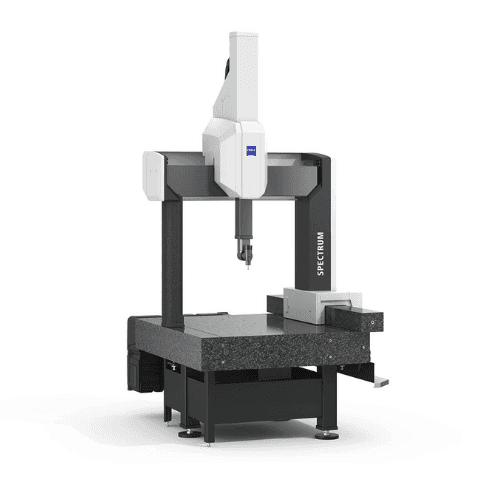
Pick datums that match assembly constraints and how the part is fixtured. Use three mutually perpendicular datums that are stable, accessible, and functional. If a CMM cannot probe it, rethink the datum.
13. How do you decide between worst-case and statistical tolerance stack-up?
Use worst-case for safety-critical fits and low-volume builds. Use RSS for high-volume processes with controlled capability. Always validate with a build check of the closing dimension on first articles.
14. What is the fastest way to do a tolerance stack-up by hand?
Create a 1D loop, set the sign convention, list each contributor at MMC or LMC, then sum. Example: clearance = hole min minus pin max minus position effects.
15. Explain MMC and LMC in one practical sentence.
MMC is the size that contains the most material, like the smallest hole or the largest shaft. LMC is the least material. They matter because fit and bonus tolerance change with actual size.
16. What GD&T control do you use most for hole patterns and why?
Position, because it controls the hole location relative to the datums in a functional way. It also supports MMC for bonus tolerance, which improves manufacturability without breaking assembly.
17. How do you pick a fit type: clearance, transition, or interference?
Start from the function: sliding needs clearance, an accurate location may need transition, and permanent joints need interference. Then check process capability and temperature effects. Micro example: aluminum housing on a steel bearing needs thermal allowance.
18. What is the “datum shift” idea, and when does it help?
Datum shift allows extra positional freedom when datums are referenced at MMC with clearance in the fixture. It helps when a part seats in a larger hole-slot system and functional assembly allows that float.
19. How do you set tolerances without inflating cost?
Match tolerance to function and process capability. Tighten only on functional faces and datums, loosen cosmetics. Ask suppliers for Cp/Cpk guidance and trade tolerance versus a cheaper process step.
20. What’s your quick check for a drawing that will fail inspection?
Look for missing datums, incomplete feature control frames, undefined surface finish, and ambiguous notes. Then, verify the part can be fixtured and measured with the tools the shop actually has.
Materials, Process Choice & DFM
21. How do you select material when strength is not the only driver?
Start with load and environment, then add corrosion, wear, temperature, weight, and supply chain. Compare material plus process cost, not material price alone. Example: 6061-T6 machined vs 6063 extruded.
22. How do you choose between machining, casting, sheet metal, and molding?
Choose by volume, geometry, tolerance needs, and lead time. Machining suits low volume and tight fits. Casting and molding suit volume with draft. Sheet metal suits thin-wall brackets and enclosures.
23. What DFM check catches the most real-world issues early?
A manufacturing walkthrough: minimum tool access, realistic radii, draft angles, standard stock sizes, and fastener reach. If a tool cannot reach it, the feature is a cost multiplier.
24. How do you control cost and lead time without breaking function?
Standardize fasteners and materials, use off-the-shelf bearings and seals, and avoid custom processes. Then relax noncritical tolerances. Track the top cost drivers per part and redesign only those.
25. What surface finish decision is most commonly wrong in drawings?
Overcalling fine Ra everywhere. Specify finish only where it affects sealing, friction, or fatigue. Micro example: leave non-mating faces as-machined, but control Ra on O-ring grooves.
Fasteners, Joints & Load Paths
26. How do you ensure a bolted joint does not loosen in service?
Design for preload, use proper grip length and joint stiffness, and avoid shear in threads. Add locking only if needed, like prevailing torque nuts. Validate with torque-tension data and a vibration test.
27. Torque vs preload: what do you trust in design?
Preload, because it drives clamp force and fatigue. Torque is just an indirect method with high scatter. If preload matters, specify lubrication, use a torque-angle method, or measure bolt stretch.
28. How do you decide if a bolt is in shear or tension in a load path?
Draw the free body and locate the slip plane. If friction holds, the joint is friction-type, and bolts see tension. If it slips, bolts see shear and bearing, so check shear, bearing stress, and edge distance.
29. What causes fastener fatigue failures in real products?
Low preload, joint separation, and bending in the bolt. The fix is higher joint stiffness, better preload control, and moving the load path through clamped members, not through the threads.
30. When do you choose rivets, welds, or adhesives over bolts?
Use rivets for thin sheet metal, welds for permanent structural joints, and adhesives for distributed load with sealing. Choose based on serviceability, heat effects, inspection method, and production rate.
Strength, Fatigue & Reliability
31. What is your go-to method for a clear and free body diagram?
Isolate one part, replace contacts with forces and moments, and label coordinate directions. Apply equilibrium before stress formulas. A clean FBD usually reveals missing constraints and hidden loads.
32. How do you spot stress hotspots before running FEA?
Look for load path turns, sharp corners, holes near edges, and stiffness jumps. Use simple hand estimates on the net section and bearing. Micro example: fillet a shoulder to cut Kt and increase fatigue life.
33. Explain the factor of safety the way a design reviewer expects.
The factor of safety is the margin against the chosen failure mode, using the correct allowable. State load basis, material condition, and environment. Example: FoS = yield/max von Mises for static.
34. How do you decide between static and fatigue as the governing case?
If the load cycles or vibration exist, assume fatigue matters. Check the mean and alternating stress and define the life target. Static governs for one-time peak loads and low cycles below endurance behavior.
35. What is the quickest fatigue sanity check without a full model?
Estimate alternating stress at the notch, apply a stress concentration, and compare to an endurance-based allowable with a mean-stress correction. If it is close, you need better geometry or testing.
36. When do you worry about buckling in mechanical parts?
When members are slender in compression or when thin plates are subjected to compressive stress. Use Euler for columns and check boundary conditions. Micro example: a long standoff may buckle before it yields.
Validation, Correlation & Change Control
37. How do you plan a prototype build to learn the most?
Prototype to reduce risk, not to look pretty. Build the minimum set that tests fit, load path, and assembly. Instrument one critical strain or displacement and compare to your hand calc prediction.
38. What does good test correlation look like for a mechanical part?
Same boundary conditions, same load introduction, and matching measurement points. Compare trends first, then numbers. If stiffness differs, your constraints or material model are wrong, not the math.
39. How do you run a fast failure analysis after a field return?
Preserve evidence, document fracture features, and trace the load and environment history. Then check drawing notes, assembly torque, and material certs. Use one hypothesis at a time and test it.
40. What design review habit prevents late surprises on the shop floor?
Always review with manufacturing and inspection in the room. Walk through fixturing, tools, and gauges. Close with an ECO-ready checklist: critical dims, datums, process notes, and acceptance tests.
FAQs
1) What does a mechanical design engineer do day to day?
Translate requirements into CAD, drawings, and tolerances, then drive design reviews, supplier feedback, prototype builds, test correlation, and release changes. The job is turning ambiguity into buildable hardware with controlled risk.
2) How do I prepare for a mechanical design engineer technical interview?
Practice explaining one project end-to-end: requirement, load path, key tolerances, material and process choice, what failed, and what you changed. Expect a CAD or drawing test and questions on GD&T and fits.
3) How much GD&T should I know for fresher mechanical design engineer interviews?
Know datums, position, profile, flatness, runout basics, MMC/LMC, and why each controls function and inspection. You do not need symbol memorization without meaning, but you must explain a datum scheme clearly.
4) What CAD test tasks are common in mechanical design interviews?
A timed part model, a simple assembly, and a drawing with dimensions, tolerances, and notes. Interviewers look for clean constraints, stable references, and drawings that match manufacturing and inspection reality.
5) Can I use these mechanical design engineer technical interview questions and answers as a PDF?
Yes. Keep this page print-friendly by copying it into a document, preserving the numbering and bold questions. That format also matches how many companies share internal interview prep sheets.
Conclusion
Mechanical design interviews usually come down to one question. Can this person design something that fits, carries a load, and can be inspected without drama? This blog was written to build that exact thinking, from how datums are chosen to how tolerances protect assembly, how preload is defended, and how validation closes the loop. When those choices are explained in plain language, with simple proof behind them, answers stop sounding like textbook recall. They start sounding like real hardware decisions that a team can release.