Process Engineer Interview Questions: PFMEA & SPC Playbook

Deepak S Choudhary
Learn More in This Video
Subscribe to GaugeHow for More
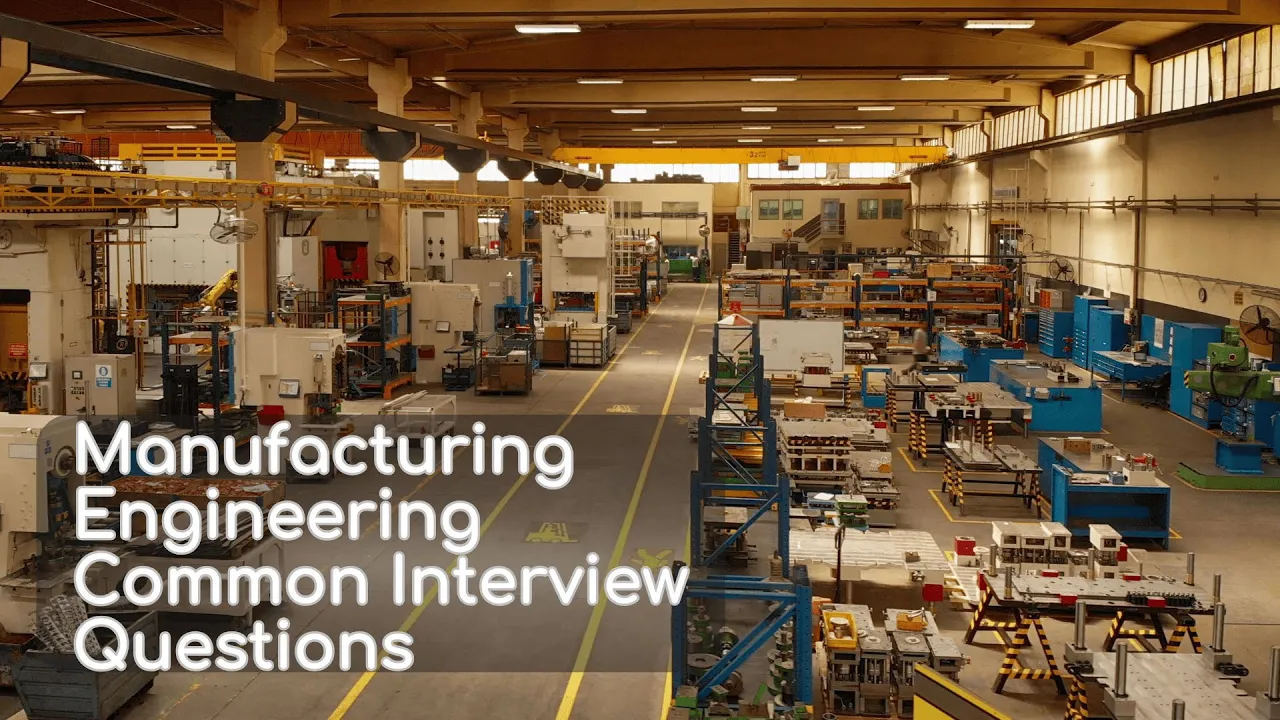
A process engineer improves manufacturing performance by controlling variation, increasing throughput, and locking changes into standards. This blog covers process engineer interview questions and answers on VSM and takt, SPC and Cp/Cpk, PFMEA and control plans, root cause and CAPA, change control and traceability, plus FPY and OEE.
This guide is also for manufacturing and process improvement roles (VSM, SPC, PFMEA, OEE).
Process engineering is the discipline of turning a shop floor into a stable, repeatable system. You remove waste, reduce defects, and protect delivery by building controls that hold across shifts.
Why does a line hit the target output on Monday, then miss it on Tuesday, even when nothing “big” changed?
This guide trains you to answer like an engineer: map flow, find the constraint, prove stability, remove the root cause, and update controls and documents so the gain stays real.
Takt vs Cycle vs Lead Time
Term | What It Means | One Line Example |
Takt Time | Allowed time per unit to meet demand | 450 minutes available and 500 units demand gives 54 seconds takt |
Cycle Time | Actual time a station needs per unit | The station takes 62 seconds, so it cannot meet the 54-second takt |
Lead Time | Total elapsed time from release to ship | A 40-minute process can still take 3 days due to queues |
Process Mapping, Cycle Time, And Bottlenecks
1. How do you calculate takt time for a line?
Divide available production time by customer demand. Example: 450 minutes available and 500 units required gives 54 seconds takt. Use takt to size staffing and expose stations that must be improved.
2. What’s the difference between cycle time and lead time?
Cycle time is the processing time per unit at a step. Lead time includes waits and queues from release to ship. High WIP can make lead time explode while cycle time looks unchanged.
3. Walk me through how you eliminated a bottleneck.
Prove the constraint using WIP buildup and utilization, then remove its top loss first. Example: cut changeover or micro stops at the constraint. Confirm success only when the total line throughput rises.
4. How do you build a value stream map that is useful?
Map material and information flow, then write real-time: value add, queue, uptime, changeover, batch size. A useful map points to one constraint and one of the biggest waste buckets.
5. When do you use Little’s Law in manufacturing?
Use it to sanity check flow: WIP equals throughput times lead time. If measured WIP and throughput predict a lead time far from reality, your time studies or routing dataares wrong.
6. How do you set WIP limits without starving the line?
Base limits on replenishment time and expected variation at the constraint. Keep buffers just large enough to avoid frequent stops. Extra WIP hides defects and stretches lead time.
7. How do you decide to add an operator vs improve the method?
Compare station cycle time to takt. If it exceeds takt due to waste, remove waste first. If work content is unavoidable, rebalance tasks or add parallel capacity.
SPC, Cp/Cpk, And Control Thinking
8. What does process stability mean in SPC terms?
Stability means that only common cause variation is present, and the chart stays predictable. Without stability, capability metrics lie because the process is drifting or being disturbed by special causes.
9. Cp vs Cpk: what’s the practical difference?
Cp measures spread assuming centering. Cpk includes mean shift relative to specs. If Cp is high but Cpk is low, your lever is centered and drift control.
10. When should you not calculate Cp/Cpk?
Avoid it when the process is unstable, data is non-normal without treatment, or measurement error dominates. Fix control and measurement first, then capability becomes meaningful.
11. X bar R chart vs I MR chart: how do you choose?
Use X bar R for rational subgroups, like 5 parts per hour from the same machine. Use I MR for one part per sample or low volume. The wrong chart creates false alarms.
12. If defects rise without a clear cause, what steps do you take?
Contain first, then verify the gauge, then segment data by time, lot, tool, and shift. Use charts and Pareto to narrow to one step. Only then run root cause and confirm with a trial.
13. What is a reaction plan for anout-of-controll signal?
It is the defined stop or contain action, quarantine boundary, verification check, and restart rule. Speed matters. If the plan is vague, alarms become noise, and defects escape.
14. How do you prevent a stable chart from hiding bad output?
Monitor a CTQ or functional output, not just a convenient dimension. Add process monitors that predict failure, like force, torque, temperature, or pressure. A stable wrong process is still wrong.
Root Cause, CAPA, And Corrective Action Closure
15. What is the cleanest way to run 5 Whys?
Each why must be a verifiable condition, not a person. Stop when the cause is controllable by a standard, design change, or maintenance plan. If the last word is “carelessness,” you are not done.
16. Fishbone vs 5 Whys. When do you use which?
Use a fishbone to expand hypotheses across Man, Machine, Method, Material, Measurement, and Environment. Use 5 Whys after you have one leading hypothesis to drill down to the control point.
17. A customer reports an escape. What do you do in the first two hours?
Stop the ship, define the suspect window, quarantine stock, and start trace-based sorting. Confirm measurement validity, then identify the step that created the defect. Containment first, root cause second.
18. How do you prove a CAPA is actually closed?
Closure needs evidence: defect rate stays down, control plan and SOP are updated, training is completed, and audits confirm compliance. If the process can drift back, the CAPA is still open.
19. What does the LOTO mindset look like for a process engineer?
You never assume an interlock is enough. You verify isolation points, confirm zero energy, and require a restart checklist after work. Safety control is part of process control, not a separate topic.
20. What is the difference between correction and corrective action?
Correction fixes the immediate nonconformance. Corrective action removes the root cause so it cannot recur. If you only add inspection, you applied correction and called it a fix.
Lean Waste Removal, Standard Work, And Line Balancing
21. What are the 8 wastes, and which one hides inside “busy work”?
Overproduction, waiting, transport, overprocessing, inventory, motion, defects, and unused talent. Busy work is often overprocessing or motion. If it does not change the part or decision, cut it.
22. How do you create standard work that people actually follow?
Write the best-known method with sequence, timing, and critical quality points, then validate it with operators on the floor. If it ignores constraints, people will invent an unofficial standard.
23. What makes a kaizen event fail fast?
No baseline metric, no constraint focus, and no owner for sustainment. Rearranging work without measuring time and defects creates temporary optimism, not a stable improvement.
24. How do you calculate line balancing efficiency?
Sum of task times divided by the number of stations times the line cycle time. Low efficiency means uneven work content. Use the math to justify task moves and to defend staffing.
25. When does SMED matter most?
When changeovers force big batches and steal available time, if setup is longer than run time, you are scheduling around waste. Separate the internal and external setup to win back capacity.
PFMEA, Control Plans, And Risk Tools
26. How do you start a PFMEA from zero?
Start from the process flow, list each step function, then potential failure modes and effects. Add causes and controls only when you can verify them on the floor. A room built for PFMEA lies.
27. PFMEA vs control plan: What is the link?
PFMEA identifies high-risk failure modes and the prevention or detection controls. The control plan turns those into measurable checks with method, frequency, and a reaction plan. If they do not align, risk is unmanaged.
28. What belongs in a control plan reaction plan?
Trigger condition, immediate containment, disposition rules, and restart approval. Example: stop, quarantine last N lots, verify setup and gauge, run confirmatory parts, then release with sign off.
29. When do you runGagee R and R?
When the measurement drives accept or reject decisions, or when observed variation is close to tolerance. If gage noise is high, you will chase fake process problems and miss real ones.
30. Walk me through how you reduced scrap on a stable process.
Pareto scrap by defect type and step, then attack the top mode with prevention first. Tighten the process window, add error proofing, or improve fixturing. Confirm with sustained FPY improvement.
SOPs, Change Control, Traceability, And Basic Automation
31. How do you write an SOP that survives shift changes?
Use simple steps, clear checkpoints, and a defined verification method. Control the version and train on the critical steps. If the SOP does not match reality, it becomes ignored paperwork.
32. What is an ECR vs an ECN in manufacturing?
An ECR proposes a change and triggers evaluation. An ECN authorizes release with affected documents, part numbers, and an effective date. Mixing them breaks traceability and causes mixed builds.
33. How do you validate a process change without risking output?
Define success metrics, run a controlled trial, compare to baseline with enough data to see drift, then release with updated controls. If you cannot measure it, you cannot improve it.
34. What traceability details do interviews expect?
Lot, date code, machine or line, tool or cavity, shift, and inspection status. Strong traceability lets you contain in minutes and proves change control discipline under pressure.
35. What basic automation and control logic should a process engineer know?
Know feedback loops, setpoint, sensor drift, and why alarms must have a defined action. If a PLC interlock trips often, fix the root cause and tune thresholds so the alarm protects, not annoys.
Yield, OEE, Downtime, And Continuous Improvement Metrics
36. FPY vs RTY: What’s the difference?
FPY is the first pass yield at one step. RTY multiplies yields across steps, so rework loops crush overall yield. RTY exposes hidden factory cost even when each station looks acceptable.
37. How do you calculate OEE and interpret it correctly?
OEE equals Availability times Performance times Quality. Example: 0.90 × 0.95 × 0.98 equals 83.8%. Interpret it at the constraint. High OEE off the constraint does not raise throughput.
38. What is the most common mistake when chasing OEE?
Improving OEE on a non-constraint while the bottleneck stays starved. That builds inventory, not shipments. Start with the constraint, protect it with uptime and quality, then improve upstream and downstream.
39. How do you quantify downtime so it drives action?
Use reason codes, validate them with operator notes, then trend MTBF and MTTR. If one code dominates, fund that fixes first. Bad coding hides the real loss and wastes maintenance.
40. How do you explain a continuous improvement result in one sentence?
State baseline, change, and measured outcome. Example: reduced cycle time from 62 seconds to 52 seconds by setup simplification, raising throughput, and stabilizing output without extra headcount.
Conclusion
A manufacturing process engineer interview is about trust. Show you can map the flow, identify the constraint, control variation with SPC, reduce risk using PFMEA and control plans, and protect traceability through disciplined change control. Keep answers short, numeric, and tied to proof.
FAQs
1) What do process engineer interviews test the most in manufacturing?
They test whether you can reduce variation, increase throughput, and sustain gains with controls. Expect takt, bottlenecks, SPC, Cp, and Cpk, PFMEA to control plan linkage, and OEE loss logic.
2) How do I answer “tell me about an improvement” as a fresher?
Use one project. State the defect or delay, the measurement, the root cause, the change you made, and the control you added. A small verified improvement beats a big vague claim.
3) What are the most common SPC questions in process engineer interviews?
Stability vs capability, chart selection, interpreting out-of-control signals, and reaction plan discipline. Interviewers also probe measurement risk because bad gauges create fake process problems.
4) What is the fastest way to explain the PFMEA and the control plan in an interview?
Say PFMEA ranks risk by failure mode and cause, then the control plan is where those controls become measurable checks with frequency and reaction plans. If they do not match, the risk is not controlled.
5) What metrics should I mention for yield and productivity?
Mention FPY, scrap rate, downtime, and OEE. Tie each metric to an action lever: containment, setup control, preventive maintenance, error proofing, or parameter window tightening. Metrics without levers sound weak.