R&D Mechanical Engineer Interview Questions: VOC to Specs

Deepak S Choudhary
Learn More in This Video
Subscribe to GaugeHow for More
R&D Mechanical Engineering interview questions test how you convert VOC into specs, pick materials from loads, control risk with DFMEA, and prove performance with prototypes, DOE, and DVP&R.
R&D Mechanical Engineering is the discipline of taking an idea, converting it into clear requirements, and building hardware that survives real use. The job blends design, materials, tolerancing, testing, and manufacturing decisions into one accountable workflow.
Have you noticed how R&D interviews jump from “what’s your DFMEA approach” to “show your datum scheme” in minutes, and still expect you to justify trade-offs without guessing?
R&D interviews move fast from specs to failure modes. Here you will practice the decision logic, validation thinking, and design choices that actually hold up in hardware.
Product Discovery And Requirement Flowdown
1. How do you convert Voice of Customer (VOC) into engineering requirements?
Translate VOC into measurable CTQs with units, limits, and a test method, then trace each CTQ to a drawing feature and a validation check. Example: “easy to open” becomes opening torque below 0.6 N·m at 25 °C.
2. What does a “good spec” look like for a new part or assembly?
A good spec states what must be true, how you measure it, and the acceptance limit. Avoid adjectives. If you cannot test it, it is not a requirement.
3. How do you prioritize requirements when they conflict on cost, weight, and performance?
Rank by safety, regulatory, and customer pain first, then by margin impact. Make the trade explicit and lock one primary metric. Example: choose stiffness target over weight when vibration drives failures.
4. How do you start a DFMEA from a blank sheet for a new mechanism?
Define the function, list realistic failure modes, then rate severity, occurrence, and detection based on evidence. Drive actions that change physics or detection, not paperwork. Example: add a hard stop to prevent overload.
5. How do you prevent “pretty but wrong” concepts during early design?
Force a quick load path sketch and a back-of-the-envelope check before CAD detail. If the first order numbers do not close, the model is noise, not insight.
6. What interview story best proves product discovery skills?
Pick a case where you reframed the problem, wrote testable requirements, and killed a feature with data. Show the decision, the metric, and the customer outcome in one thread.
Design And Material Selection
7. How do you choose the factor of safety for an R&D prototype vs production?
Set a lower margin for learning prototypes with tight monitoring, then raise it for production based on uncertainty, usage scatter, and consequence of failure. Example: FoS 1.5 in lab, 2.5 in field.
8. How do you build a load case quickly when data is missing?
Begin with the worst credible use, add misuse loads, then apply a simple free-body model to size the part. Validate with a quick test or strain gauge before finalizing.
9. What is your method to separate static strength from fatigue risk?
Check peak stress versus yield for static, then use stress range and mean stress for fatigue. If load cycles exist, treat sharp notches as fatigue drivers even when static looks safe.
10. How do you pick a material when stiffness, fatigue, and corrosion compete?
Choose the limiting failure mode first, then pick the lowest risk material that meets it with manufacturing reality. Micro example: switch to a coating change before jumping alloys if corrosion is the true driver.
11. How do you decide between aluminum, steel, and stainless steel for outdoor hardware?
Base the call on the environment and the failure consequence. Aluminum saves mass but needs corrosion control at joints. Carbon steel is strong but needs coating. Stainless steel buys corrosion resistance but can gall and cost more.
12. When do you worry about creep or stress relaxation in plastics and elastomers?
Worry when loads are sustained, temperatures are elevated, or the clamping force must hold for months. Example: a plastic snap-fit holding preload at 60 °C will relax and loosen without a design margin.
13. How do you select fasteners to avoid loosening in vibration?
Target clamp load, joint stiffness, and friction first, then add locking only when needed. Example: increase grip length and preload so slip never occurs, rather than relying on threadlocker alone.
14. How do you handle contact, friction, and wear in a mechanism design?
Model contact pressure and sliding distance early, then pick materials and surface finish to control wear. Example: Change the steel-on-aluminum sliding to a bushing interface to stop fretting.
CAD, GD&T, And Tolerance Strategy
15. How do you choose a datum scheme that makes inspection and assembly stable?
Select datums that match the functional interfaces and the assembly constraints, not the easiest surfaces. Example: locate a bracket from the mounting plane and two holes, so the stack-up aligns with the vehicle.
16. What is the fastest way to sanity-check a GD&T callout in an interview?
Ask: what function does it protect, how will it be measured, and what happens at MMC or LMC. If the measurement is unclear or the function is unchanged, simplify the callout.
17. When should you run a tolerance stack-up analysis?
Run it when multiple tolerances align in one functional direction, or when fit and motion depend on gaps. Example: hinge free play sums hole position, pin diameter, and bushing thickness.
18. How do you choose between clearance, transition, and interference fits?
Decide based on load transfer and serviceability. Use clearance for sliding, transition for accurate location, and interference for torque transfer. Example: Press-fit a bearing only if the housing can hold it without cracking.
19. How do you set tolerances without killing cost and yield?
Set tolerances from process capability and functional need, then tighten only the features that control CTQ. Example: hold bore roundness for sealing, but relax non-functional outer profiles to standard tolerance.
20. What makes a drawing “manufacturing-ready”?
It defines datums, critical dimensions, tolerances, material, finish, and inspection notes with no ambiguity. If two people can build it two ways, the drawing is not ready.
21. How do you avoid tolerance stack issues caused by thermal expansion?
Anchor the design to one thermal reference point, allow expansion directionally, and avoid over-constraint. Example: slot one hole in a long plate so it grows without bowing or shifting the critical interface.
22. What’s your approach to selecting a measurement method for tight tolerances?
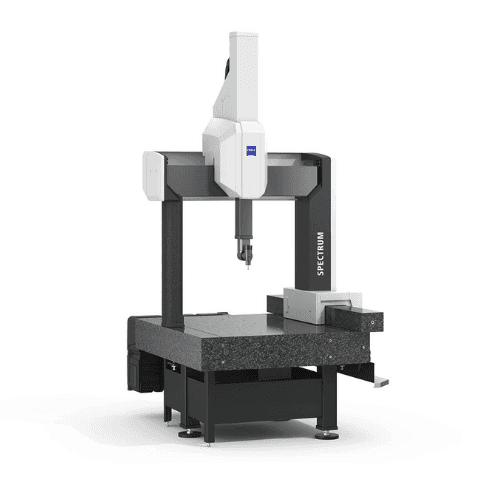
Match the method to the tolerance and datum strategy. Use CMM or gauges for location control, surface plate methods for form, and define fixturing so the measurement repeats the same constraint state.
Prototyping And Test Validation
23. How do you build a verification and validation test plan from requirements?
Map each requirement to a test, analysis, or inspection with acceptance criteria, sample size, and boundary conditions. Example: stiffness spec becomes a load–deflection test at min and max temperature.
24. What is a practical DOE you would run on a prototype?
Pick 2–3 factors that plausibly change the output, choose a small factorial, and measure with repeatability. Example: latch torque versus lubricant type, assembly torque, and surface finish.
25. How do you instrument a test so results are defensible?
Control boundary conditions, calibrate sensors, log raw data, and record uncertainty. Example: for strain gauges, document gauge factor, wiring, and temperature compensation sothe CAE correlation is meaningful.
26. How do you correlate CAE results to test without tuning the model to death?
Align loads and constraints first, then compare trends, not just peaks. If the mismatch persists, fix geometry, material data, or contact assumptions. Example: correct fixture compliance before changing material modulus.
27. What reliability test do you propose when time is short?
Run an accelerated test that targets the suspected failure physics and monitors degradation. Example: cycle a hinge under overload at elevated temperature to expose wear and loosening within days.
28. How do you decide when a prototype is “good enough” to release?
Release when critical requirements are met with margin, key risks are retired, and remaining unknowns have containment plans. If the failure consequence is high, delay the release until the evidence is closed.
Manufacturing And DFM/DFA Decisions
29. How do you pick a manufacturing process early, before final geometry exists?
Start from material, tolerance, volume, and cost targets to shortlist processes, then co-design geometry for the process. Example: choose die casting only when draft, wall thickness, and tooling lead time fit.
30. What DFM change gives the biggest payoff in real products?
Reduce part count and special operations. Fewer unique parts usually beat tighter tolerances. Example: replace multiple fasteners and a spacer with a single formed tab that locates and retains.
31. How do you work with suppliers to avoid late surprises?
Share critical dimensions and test intent early, ask for process capability, and lock a control plan. Example: review tooling, split line, gates, and inspection datums before the first article run.
32. How do you balance performance with manufacturability when the shop says “no”?
Revisit the CTQ and redesign the feature to be robust to variation. Example: replace a sharp corner with a generous fillet and add a locating boss so machining and assembly repeat cleanly.
33. What is your approach to cost-down without breaking reliability?
Protect the failure modes first, then remove cost from noncritical features. Example: keep sealing surface finish, but change cosmetic machining to as-cast and simplify fastener grade where loads allow.
34. How do you think about yield during R&D, not after launch?
Design so that small variations do not flip the function. Example: add a lead-in and increase latch overlap so tolerance drift still produces a positive lock.
Root Cause And Field Failures
35. How do you handle a field failure when data is messy and emotional?
Stabilize with containment, then recreate the failure with a controlled test. Separate symptom from mechanism. Example: “cracked bracket” becomes “fatigue from out-of-plane load due to misalignment.”
36. How do you run a 5-Why without stopping at a convenient answer?
Drive each “why” to a controllable design or process cause, and demand evidence at each step. If the cause cannot be acted on, keep drilling until it can.
37. What corrective action is strong enough to prevent recurrence?
A strong action changes the system so that the failure cannot happen or is detected before shipping. Example: add a poka-yoke feature and a go/no-go gauge, not just a reminder in a work instruction.
38. How do you decide between redesigning a part vs fixing the process?
Choose the option that removes the dominant root cause with the least residual risk. Example: redesign a notch-sensitive part, but tighten process control when variation is uncontrolled, and the design is already robust.
Execution, Reviews, And Change Control
39. What makes a design review effective in R&D?
An effective review tests assumptions, load paths, tolerances, and test evidence, not slide aesthetics. Bring one page: requirements, risks, open decisions, and the next validation step.
40. How do you manage change control without slowing innovation?
Freeze interfaces and requirements, version CAD and drawings, and use a change log tied to test results. Example: approve geometry changes only after showing impact on CTQs and updating validation evidence.
Conclusion
The questions in this blog were selected to reflect what R&D work feels like day to day. Requirements are rarely perfect, tolerances are never free, and testing has to answer real risk, not curiosity. The core learning is to connect design intent to what can fail, and then to what “pass” truly means. When that connection is clear, answers land with confidence. It sounds like someone who has built parts, learned from issues, and improved the next revision.
FAQs
1) What does an R&D mechanical engineer do?
They translate customer needs into requirements, design and tolerance parts, prototype rapidly, validate with tests, and drive fixes through manufacturing constraints so the final product works reliably in real use.
2) How do I prepare for an R&D mechanical engineer interview?
Prepare one project story that shows requirement flowdown, DFMEA thinking, key design calculations, a validation test plan, and one failure you diagnosed and fixed. Interviewers want decision logic, not theory.
3) What topics are most asked in mechanical product development interviews?
Expect VOC to specs, DFMEA, loads and fatigue, GD&T and stack-ups, DFM/DFA trade-offs, prototype validation, supplier issues, and field-failure root cause with corrective actions.
4) How should I answer “walk me through a project”?
Frame it as: problem, requirements, concept choice, key calculations, tolerance strategy, prototype test, what failed, what you changed, and the final validation result. Keep it measurable and sequential.
5) What mistakes fail candidates in R&D mechanical interviews?
Common fails are vague specs, no load-path reasoning, over-tolerancing, “converged” CAE without validation, weak test planning, and blaming manufacturing instead of designing for variation and evidence-based decisions.