Feeler Gauge – How To Measure Gaps And Clearance
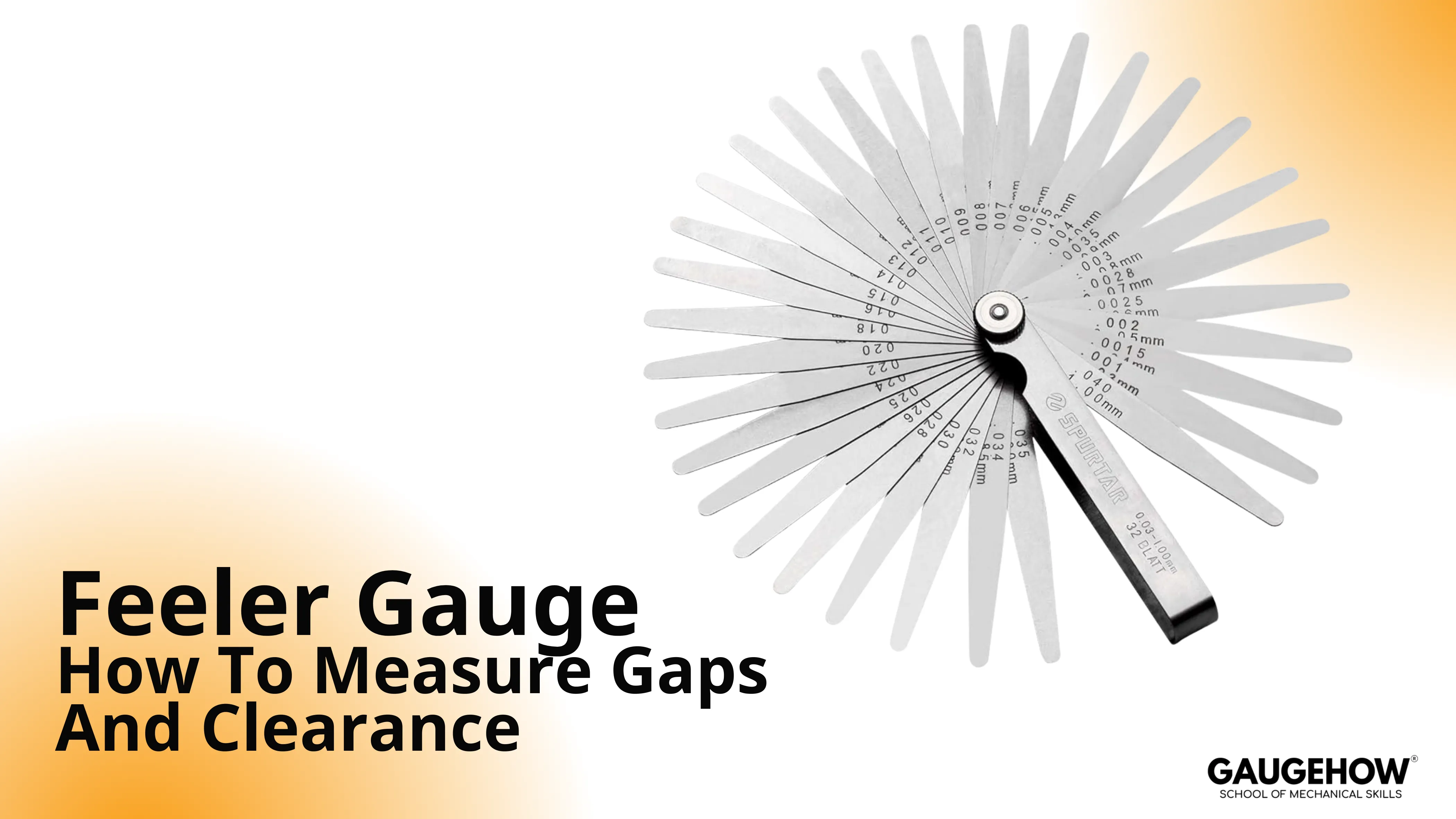
A feeler gauge measures small clearances by testing fit with known-thickness blades. The correct reading is the thickest blade that slides with uniform light drag, confirmed by the next thickness that will not enter without force. Clean surfaces, straight insertion, and repeatable feel protect accuracy.
Clearance checks fail for predictable reasons: surface film, burrs, blade tilt, and inconsistent pressure. A good method removes those variables and turns “feel” into a repeatable result.
This guide explains the tool, the measurement mechanism, and the operating habits that prevent false readings.
It also covers common applications in engines and general maintenance work, plus sizing and unit systems, so the selected blade thickness matches the specification.
What Is A Feeler Gauge?
This tool is a set of blades with known thickness, used to verify the clearance between two nearby surfaces through controlled fit.
The output in real work is a bracketed result: one thickness that moves with uniform light drag, plus the next thickness that clearly becomes a no-go.
Sets matter because clearance is rarely proven by one blade.
Step sizes provide resolution, and multiple blades make it possible to bracket the result instead of accepting a single “fits once” reading.
Feeler Gauge Least Count
Least count is the smallest thickness step your set can resolve as a meaningful increment. Practically, it defines the tightest go/no-go bracket that can be produced with that set.
In metric sets, minimum blades are commonly 0.05 mm on standard workshop sets, while finer sets often start at 0.01 mm to 0.03 mm for tighter checks.
In inch-marked sets, minimum blades are commonly around 0.001 in, with finer sets reaching about 0.0005 in.
Meaning: The smallest step between adjacent blades in the set
Role: Sets the resolution of the bracketed reading
Practical effect: Coarse steps widen uncertainty; fine steps narrow it
Best practice: Record both the “go” and the “no-go” thickness, not a single value
Common confusion: Least count is resolution, not guaranteed accuracy
A quick way to use least count correctly is to look at the step pattern, then compare it to how tight the decision needs to be.
When the step size is large relative to the tolerance window, the measurement can only confirm a wide bracket. In that situation, the correct action is not to force a tighter “feel.” The correct action is to use a finer-step set or a different method.
Micro-example:
A clearance is checked, and 0.20 mm slides with uniform light drag, while 0.25 mm will not enter without force. Record the bracket as Go: 0.20 mm, No-Go: 0.25 mm, not “0.20 mm exactly.”
Feeler Gauge Diagram

A feeler gauge diagram is useful only when parts are tied to measurement errors. Each part below maps to a failure mode that creates false drag and false confidence.
1. Blade (Leaf/Shim): This is the thickness standard that creates the measurement. The blade must stay flat and straight. A kink, bend, or ripple changes contact pressure, so the blade can feel tighter than it should, even when the clearance is correct.
2. Thickness Marking: This marking defines the value being tested. It should be read before insertion. Reading after insertion often leads to mixing up adjacent sizes, especially when several blades are fanned out or overlapping.
3. Pivot/Holder: This keeps the blades organised and protected, but it can force a bad approach angle. When the blade is not opened far enough, the holder pushes the leaf into the gap on a tilt, which turns the fit check into a wedge and increases friction.
4. Entry Edge: This is the first edge that touches the surfaces. Burrs, nicks, or roughness here can catch and imitate “tight clearance.” A damaged entry edge is a common reason a blade becomes a false no-go.
5. Blade Face: This is the working surface that must sit parallel to both gap faces. Any twist or side load prevents flat contact. Instead of sliding smoothly, the blade wedges or drags unevenly, and friction replaces thickness as the dominant signal.
6. Contact Surfaces: These are the two faces forming the gap. Oil film, dirt, and fine debris increase drag without changing the true clearance. Burrs and raised edges create localised interference that can make a correct gap feel tight.
7. Insertion Path: This is the direction the blade travels into and through the gap. A straight, consistent path keeps pressure balanced. Side-loading pushes the blade harder against one face, changing friction and destroying repeatability even if the clearance itself is stable.
Used correctly, the diagram becomes a quick self-audit before accepting a number. When repeatability fails, the cause is usually visible here: a tilted blade, contaminated faces, or a damaged edge that changes friction.
Feeler Gauge Use
In practical work, feeler gauge use is a controlled fit check for small clearances. The tool answers one question: does a known thickness belong in the gap with uniform light drag, and does the next thickness clearly reject as a no-go?
Bracketed Clearance Check
Best for verifying a spec window on a small gap. Step up in thickness until the first clean no-go appears. Record both values because the bracket is the decision.
Adjustment Verification
Best for settings that move when fasteners are tightened. Confirm the target blade still gives uniform drag after the lock step. A one-step thicker blade should remain a no-go.
Quick Wear Screening
Best for fast checks during maintenance when a setup for full measurement is not justified. Check the tightest point and compare to spec behavior. A shift in go/no-go behavior signals a clearance change worth investigating.
Validity boundary: angled insertion changes friction signature and can imitate tight clearance. Flat contact and straight entry restore a trustworthy feel.
Feeler Gauge Types
Different forms exist for one reason: access. The measurement principle stays the same, but blade shape and stiffness change how easy it is to keep contact flat and drag uniform.
Blade Type
Blade sets suit general clearance checks because a flat leaf can sit against flat faces and provide a stable drag signature. Problems start when the blade is twisted to reach the gap, because twist turns a thickness check into a wedge.
Wire Type
Wire-style gauges fit well where a flat blade is awkward, especially in tight plug-style areas. They require careful seating, because a round contact changes how drag feels and where the contact pressure sits.
Angled Or Offset
Offset tips solve reach problems, but they increase operator influence. Side-loading adds friction, and friction can imitate tight clearance. The working goal is still straight entry at the contact, even if the handle approaches from an angle.
Plastic
Plastic blades reduce the chance of scratching sensitive surfaces and can be useful where corrosion protection matters. Durability and stiffness are the tradeoff. When stiffness is inconsistent, drag becomes inconsistent, and the bracket becomes harder to confirm.
Sets Vs Individual Blades
A set is the diagnostic tool because it provides the steps needed to bracket a result. Individual blades make sense as replacements later, especially for frequently used sizes, but a missing step can remove the ability to confirm a no-go.
🔧 Trusted by 23,000+ Happy Learners
Industry-Ready Skills for Mechanical Engineers
Upskill with 40+ courses in Design/CAD, Simulation, FEA/CFD, Manufacturing, Robotics & Industry 4.0.
How To Use Feeler Gauge
How to use feeler Gauge correctly is a controlled fit test, not a force test. The goal is a bracketed result: the thickest blade that moves with uniform light drag, confirmed by the next thickness that becomes a no-go without forcing.
Go / No-Go Method
Start slightly below the expected clearance. Insert the blade flat, at the true contact location, using steady light pressure.
If movement feels uniform with light drag, step up. When the next thickness will not enter without force, the last thickness that moved correctly is the “go” value.
The method works because it creates a decision boundary.
One thickness is clearly acceptable, and the next thickness is clearly rejected under the same insertion conditions.
Feeler Gauge Technique
The feeler gauge technique is a controlled fit test, not a force test.
The blade must enter straight, remain flat, and slide with uniform light drag. The correct reading is the thickest “go,” confirmed by the next thickness that becomes a “no-go” without forcing.
“Blade control matters more than hand strength”.
Tilt, twist, and rocking change friction, and friction is not clearance. A clean bracket comes from consistent geometry.
Engineer’s Wedge
Same blade, same gap, same feel across three passes. When repeatability fails, the measurement is not valid yet. Setup needs correction before any clearance value is recorded.
Reading Error Causes
False readings come from predictable mechanisms. Oil film increases drag without changing the true gap.
Burrs grab the entry edge and imitate tight clearance. Blade tilt wedges the leaf and creates artificial resistance. Kinks change local contact pressure and distort feel.
A stable check removes variables first. Clean contact faces, use a flat blade surface, and insert in one controlled direction.
When the bracket appears reliably, the reading can be recorded with confidence.
When To Stack Blades
Stacking can work to create a temporary combined thickness, but alignment becomes harder, and friction increases.
Stacks should stay flat and should only be used when access allows controlled seating.
A stacked “go” needs the same confirmation logic as a single blade. A thicker stack should become a clear no-go under the same conditions.
When the bracket cannot be confirmed, stacking adds uncertainty rather than value.
Blade Care And Damage Checks
The blades are the standard thickness.
Dirt, corrosion, kinks, and rough edges change drag and distort the bracket. Blades should be clean before use and protected from bending during storage.
Edge condition matters most at the entry. A small burr can create a snag that feels like tight clearance.
When a blade behaves inconsistently, replace it rather than trying to interpret a compromised surface.
Common Mistakes
Forcing a blade, inserting at an angle, rocking to “see if it fits,” and measuring through oil film are the usual causes.
Measuring on curved or uneven faces is another quiet failure mode because contact becomes partial and drag becomes misleading.
A reliable habit is to treat the tool as a comparison standard, not a pry bar.
When the bracket is clean and repeatable, the reading becomes actionable.
Using a Feeler Gauge For Valve Clearance
Using a feeler gauge for valve clearance starts with reaching the correct measurement position for the specification, then inserting the blade at the specified contact point with the leaf kept flat.
The correct feel is uniform light drag, not a tight jam and not a free slip.
Adjustment decisions follow the bracket. A no-go at the specified thickness indicates tight clearance, while free slip suggests loose clearance.
After any adjustment, the bracket needs to be confirmed again because tightening can shift the result.
Feeler Gauge For Spark Plug Gap
A feeler gauge for spark plug gap works when the blade seats at the true electrode gap and remains straight.
The correct thickness slides with light drag, and the next thicker blade should not enter without forcing.
After any electrode adjustment, the gap needs to be rechecked.
Adjustment changes geometry, and only the final bracketed check is meaningful.
Feeler Gauge Sizes
Size ranges matter for coverage, but step pattern matters for resolution.
A set can cover a wide span and still be hard to use if the steps are coarse and the bracket cannot be tightened.
Blade length and width affect control. Longer leaves reach deeper but flex more easily.
Shorter leaves are stiffer but may not reach the measurement point. The usable range is the range that can be inserted flat and controlled at the true contact.
Metric And Imperial Feeler Gauges
Metric blades read in millimetres, and inch-marked blades commonly read in thousandths of an inch.
Dual-marked sets are convenient, but consistency matters more than convenience.
Unit mistakes are avoidable. The specification unit system should be chosen first, and blade selection should stay within that unit system throughout the full bracket.
Mixed units mid-check lead to wrong blade choice and false confidence.
What Is The Best Feeler Gauge For You?
Selection becomes simple when based on role and failure modes. The best choice is the one that can be inserted flat, held straight, and used to bracket a result reliably for the clearances that appear most often.
Role | Used For | Best Fit | Advantages | Failure Modes |
General Clearance Checks | Flat gaps on accessible parts | Blade set | Easy bracketing, stable feel | Tilted insertion creates a false tight |
Tight Access Clearances | Recessed gaps, limited approach | Offset/angled blades | Reaches difficult points | Side-loading changes friction signature |
Plug-Style Gaps | Electrode-style checks | Wire style | Fits tight plug geometry | Seating error, friction-heavy feel |
Delicate Surfaces | Soft finishes, non-marring needs | Plastic blades | Reduced marking risk | Deformation, inconsistent stiffness |
Mixed Unit Environments | Shops handling both specs | Dual-marked set | Convenience across jobs | Unit mixing leads to wrong blade choice |
High-Repeat Maintenance | Frequent checks on known specs | Set plus common replacements | Fast routine checks | Worn edges and kinks distort drag |
A practical buying rule is to select by access first. When the blade cannot sit flat, no material or brand choice can rescue the measurement.
A later standalone feeler gauge mention belongs here because the decision point is selection for repeatable use, not just definition.
Frequently Asked Questions
1. Does Stacking Blades Give A Correct Reading?
Stacking can work for a quick bracket, but alignment becomes harder, and friction increases. Use stacking only when access allows flat contact, then confirm with a thicker stack that becomes a clear no-go.
2. What Thickness Should Feel “Correct” In The Gap?
Correct fit is uniform light drag across motion, not a tight jam and not free slip. A proper reading feels consistent in repeated passes and changes clearly when stepping one blade size up.
3. Why Do Readings Change Between Attempts?
Inconsistent readings usually come from blade tilt, oil film, surface debris, burrs, or a kinked blade. Fix the setup, clean the surfaces, and repeat until the same go/no-go bracket appears reliably.
4. Can A Feeler Gauge Set Spark Plug Gap Accurately?
Yes, when the blade seats at the true electrode gap and alignment stays straight. After any electrode adjustment, recheck. A correct gap shows light drag, and the next thicker blade should not enter.
5. How To Choose Between Metric And Imperial Sets?
Choose the unit system that matches the specification and stay consistent throughout the measurement. Dual-marked sets help, but mixing units mid-check causes wrong blade selection and false confidence.