How to Become an Automation Engineer: Step by Step Guide
Learn More in This Video
Subscribe to GaugeHow for More
Every production line that runs with fewer people, fewer errors, and more consistent output has an automation engineer behind the systems that make it possible.
This role sits at the intersection of mechanical, electrical, and software engineering, and it rewards people who like making machines work together with as little manual intervention as possible.
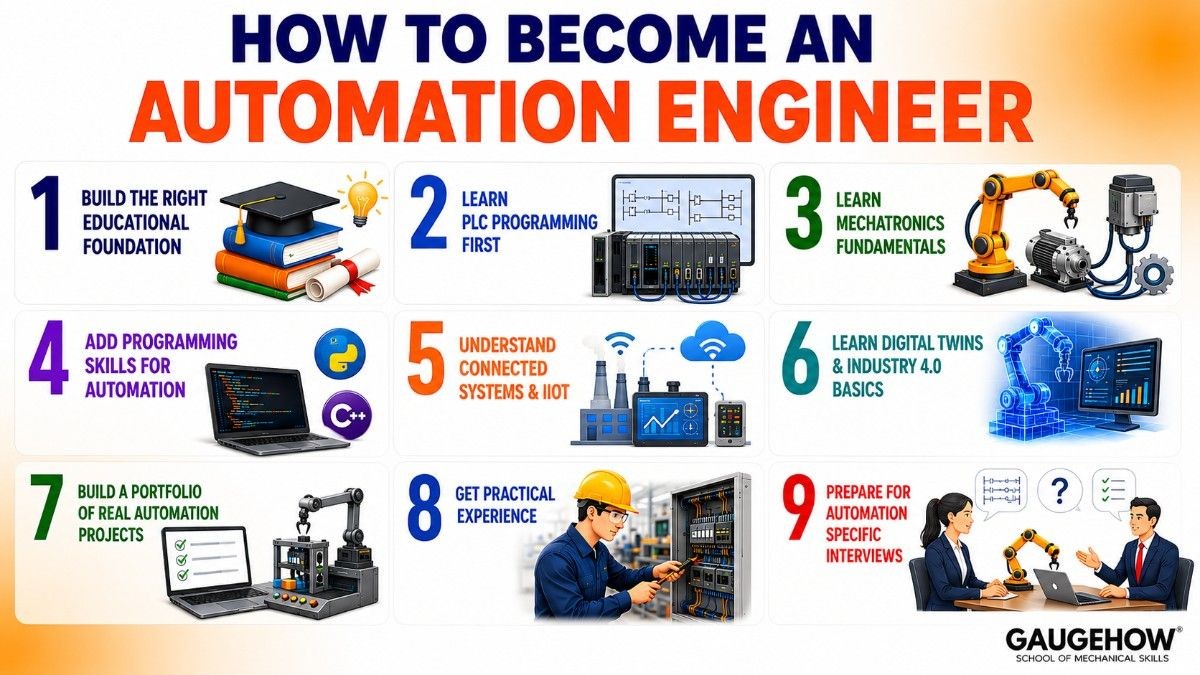
If you want a clear answer to how to become an automation engineer in 2026, this guide from GaugeHow walks through the education, tools, and career stages step by step.
What Does an Automation Engineer Actually Do?
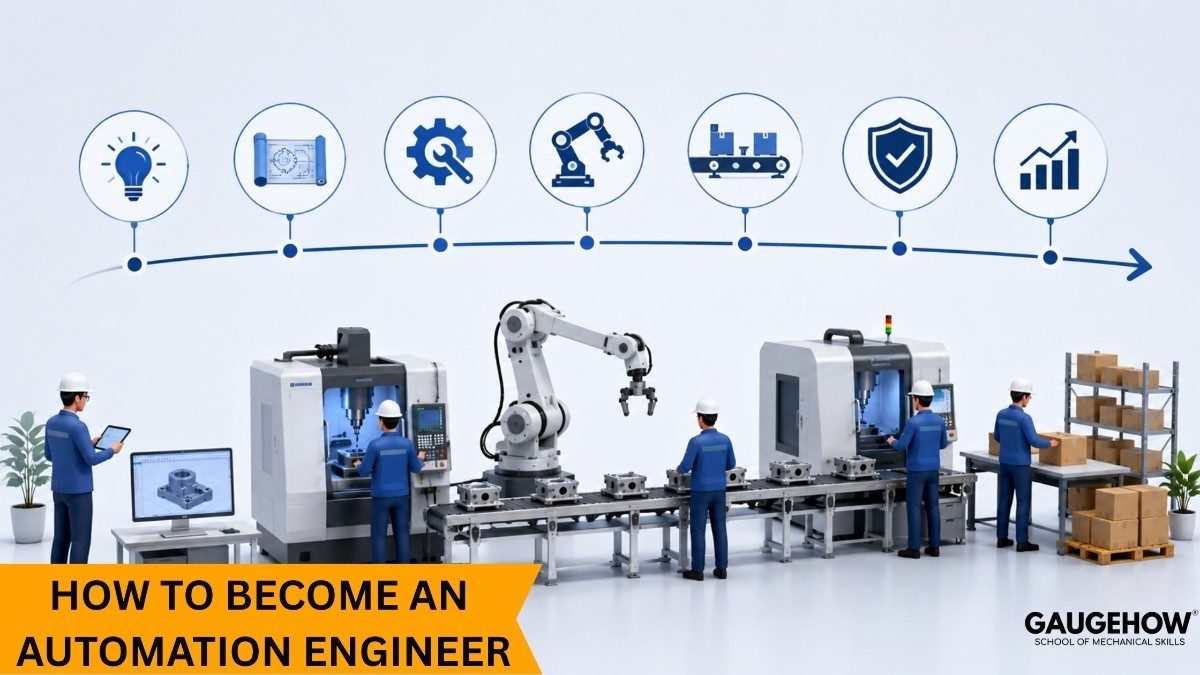
An automation engineer designs, programs, and maintains systems that control machines and processes automatically, with minimal human input.
This includes programming PLCs that control machinery, integrating sensors and actuators, building basic robotic or mechatronic systems, and connecting equipment to data collection systems for monitoring and control.
Automation engineers work across automotive, electronics, packaging, and general manufacturing, and the exact mix of skills needed depends on whether the role leans more toward industrial control systems, robotics, or connected factory data.
How to Become an Automation Engineer: Step 1, Build the Right Educational Foundation
A bachelor's degree in mechanical, electrical, mechatronics, or instrumentation engineering is the most common starting point.
During your degree, pay close attention to basic electrical circuits, control systems, and programming fundamentals, since these subjects show up constantly once you start working with real automated equipment.
This foundation is what lets you understand why a control system behaves the way it does, not just how to wire it up by following a manual.
Step 2, Learn PLC Programming First
This is the single most important skill in the entire roadmap, since PLCs form the backbone of most industrial automation systems.
Our PLC Programming and Automation course covers how programmable logic controllers are programmed and used to control real machinery, from basic ladder logic through practical automation sequences.
Almost every automation engineering job posting expects at least foundational PLC skills, which makes this the natural starting point before anything else.
Step 3, Learn Mechatronics Fundamentals
Automation engineering blends mechanical, electrical, and control system knowledge, and mechatronics is the discipline that ties these together.
Our Mechatronics for Beginners course introduces how sensors, actuators, and controllers work together in a real automated system, which gives you the conceptual foundation to understand any automated machine, not just the specific one you happen to be working on.
Step 4, Add Programming Skills for Automation Logic
Modern automation increasingly goes beyond simple PLC logic into scripting and custom control logic, which makes basic programming skills valuable early on.
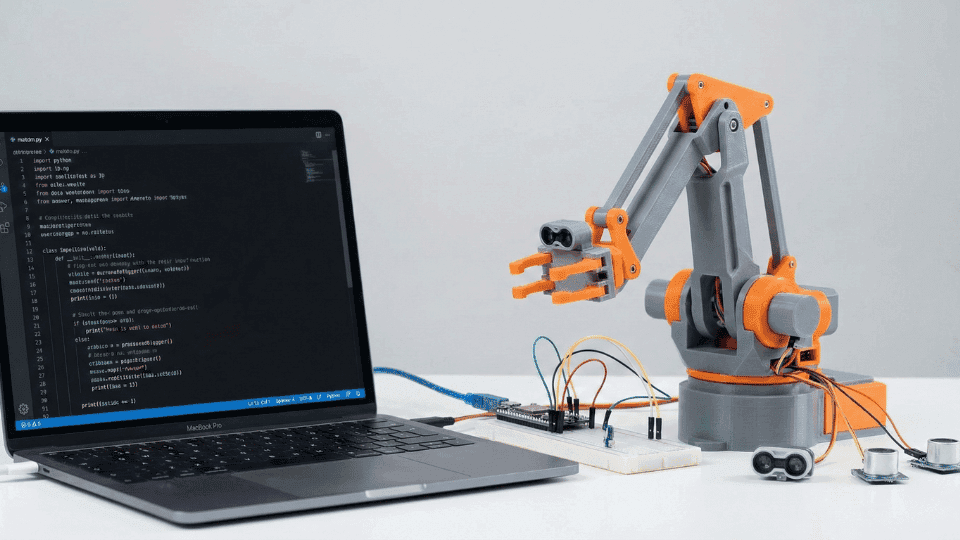
Python is widely used for automation scripting, data logging, and connecting automated systems to broader software tools. Our Python for Mechanical Engineers & Robotics course is a practical starting point built specifically for engineers rather than pure software developers.
C and C++ are commonly used in embedded automation systems and microcontroller programming, especially where speed and low level hardware control matter. Our C and C++ for Mechanical Engineering course covers this from an engineering perspective.
You do not need to master both languages immediately, but comfort with at least one gives you a real edge over candidates who only know PLC ladder logic.
Step 5, Understand Connected Systems and IIoT
Modern automation is increasingly about connected machines that share data, not just isolated control loops.
Our Industrial Internet of Things (IIoT) course covers how sensors and equipment connect to broader data systems, which is quickly becoming a standard expectation for automation engineers working in modern, data driven factories.
Step 6, Learn Digital Twins and Industry 4.0 Basics
Automated systems today are frequently paired with digital models that simulate and monitor their real world performance.
Our Digital Twins course and Introduction to Industry 4.0 course help you understand how automation fits into a broader connected, smart factory environment, a perspective that is increasingly expected of automation engineers beyond just programming a single machine.
Step 7, Build a Portfolio of Real Automation Projects
Automation engineering is provable through working systems, not just certificates.
Document two or three real or practice projects that show an automation problem, such as automating a repetitive process or building a simple sensor based control system, the PLC logic or code you wrote, and the result, including any issues you solved along the way.
This kind of concrete example is exactly what interviewers ask for, and most fresh candidates only have generic textbook answers ready instead.
Step 8, Get Practical Experience
An internship or entry level role in an automation, controls, or maintenance department is the fastest way to see how these systems actually behave under real production conditions, including troubleshooting a system that stops working unexpectedly.
If a formal internship is not available, look for opportunities to build small automation projects with accessible hardware, since hands on experience with real sensors and controllers builds intuition that no course alone can fully replace.
Step 9, Prepare for Automation Specific Interviews
Automation engineer interviews usually test three things. First, your PLC and control logic knowledge, such as how you would program a basic sequencing operation. Second, your troubleshooting ability, since interviewers often present a system failure scenario and ask you to walk through your diagnostic process.
Third, your understanding of how automation fits into a broader connected system, including data collection and monitoring. Practice with real questions on the Interview Q&A Hub before your first interview.
How to Become an Automation Engineer: Career Growth by Stage
Stage | Experience | What Changes |
|---|---|---|
Junior Automation Engineer | 0 to 2 years | Learning PLC programming, basic troubleshooting under supervision |
Automation Engineer | 2 to 5 years | Owns automation projects independently, integrates sensors and control systems |
Senior Automation Engineer | 5 to 8 years | Leads complex automation and IIoT projects, mentors juniors |
Lead or Principal Automation Engineer | 8 plus years | Sets automation standards, technical authority across projects |
Automation Manager | 8 plus years, people track | Leads an automation team, manages resourcing and project priorities |
Around the 5 to 8 year mark, most automation engineers pick a direction. The individual contributor path means going deeper into a specific area, such as advanced PLC systems, robotics integration, or IIoT architecture, and becoming the specialist others rely on.
The management path means moving into leading an automation team and planning project priorities. Both build on the same roadmap.
How to Become an Automation Engineer: Salary Expectations in India
Salary figures vary by source, city, and sector, but the general pattern across recent salary data is consistent:
Career Stage | Approximate Annual Salary (India) |
|---|---|
Fresher, 0 to 2 years | 3 to 6 LPA |
Mid level, 2 to 5 years | 6 to 12 LPA |
Senior, 5 to 8 years | 12 to 20 LPA |
Lead or Principal, 8 plus years | 20 LPA and above |
Automation engineers who combine PLC skills with programming knowledge and IIoT or robotics exposure tend to land at the higher end of each band, especially in automotive, electronics, and high volume manufacturing companies investing heavily in smart factory systems.
FAQ: How to Become an Automation Engineer
Q: Do I need a specific degree to become an automation engineer?
A: A bachelor's degree in mechanical, electrical, mechatronics, or instrumentation engineering is the most common route. Some companies also hire strong candidates from diploma programs with solid hands on PLC and controls experience.
Q: Should I learn PLC programming or Python first?
A: Start with PLC programming, since it is the foundation of most industrial automation systems. Python becomes valuable soon after, especially for scripting, data logging, and connecting automation systems to broader software tools.
Q: Is robotics knowledge necessary to become an automation engineer?
A: Not always required at entry level, but understanding mechatronics fundamentals, which cover sensors, actuators, and controllers, gives you a strong base that transfers directly into robotics work if you choose to specialize there later.
Q: How important are IIoT and digital twin skills for a fresher?
A: Not essential on day one, but understanding these concepts early gives you a real advantage, since more employers now expect automation engineers to think about connected data, not just isolated control loops.
Q: How long does it take to become job ready as an automation engineer?
A: With focused practice, most graduates can build a solid, interview ready portfolio in 6 to 12 months by combining PLC programming, one programming language, and at least one complete automation project.
Conclusion
Becoming an automation engineer comes down to a clear sequence: strong fundamentals in electrical and control systems, real PLC programming skill, comfort with mechatronics and at least one programming language, and growing awareness of IIoT, digital twins, and Industry 4.0. Build a portfolio of real automation projects, and the path from fresher to senior automation engineer becomes far more predictable.
Start Building Your Automation Engineer Skills With GaugeHow
Explore the full Automation & Robotics Engineer career track on GaugeHow for a structured route through the PLC, mechatronics, and connected systems skills covered in this guide.
Mechanical Engineering Courses That Industry Actually Uses
Learn Tools of Design & CAD, Analysis & Simulation, Automation & Robotics, and Industry 4.0 used in modern factories.
Join 40+ Mech Courses like GD&T, Siemens NX, SolidWorks, CATIA V5, AutoCAD, ANSYS (FEA & Fluent), ABAQUS, Creo, Fusion 360, CNC Programming, Digital Twins, Python for Mechanical, and Industry 4.0.
Our Courses
Complete Course Library
Access to 40+ courses covering various fields like Design, Simulation, Quality, Manufacturing, Robotics, and more.