
Mechanical Engineering Career Roadmap: From Student to Industry Expert
Learn More in This Video
Subscribe to GaugeHow for More
Wondering what your mechanical engineering career actually looks like over the next ten or fifteen years, not just the next semester? You are not alone. Most guides focus on a single moment, getting through school or landing that first job, without showing how the whole journey connects from student to genuine industry expert.
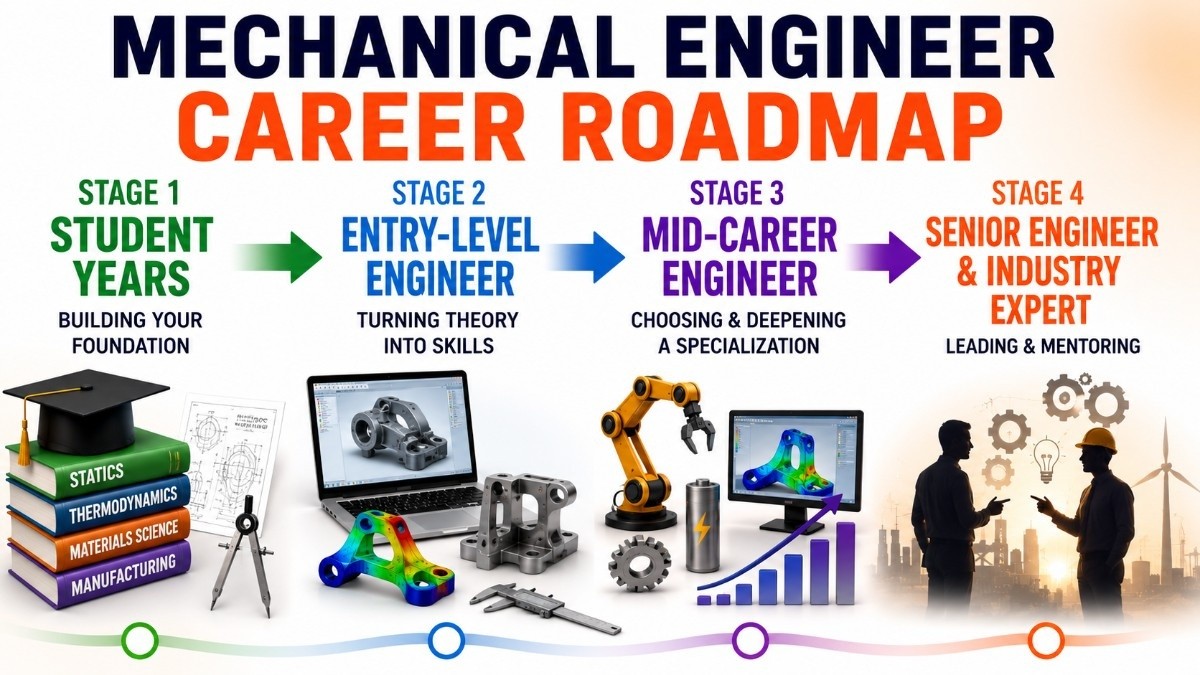
This roadmap walks through four real career stages: student, entry-level engineer, mid-career specialist, and senior expert. Each stage builds directly on the one before it, so you always know what to focus on next instead of guessing.
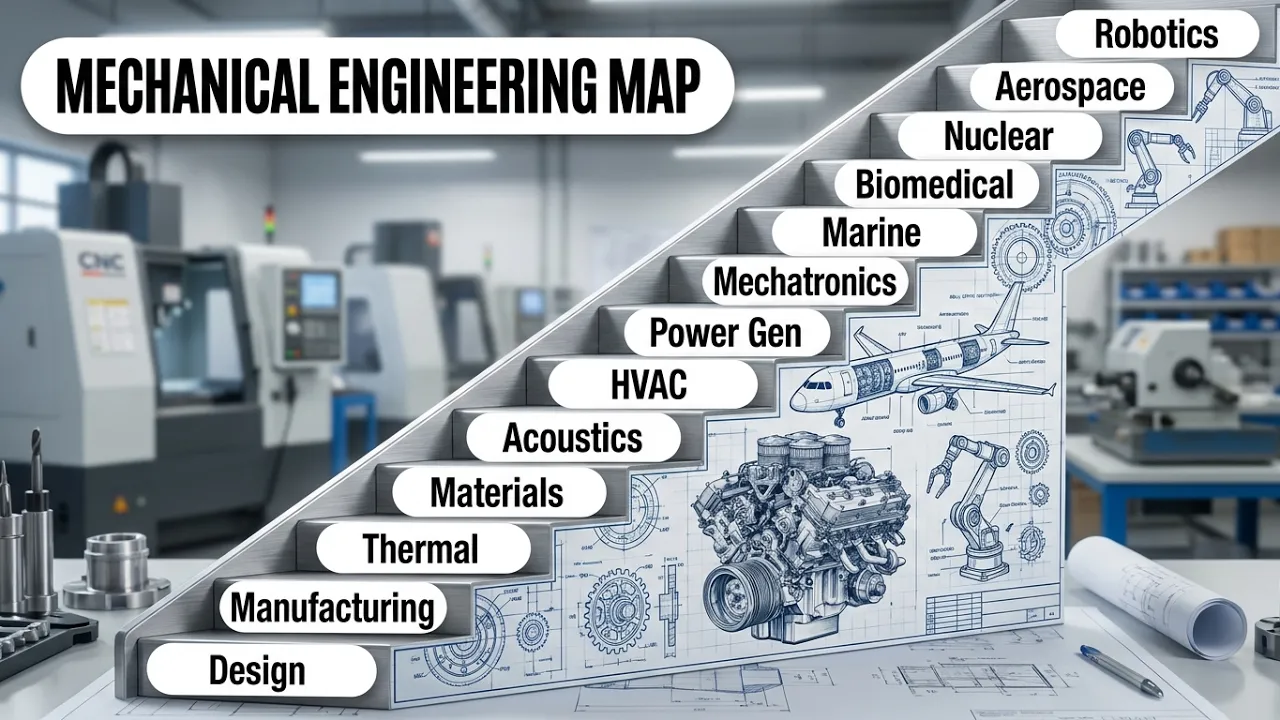
Mechanical Engineering Career Roadmap
Stage 1: The Student Years, Building Your Foundation
What to Focus On Academically
Your degree covers the theory every later stage depends on: statics, dynamics, thermodynamics, and materials science. Do not rush through these to get to the "practical stuff" faster.
A shaky theoretical foundation shows up years later as gaps that are much harder to fix once you are working full time. Prioritize electives in manufacturing processes and control systems, since these connect directly to real job requirements later.
Start Learning Practical Tools Early
You do not need to wait until graduation to start building job-ready skills. If you want a low-pressure way to explore what practical engineering work actually looks like, GaugeHow's Free Course is a good starting point.
Beyond that, getting comfortable with a CAD platform like AutoCAD while you are still studying gives you a real head start over classmates who wait until their final year.
Stage 2: Entry-Level Engineer, Turning Theory Into Skills
Master CAD and GD&T
This is where most of your first year on the job actually happens. You need to move beyond viewing models to confidently designing parts and assemblies, and you need to understand tolerancing well enough that your designs assemble correctly at scale, not just in a single prototype.
The SolidWorks 2024 course and GD&T and Engineering Graphics course build exactly these two foundational skills.
Learn Simulation and Manufacturing Basics
Entry-level engineers who understand how their designs get validated and manufactured make far fewer costly mistakes. The FEA with ANSYS course covers basic structural validation, and the CNC Programming course helps you understand what happens to your design after it leaves your CAD software.
Build a Portfolio Project
By the end of this stage, you should have at least one project you can walk through confidently in an interview or performance review, a redesign that reduced weight, a simulation that caught a real problem, or a process improvement you contributed to.
This single project usually matters more to your next career move than any certificate.
Stage 3: Mid-Career Engineer, Choosing and Deepening a Specialization
Pick a Specialization Path
By this point, you likely have a sense of which kind of work energizes you most: design, simulation, quality, production, automation, EV systems, or connected digital manufacturing.
GaugeHow has a dedicated career track for each of these seven directions, including the Design Engineer career track, CAE / Simulation Engineer career track, Quality Engineer career track, and Production Engineer career track.
Go Deep in Your Chosen Area
Whichever path you choose, mid-career progress comes from genuine depth, not surface familiarity. If quality and process control appeal to you, the Basics of 6 Sigma course builds the statistical thinking this specialization rewards.
If automation and robotics interest you more, the Automation & Robotics Engineer career track and EV / Battery Engineer career track both lay out focused course sequences worth working through in order.
Add Modern Skills That Keep You Competitive
Regardless of your specialization, a few skills are becoming expected across the board.
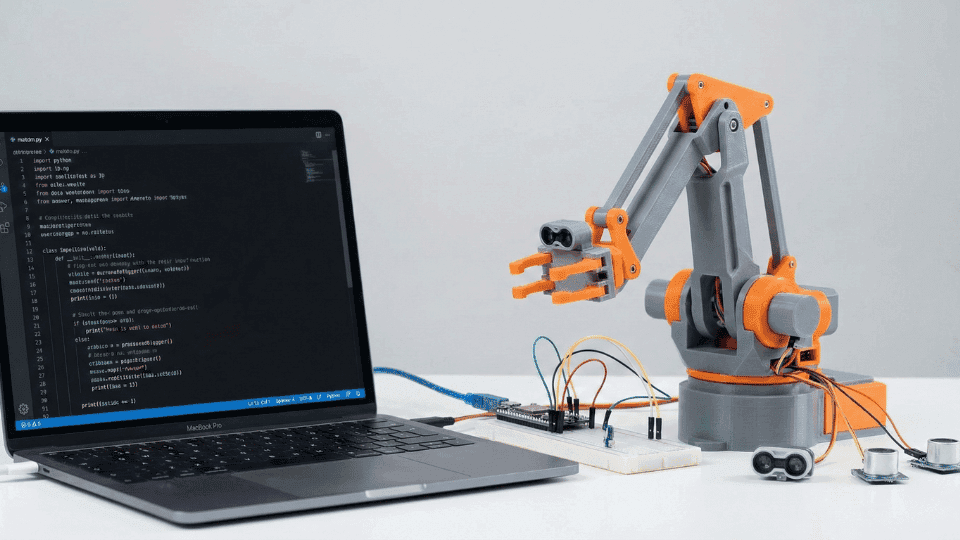
Basic scripting in the Python for Mechanical Engineers & Robotics course helps you automate repetitive work, and a foundation in the Introduction to Industry 4.0 course keeps you fluent in the connected manufacturing systems most modern plants now depend on.
Stage 4: Senior Engineer and Industry Expert, Leading and Mentoring
Develop Cross-Domain Knowledge
Senior engineers are rarely defined by one narrow skill anymore. The most valuable senior mechanical engineers understand enough of the neighboring specializations, design, simulation, quality, automation, to make good tradeoffs and communicate clearly across teams, even if their own daily work stays focused on one area.
Take On Leadership and Mentorship
At this stage, your value shifts from what you can personally design or simulate to what your team can accomplish under your guidance.
This means mentoring junior engineers, reviewing designs critically, and making judgment calls under uncertainty, skills that come from experience more than any single course.
Stay Current as the Field Evolves
The tools and expectations in mechanical engineering keep shifting, from EV and battery work to Industry 4.0 and connected manufacturing. Senior engineers who stay genuinely current, rather than relying entirely on experience from a decade ago, remain far more valuable to their organizations.
Browsing GaugeHow's Learn Hub periodically is a low-effort way to keep a pulse on what is changing across the field.
Mechanical Engineer Career Roadmap Timeline
Career Stage | Typical Timeframe | Main Focus |
|---|---|---|
Student | Years 0 to 4 | Building theoretical foundation and early practical exposure |
Entry-Level Engineer | Years 0 to 3 on the job | CAD, GD&T, basic simulation, first real portfolio project |
Mid-Career Engineer | Years 3 to 10 | Choosing and deepening a specialization, adding modern skills |
Senior Engineer / Expert | Years 10 and beyond | Cross-domain knowledge, leadership, mentoring, staying current |
Frequently Asked Questions
Q: Do these career stages happen at the exact timeframes shown?
A: No, these are general guidelines rather than fixed rules. Some engineers specialize earlier, some later, and career progression depends heavily on individual opportunities, company structure, and personal choices along the way.
Q: Can I skip straight to a specialization instead of following this order?
A: You can, but most engineers benefit from a solid entry-level foundation first. Specializing too early, before CAD, GD&T, and basic simulation are genuinely solid, tends to create gaps that surface later at a more inconvenient time.
Q: What should I prioritize if I am already mid-career but feel behind on modern skills?
A: Start with whichever gap feels most relevant to your current role, whether that is basic scripting, Industry 4.0 awareness, or a completely new specialization, rather than trying to catch up on everything at once.
Q: Is it common to change specializations mid-career?
A: Yes, quite common. The shared foundation across all seven mechanical engineering specializations makes switching realistic, especially for engineers who build strong fundamentals early rather than narrowing too quickly.
Q: What separates a senior engineer from an experienced mid-career one?
A: Primarily the shift from individual technical output to cross-domain judgment, mentorship, and leadership. Technical skill still matters, but it stops being the main differentiator at the senior level.
Conclusion
A mechanical engineering career is not one leap from student to expert, it is four connected stages, each building directly on the last. Focus on strong fundamentals as a student, turn theory into real skills early in your career, specialize with intent in the middle years, then broaden into cross-domain leadership as you move toward genuine expertise.
Ready to start building your roadmap? Visit the Mechanical Engineer Hub on GaugeHow to explore the full course catalog and every specialization path mapped to this exact journey.
Mechanical Engineering Courses That Industry Actually Uses
Learn Tools of Design & CAD, Analysis & Simulation, Automation & Robotics, and Industry 4.0 used in modern factories.
Join 40+ Mech Courses like GD&T, Siemens NX, SolidWorks, CATIA V5, AutoCAD, ANSYS (FEA & Fluent), ABAQUS, Creo, Fusion 360, CNC Programming, Digital Twins, Python for Mechanical, and Industry 4.0.
Our Courses
Complete Course Library
Access to 40+ courses covering various fields like Design, Simulation, Quality, Manufacturing, Robotics, and more.