
5 Mechanical Engineering Side Projects That Actually Get You Hired
Learn More in This Video
Subscribe to GaugeHow for More
Most mechanical engineering resumes look the same. Same coursework, same "SolidWorks proficient" line, same GPA nobody reads.
If your applications aren't getting callbacks, this is usually why, there's nothing on the page that sets you apart.
Recruiters aren't hiring you because you survived your degree.
They're hiring you because you can show them something you built and explain why you built it that way. Here are five projects that actually do that, with the tools you need for each.
1. FEA Simulation Study
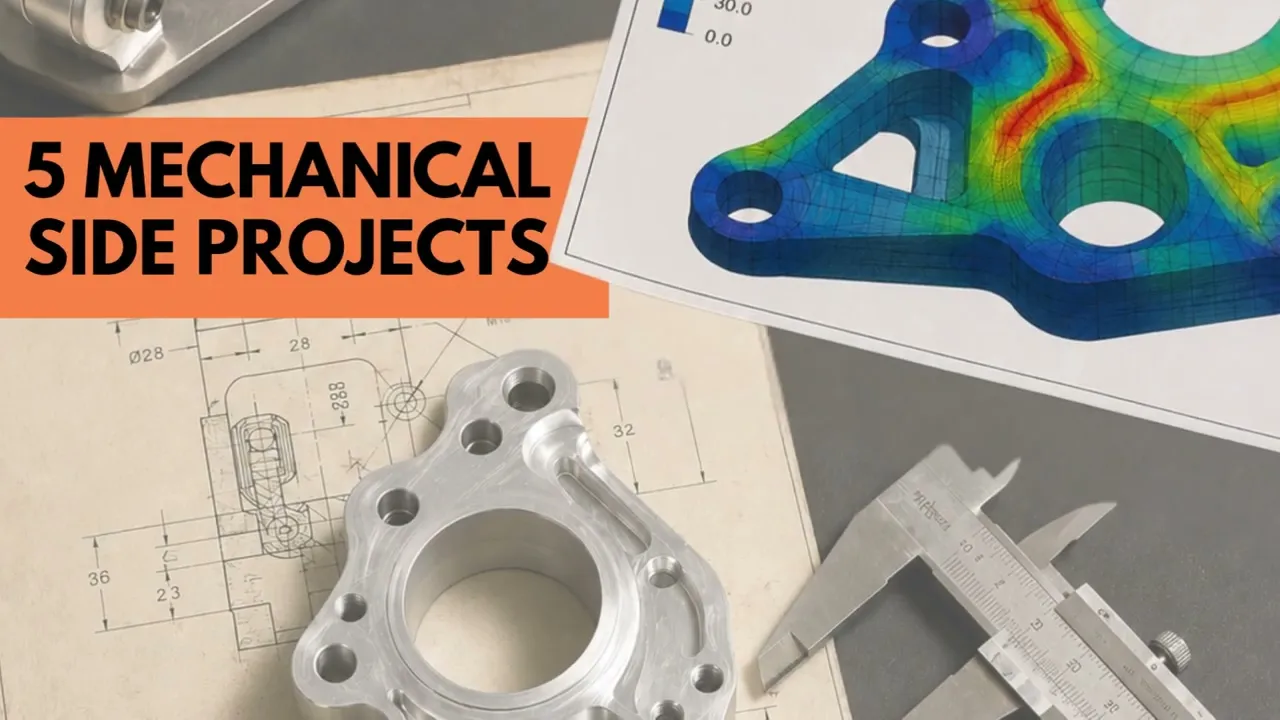
Pick a real part — a bracket, a suspension piece, anything structural. Run a stress analysis on it. The trick is documenting your mesh convergence (how the result changes as you refine the mesh) and comparing it to a hand calculation. Then redesign the part to lower the stress and re-run it. That loop is basically the job.
2. Topology Optimization
Tools: Altair OptiStruct, nTopology, or ANSYS Topology
Take an over-built part and let the software strip out the material it doesn't need. You'll often cut 30-60% of the mass.
Clean up the result into a real CAD model, validate it with FEA, and print it. A photo of the new part next to the old one is one of the strongest things you can put in a portfolio.
3. CFD Study
Tools: ANSYS Fluent or OpenFOAM
Simulate airflow or heat transfer on something real — an airfoil, a heat exchanger, a pipe bend. Document your setup choices (turbulence model, mesh, boundary conditions) and show a clean result like a pressure or temperature plot. OpenFOAM is free and used by F1 teams, so using it shows initiative.
4. Reverse Engineering
Tools: SolidWorks, CATIA, or Creo
Take apart a real mechanism — a small gearbox, an actuator, anything with moving parts. Measure it, rebuild it in CAD, then find the weakest point and redesign it. This proves you understand manufacturing and failure, not just modeling.
5. Mechatronics Build
Tools: Arduino or STM32 + your CAD package
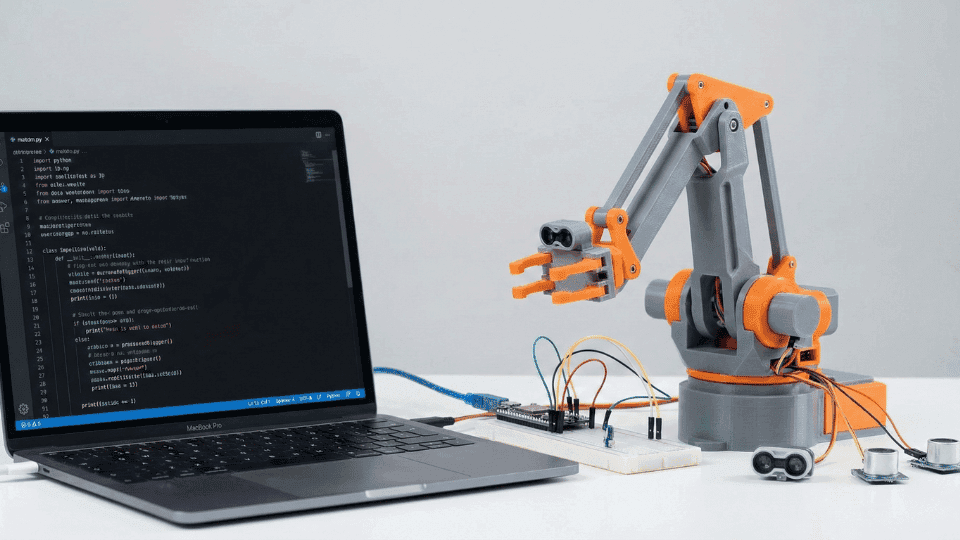
Build something that actually moves — a small gripper, a linear actuator. Add a microcontroller for control. Document the force, stroke, and power like a real datasheet. This proves you can own a full system, not just one part of it.
The Real Takeaway
Your degree proves you finished school. These projects prove you can think like an engineer. Pick one, document it well, and put it where a recruiter can actually see it.
Mechanical Engineering Courses That Industry Actually Uses
Learn Tools of Design & CAD, Analysis & Simulation, Automation & Robotics, and Industry 4.0 used in modern factories.
Join 40+ Mech Courses like GD&T, Siemens NX, SolidWorks, CATIA V5, AutoCAD, ANSYS (FEA & Fluent), ABAQUS, Creo, Fusion 360, CNC Programming, Digital Twins, Python for Mechanical, and Industry 4.0.
Our Courses
Complete Course Library
Access to 40+ courses covering various fields like Design, Simulation, Quality, Manufacturing, Robotics, and more.