Top 30 Quality Engineer Interview Questions and Answers (QA/QC)


Deepak S Choudhary
Learn More in This Video
Subscribe to GaugeHow for More
Walking into a quality engineer interview can feel like a pop quiz on everything you've ever learned about manufacturing SPC, GD&T, root cause analysis, ISO clauses, all of it at once.
The good news is that most interviewers stick to a predictable set of themes: fundamentals, tools, statistics, inspection, problem-solving, and standards.
Quality Fundamentals and Definitions
Every interview starts here. Panels want to confirm you understand the vocabulary before diving into tools and techniques.
1. What is the difference between Quality Assurance (QA) and Quality Control (QC)?
QA is a proactive, process-focused approach that prevents defects by building good practices into the workflow. QC is reactive and product-focused it identifies defects through inspection and testing after the work is done. In short, QA builds the process right; QC checks if the output is right.
2. What is the Cost of Quality (COQ)?
Cost of Quality is the total cost of ensuring a product meets requirements, plus the cost of failing to do so. It includes prevention costs, appraisal costs, internal failure costs, and external failure costs. Tracking COQ helps management see quality as an investment, not just an expense.
3. What is a Quality Management System (QMS)?
A QMS is a documented framework of policies, processes, and procedures a company uses to consistently meet customer and regulatory requirements. ISO 9001 is the most widely recognized QMS standard. It covers everything from document control to management review.
4. What's the difference between Verification and Validation?
Verification confirms the product was built correctly according to specifications ("Did we build it right?"). Validation confirms the product meets the actual user's needs ("Did we build the right thing?"). Both are required before a product is released.
5. What are the seven basic principles of quality management?
They are customer focus, leadership, engagement of people, process approach, improvement, evidence-based decision making, and relationship management. These principles form the backbone of ISO 9001 and most modern QMS frameworks.
Quality Tools and Techniques
This is where interviewers separate candidates who've only read about tools from those who've actually used them on the shop floor.
6. What are the 7 QC Tools?
The seven QC tools are the cause-and-effect (fishbone) diagram, check sheet, control chart, histogram, Pareto chart, scatter diagram, and stratification. They're simple, visual tools used to identify, analyze, and solve quality problems without needing advanced statistics. If you want hands-on practice building each of these, GaugeHow's 7 QC Tools course walks through real manufacturing case studies.
7. What is a Pareto Chart used for?
A Pareto chart applies the 80/20 rule to show which few causes are responsible for most defects. It's used to prioritize which problems to fix first, since tackling the top 20% of causes usually eliminates 80% of the issue.
8. What is a Fishbone (Ishikawa) Diagram?
It's a cause-and-effect diagram used to brainstorm and categorize potential root causes of a defect under headings like Man, Machine, Material, Method, Measurement, and Environment (the 6 Ms). It's typically the starting point before a deeper Root Cause Analysis.
9. What is Six Sigma and what does DMAIC stand for?
Six Sigma is a data-driven methodology to reduce process variation and defects to near zero (3.4 defects per million opportunities). DMAIC stands for Define, Measure, Analyze, Improve, Control the five phases used to solve existing process problems.
Candidates aiming for Green Belt or Black Belt roles should be fluent in this framework; GaugeHow's Basics of 6 Sigma course covers DMAIC step by step.
10. What is the difference between Six Sigma and Lean?
Six Sigma focuses on reducing variation and defects using statistical analysis, while Lean focuses on eliminating waste and improving flow. Many organizations combine both into "Lean Six Sigma" to attack both variation and inefficiency at the same time.
11. What is a Control Chart and how do you read one?
A control chart plots process data over time against an upper and lower control limit to show whether a process is stable ("in control") or drifting. Points outside the control limits, or non-random patterns like trends and runs, signal special-cause variation that needs investigation.
Statistical Process Control and Metrology
Numbers matter in QA/QC. Expect at least a couple of SPC or measurement-focused questions in every interview.
12. What is Statistical Process Control (SPC)?
SPC is the use of statistical methods to monitor and control a process in real time, catching variation before it produces defective parts. It relies heavily on control charts, capability studies, and sampling plans to keep processes within specification.
13. What is Process Capability (Cp and Cpk)?
Cp measures whether a process's spread fits within specification limits, assuming the process is centered. Cpk goes further by also accounting for how centered the process actually is. A Cpk above 1.33 is generally considered capable in most industries.
14. What is Measurement System Analysis (MSA) / Gage R&R?
Gage R&R (Repeatability and Reproducibility) evaluates how much of the variation in your measurements comes from the measurement system itself versus the actual part. It answers whether you can trust your gauges and inspectors before you trust your data. Understanding measurement uncertainty is critical here GaugeHow's Uncertainty Measurement course covers this in depth.
15. What's the difference between Accuracy and Precision?
Accuracy is how close a measurement is to the true value; precision is how consistent repeated measurements are with each other. A gauge can be precise (tight grouping) but inaccurate (off-target), which is exactly what calibration and MSA studies are designed to catch.
16. What calibration standards or metrology practices have you worked with?
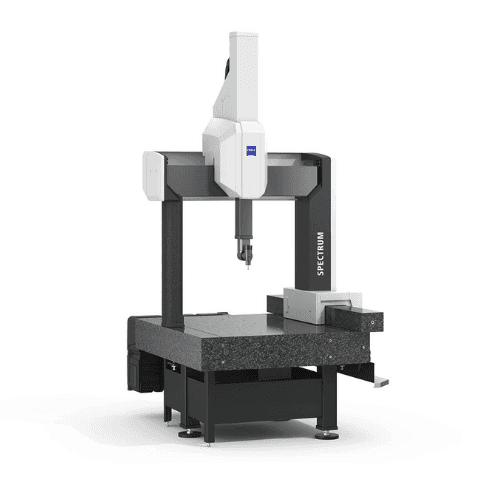
This is your chance to talk about CMMs, calipers, micrometers, height gauges, or optical comparators, and how often you calibrate them against traceable standards. If you're building this experience, GaugeHow's Engineering Metrology & 3D Measurement course is a strong reference point to mention.
GD&T and Inspection
17. What is GD&T and why is it used?
Geometric Dimensioning and Tolerancing is a symbolic language used on engineering drawings to define allowable variation in a part's form, orientation, location, and size. It's more precise than plus/minus tolerancing because it accounts for how features actually function together in an assembly.
18. What is the difference between Datum and Datum Feature?
A datum is a theoretical, perfect reference point, line, or plane used to define geometric relationships. A datum feature is the actual physical feature on the part (a surface or hole) used to establish that datum. Interviewers ask this to check you understand GD&T isn't just theory it maps to real inspection setups. Candidates weak on this topic benefit from GaugeHow's GD&T and Engineering Graphics course.
19. What is a First Article Inspection (FAI)?
FAI is a complete, documented inspection of the first production part to verify it meets every requirement on the engineering drawing before full production begins. It's especially common in aerospace and automotive supply chains using formats like AS9102.
20. What inspection equipment have you used for incoming, in-process, and final inspection?
Talk specifically: calipers and micrometers for quick checks, CMMs for complex geometry, surface roughness testers, and go/no-go gauges for high-volume checks. Naming the actual tools and when you'd choose one over another shows real shop-floor experience, not textbook knowledge.
5. Root Cause Analysis and CAPA
21. What is Root Cause Analysis (RCA) and what methods do you use?
RCA is a structured process to identify the true underlying cause of a defect rather than just its symptoms. Common methods include the 5 Whys, Fishbone diagrams, and Fault Tree Analysis, often used together to cross-check findings.
22. Walk me through the 5 Whys technique with an example.
The 5 Whys involves repeatedly asking "why" a problem occurred until you reach the root cause, typically five times.
For example: a part is out of tolerance → why? the machine drifted → why? the tool wasn't recalibrated → why? the calibration schedule was missed → why? the tracking system had no alert, which is the actual root cause to fix.
23. What is CAPA and how is it different from a simple correction?
CAPA stands for Corrective and Preventive Action. A correction just fixes the immediate defect (like scrapping a bad part), while a corrective action fixes the root cause so it doesn't happen again, and a preventive action stops it from happening in other, similar processes.
24. What is an 8D Report?
8D (Eight Disciplines) is a structured problem-solving methodology used mainly in automotive and manufacturing to address customer complaints, from forming a team (D1) through containment, root cause, corrective action, and preventing recurrence, all the way to closure (D8).
25. How do you handle a situation where a defect is found after the product has shipped?
The priority is containment first stop further shipments and assess the scope of affected units. Then you run RCA to find the true cause, issue a CAPA, and communicate transparently with the customer, since concealing a shipped defect damages trust far more than the defect itself.
ISO Standards and Audits
26. What is ISO 9001 and why does it matter?
ISO 9001 is the international standard for Quality Management Systems, defining requirements for consistent processes, customer satisfaction, and continual improvement. It's often a contractual requirement for suppliers in automotive, aerospace, and industrial sectors.
27. What is the difference between ISO 9001 and ISO 17025?
ISO 9001 governs a general quality management system across an organization, while ISO 17025 specifically accredits testing and calibration laboratories for technical competence and traceable measurement results.
A lab can be ISO 9001 certified without being ISO 17025 accredited, and the two serve different audiences. If lab accreditation is part of your career path, GaugeHow's ISO 17025:2017 course covers internal audit requirements in detail.
28. What is an Internal Audit and how do you prepare for one?
An internal audit is a self-assessment against your QMS requirements to find gaps before an external certification body does. Preparation involves reviewing previous audit findings, checking document control, verifying training records, and confirming corrective actions from past non-conformances are actually closed.
Lean and Continuous Improvement
29. What is 5S and how does it relate to quality?
5S Sort, Set in order, Shine, Standardize, Sustain is a workplace organization method that reduces waste, errors, and safety incidents by keeping tools and materials in a consistent, visible place.
A clean, organized line directly reduces defects caused by wrong-part mix-ups or damaged tooling. GaugeHow's 5S System course is a good refresher before interviews that focus on shop-floor practices.
30. What Lean tools do you use to reduce defects and waste?
Common tools include Value Stream Mapping to spot non-value-added steps, Poka-Yoke (error-proofing) to physically prevent mistakes, Kaizen events for continuous improvement, and standard work to reduce process variation caused by inconsistent methods. For a deeper toolkit, GaugeHow's Lean Manufacturing Tools course covers each of these with practical examples.
Frequently Asked Questions
Is a quality engineer interview more technical or behavioral?
It's usually a mix, but weighted toward technical fundamentals SPC, GD&T, RCA, and standards. Expect one or two behavioral questions about handling a defect escape or a difficult audit, but the bulk of the interview tests whether you actually understand the tools.
Do I need Six Sigma certification to get a quality engineer job?
It's not always mandatory, but a Green Belt or working knowledge of DMAIC significantly strengthens your candidacy, especially in automotive and manufacturing. Many companies list it as "preferred" rather than "required" for entry-level roles.
What's the difference between a Quality Engineer and a Quality Inspector?
A Quality Inspector primarily performs hands-on checks and measurements against specifications. A Quality Engineer designs the inspection plans, investigates root causes, drives CAPA, and improves the overall quality system it's a more analytical, process-level role.
How technical should my GD&T answers be for an entry-level role?
Focus on explaining concepts clearly with examples datums, feature control frames, and why GD&T beats plus/minus tolerancing rather than memorizing every symbol. Interviewers are checking your reasoning, not running a written exam.
What tools should I mention if asked about CNC or production experience?
If your role touches manufacturing, it helps to speak confidently about G-code basics, tolerancing on CNC-machined parts, and how inspection ties back to programming. GaugeHow's CNC Programming course is worth mentioning if you've studied it, since it shows you understand quality from the machining side, not just the inspection side.
Conclusion
Quality engineer interviews reward candidates who can move fluidly between concepts, tools, and real examples not just definitions. Know your 7 QC Tools, be ready to walk through a 5 Whys or 8D example from your own experience, and understand how GD&T, SPC, and ISO standards fit together in a real production environment.
Review this list a day before your interview, practice saying the answers out loud, and you'll walk in prepared for almost anything they throw at you.
Ready to close the gaps in your QA/QC knowledge before your next interview? Browse GaugeHow's full Quality & Metrology course catalog and build hands-on confidence in the tools employers actually ask about.