CNC Machine Interview Questions and Answers for Operators & Setters


Deepak S Choudhary
Learn More in This Video
Subscribe to GaugeHow for More
CNC operator and setter interviews rarely ask you to write a full G-code program from scratch. What they're actually checking is whether you can safely run a machine, set up a job correctly, catch a problem before it ruins a part, and talk through a real shop-floor situation without freezing up. That's a very different skill from memorizing G-code definitions off a chart.
CNC Machine Fundamentals
1. What does CNC stand for, and what's the basic difference between a CNC machine and a manual machine?
CNC stands for Computer Numerical Control the machine follows a pre-written program to move its axes automatically instead of an operator turning handwheels by hand.
A manual machine depends entirely on operator skill and hand-eye coordination for every cut, while a CNC machine repeats the exact same path every time once the program and setup are correct. This makes CNC far more consistent for repetitive, high-precision production runs.
2. What is the difference between a CNC operator and a CNC setter?
An operator typically runs an already-set-up machine loading parts, starting cycles, checking finished parts against spec, and reacting to alarms.
A setter (or setup person) prepares the machine before production starts: mounting fixtures, setting offsets, loading the correct tools and program, and running the first-off part to confirm everything is correct. Many shops expect operators to grow into setter responsibilities over time.
3. What are the main types of CNC machines you might work on in a machine shop?
The most common are CNC mills (3-axis and above, cutting with a rotating tool), CNC lathes/turning centers (rotating the workpiece against a stationary tool), and CNC machining centers that combine milling and drilling with automatic tool changers.
Some shops also run CNC grinders, EDM machines, and multi-axis turn-mill centers for more complex parts.
4. What is the difference between absolute and incremental positioning in CNC programming?
Absolute positioning (usually G90) defines every move as a coordinate relative to a fixed program zero point. Incremental positioning (usually G91) defines each move as a distance relative to the machine's current position, not a fixed origin.
Most production programs use absolute positioning because it's easier to verify and less prone to compounding errors.
5. What is a machine's "home position" and why does the machine need to go there at startup?
Home position is a fixed, repeatable reference point the machine returns to, usually at the extreme travel limits of each axis, established by hitting physical home switches.
The control needs this reference every time it powers up because it has no memory of exact axis position without it without homing, every coordinate the machine reports would be unreliable.
Setup & Workholding
6. What's the first thing you check before starting a new job setup on a CNC machine?
Confirm you have the correct, current-revision program, drawing, and tooling list for the part being run, since running an outdated revision is one of the most common and costly setup mistakes. After that, check that the fixture or workholding called out matches what's physically available at the machine.
7. What factors do you consider when choosing a workholding method for a new part?
The part's shape, the forces the cutting operation will generate, how much of the part needs to stay accessible to the tool, and how repeatable the location needs to be from part to part.
A part needing tight positional tolerance usually needs a more precise fixture than a simple vise, especially if multiple features are machined from the same setup.
8. Why is it important to check for burrs or debris on a fixture or vise before clamping a new part?
Even a small burr or chip trapped under the part lifts it slightly off the reference surface, which throws off every dimension measured from that surface.
This is a very common, very avoidable cause of parts failing inspection, so cleaning the fixture is a standard step before every single clamping, not just the first one.
9. What is a "first-off" or "first article" inspection, and why is it done before running the full batch?
It's a full inspection of the very first part produced in a new setup, checked against the drawing before the machine is allowed to run the rest of the batch unattended.
Catching a setup error on part one, instead of part fifty, saves significant scrap and rework, which is why most shops treat skipping it as a serious process violation.
10. How would you set up a job that requires machining features on multiple sides of a part?
You'd plan which features can be completed in a single setup versus which require flipping or repositioning the part, and choose workholding and datums that keep the coordinate system consistent across each setup.
Where possible, features that need tight positional relationships to each other are kept in the same setup to avoid stacking up alignment errors between operations.
Offsets & Tool Setting
11. What is a work offset (like G54), and why does the machine need one for every job?
A work offset tells the machine where the part's zero point sits relative to the machine's own home position, so the program's coordinates line up with the actual physical part on the table.
Without setting the correct work offset, the program would run its toolpath relative to the wrong location entirely, likely crashing into the fixture or vise.
12. What is a tool length offset, and what happens if it's entered incorrectly?
A tool length offset tells the control exactly how far a specific tool extends from the spindle, so the Z-axis position is calculated correctly for that tool. If it's entered wrong too short, the tool won't reach the part; too long, or measured against the wrong tool number, the tool can plunge into the part or fixture at full speed, causing a serious crash.
13. How do you measure and set a tool offset in practice on the shop floor?
Common methods include touching the tool off a known reference surface using a tool setter or edge finder, or using an automatic tool presetter that measures the tool offline before it's loaded into the machine.
Whichever method is used, the resulting number is entered into the correct tool offset register, and it's always worth double-checking the tool number matches before running the program.
14. What's the difference between a tool length offset and a tool diameter (radius) offset?
Tool length offset controls the Z-axis position relative to the tool's length. Tool diameter or radius offset compensates for how wide the actual cutting tool is, so the program's toolpath which is written to the part's finished edge automatically adjusts outward or inward based on the real tool size, including allowing for wear compensation as the tool gets used.
15. A part comes out consistently oversized on one dimension across an entire batch. What offset-related cause would you check first?
This pattern points strongly toward a tool diameter/wear offset issue rather than a program error, since a program mistake would usually show up differently or on every part identically from the start, not as a consistent size drift.
Checking and adjusting the tool wear offset, or confirming the tool hasn't worn beyond its usable life, is the first practical step.
Reading & Editing Programs
16. What is the difference between a G-code and an M-code in a CNC program?
G-codes control geometric moves and preparatory functions things like rapid moves, linear and circular interpolation, and coordinate system selection.
M-codes control miscellaneous machine functions that aren't about tool motion, like starting/stopping the spindle, coolant on/off, or ending the program. Reading a program means understanding both types work together, not just the motion commands.
17. What does a typical program's first few lines usually set up before any actual cutting happens?
Most programs start by canceling any leftover offsets from a previous job, selecting the correct work coordinate system (like G54), setting the correct units (inch or metric), and calling out the first tool with its spindle speed.
This "safe start" block exists specifically to prevent a program from accidentally running with settings left over from whatever job ran before it.
18. As an operator, if you spot what looks like a mistake in the program, what's the correct next step?
Stop and flag it to a setter, supervisor, or programmer rather than editing the program yourself, unless you're specifically authorized and trained to make program edits.
Unauthorized changes to a proven program are a common source of scrap and safety incidents, even when the operator's instinct about the mistake turns out to be correct.
19. What is a "block skip" (often shown as a forward slash "/") used for in a CNC program?
It marks a line that the machine will skip entirely if the block skip switch is turned on, letting one program handle optional operations like an optional inspection stop or an alternate machining step without needing a separate program for each variation.
It gives flexibility without duplicating and maintaining multiple near-identical programs.
20. What's the difference between a canned cycle and writing out every move manually in a program?
A canned cycle (like a drilling or tapping cycle) packs a repeated sequence of moves rapid down, feed in, retract into a single line of code that the control expands internally.
Writing every move manually gives full control but makes the program longer and more error-prone for repetitive operations like a pattern of holes.
Operation, Safety & Daily Checks
21. What safety checks should you do before pressing cycle start on a new or unfamiliar program?
Confirm the correct work offset and tool offsets are active, run the program in single-block mode with the feed rate override turned down for the first cycle, and keep a hand near the feed hold or emergency stop.
Never assume a program someone else wrote is correct just because it's been used before verify it on the specific machine and setup you're running it on.
22. Why do experienced operators run a new program with the machine doors closed but standing ready near the E-stop, rather than walking away immediately?
Because the first run of any new setup is the highest-risk moment for an unexpected collision between the tool, part, fixture, or machine components and staying close enough to hit emergency stop can prevent serious machine damage or injury.
Once a program has run successfully and repeatably, that level of vigilance can relax, but never on the first cycle.
23. What's the correct response if a machine alarms out mid-cycle?
Stop and read the actual alarm message rather than just clearing it and restarting, since the alarm text usually points directly at the cause an overtravel, a servo fault, a program error.
Clearing an alarm without understanding it risks repeating whatever caused it, sometimes with the tool now in a compromised or unknown position relative to the part.
24. Why is personal protective equipment (PPE) like safety glasses non-negotiable around a running CNC machine, even with the doors mostly closed?
Coolant, chips, and occasionally broken tooling can escape enclosures, especially through the operator access door during loading and unloading, and eye injuries from metal chips are common and largely preventable.
Most shops treat PPE violations as a serious safety issue regardless of how experienced the operator is, because the risk doesn't go down with experience.
25. What's your responsibility as an operator if you notice unusual noise or vibration during a cutting cycle?
Stop the cycle using feed hold (not necessarily a full E-stop, unless there's immediate danger) and investigate rather than letting the cycle continue and hoping it resolves itself.
Unusual noise often signals tool wear, a loose fixture, or an incorrect feed/speed, and continuing to run can turn a minor issue into a broken tool, a scrapped part, or machine damage.
Troubleshooting & Quality
26. A finished part is consistently out of tolerance on a hole's position, but its size is correct. What would you check first?
Since size is fine, this points away from the tool itself and toward the work offset or fixture location check whether the work offset was set correctly and whether the fixture has shifted or has debris under it.
A position error with correct size is a strong, specific clue that narrows the troubleshooting fast, which is exactly why interviewers like this scenario.
27. How would you explain the difference between a scrap part and a rework part to someone new on the floor?
A scrap part is out of tolerance in a way that can't be corrected material removed that can't be added back, for instance and has to be discarded.
A rework part is out of tolerance but can still be brought into spec with an additional operation, like an extra pass or a different finishing step, without discarding the part entirely.
28. What would you do if you suspect a batch of parts might be bad, but the machine hasn't thrown any alarm?
Stop production and pull a part for inspection rather than continuing to run based on the assumption that no alarm means no problem, since dimensional drift, tool wear, or a fixture issue often won't trigger any machine alarm at all.
Catching a suspected issue early, even without hard proof yet, is almost always cheaper than confirming it after a full batch is already scrapped.
29. Why might a part measure differently on a CMM in the quality lab versus what looked fine by eye or with a caliper on the shop floor?
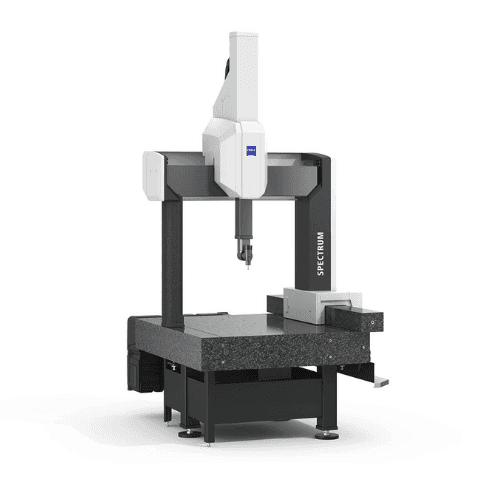
CMMs measure with far greater precision and can evaluate GD&T callouts like position or profile that a caliper simply can't check at all.
A part can look and "feel" fine to hand tools while still failing a tighter GD&T requirement, which is exactly why final inspection responsibility often sits with the quality lab, not the machine operator alone.
30. In an interview, you're asked to describe a time you caught a mistake before it became a bigger problem. What makes a strong answer to this kind of question?
A strong answer names the specific signal that tipped you off an unusual sound, a dimension trending the wrong way, a program revision mismatch rather than a vague claim of "being careful."
It also names what you did next and what the outcome was, showing the interviewer a real, repeatable habit rather than a one-off lucky catch.
Frequently Asked Questions
Do CNC operator interviews require knowing how to write G-code from scratch?
Not usually for operator roles most interviews focus on reading and reacting to existing programs, setup awareness, and safety judgment rather than program authoring. Setter and programmer roles expect deeper G-code fluency, so it's worth checking which level the job posting is actually asking for.
What's the biggest difference between how freshers and experienced candidates answer these questions?
Freshers tend to answer with correct definitions, while experienced candidates answer with a specific troubleshooting sequence and real scenario details, because they've actually lived through the failure being asked about.
Practicing the "what would you check first" style of answer, even from textbook knowledge, closes a lot of that gap.
Is it okay to admit I haven't run a specific machine brand (like Haas or Fanuc) mentioned in the job posting?
Yes core CNC concepts like offsets, canned cycles, and safety practices transfer across machine brands and controls, so being honest about which specific brand you've used, while showing you understand the underlying concepts, reads as more credible than pretending broad experience you don't have.
How important are safety-related questions compared to technical ones in these interviews?
Very important, often more than candidates expect a technically sharp answer that skips safety considerations (like running a new program at full feed rate) can be a bigger red flag to an interviewer than a slightly incomplete technical answer. Always mention the safety step even if the question doesn't explicitly ask for it.
Conclusion
CNC operator and setter interviews are really testing judgment under real shop-floor conditions can you set up correctly, catch a problem early, and stay safe while doing it.
The 30 questions above cover the situations that come up again and again: offsets, first-off checks, alarms, and the troubleshooting instincts that separate someone who's only watched a machine run from someone who's actually run one. Practice explaining your reasoning out loud, not just the final answer, since that's what interviewers are really listening for.
To build these skills hands-on, GaugeHow's CNC Programming course covers setup, offsets, and program reading from the ground up. Since so many of these scenarios come back to tolerance and inspection, pair it with the GD&T and Engineering Graphics course and the Engineering Metrology & 3D Measurement course and if you're aiming for a quality-focused setter role, GaugeHow's Basics of 6 Sigma course is worth adding for the process-control side of the job.