Digital Manufacturing Interview Questions and Answers

Deepak S Choudhary
Learn More in This Video
Subscribe to GaugeHow for More
Digital manufacturing interviews test whether you understand how data actually moves through a modern plant, from design through production to service, not just whether you can name the software involved. Interviewers want to see you understand the connections between systems, not just each piece in isolation.
General Digital Manufacturing Questions
Q1. What is digital manufacturing, and how is it different from traditional manufacturing?
Digital manufacturing integrates digital tools, data, and connectivity across the entire production lifecycle, from design and simulation through production and service. Traditional manufacturing often keeps these stages more siloed, with limited data flow between design, production, and maintenance teams.
GaugeHow's Digital Manufacturing course covers this shift in practical depth. The core difference is connected data replacing disconnected, manual handoffs.
Q2. What is the digital thread, and why does it matter?
The digital thread is the continuous flow of data connecting a product's design, manufacturing process, and field performance throughout its entire lifecycle.
It matters because it lets engineers trace a quality issue back to its exact design or process origin, instead of investigating blindly. Without it, valuable data gets trapped in separate systems that don't communicate.
Q3. What's the difference between digital manufacturing and Industry 4.0?
Digital manufacturing focuses specifically on digitizing the production and product lifecycle process itself. Industry 4.0 is a broader framework encompassing nine pillars, including digital manufacturing concepts alongside cybersecurity, cloud computing, and connected robotics.
GaugeHow's Introduction to Industry 4.0 course covers how digital manufacturing fits within that larger picture.
Q4. What business benefits does digital manufacturing typically deliver?
Faster time-to-market comes from tighter integration between design and production, catching issues earlier when they're cheaper to fix. Reduced downtime and improved quality come from real-time data visibility that traditional, periodic reporting can't match. Better traceability also supports faster root cause analysis when a quality or performance issue does occur.
MES and ERP Integration Questions
Q5. What is an MES, and what role does it play in digital manufacturing?
An MES, or Manufacturing Execution System, manages and tracks production in real time on the shop floor, bridging the gap between high-level planning and actual execution.
It records what's actually happening at each production step, feeding that data both up to ERP systems and back to engineering for analysis. It's often considered the operational core of a digital manufacturing system.
Q6. How does an MES differ from an ERP system?
An ERP system manages broader business functions like finance, procurement, and high-level production planning. An MES focuses specifically on real-time execution and tracking on the actual shop floor.
They're meant to work together, with ERP setting the plan and MES managing and reporting on its execution.
Q7. What challenges typically arise when integrating MES with legacy shop floor equipment?
Older equipment often lacks native digital connectivity, requiring retrofit sensors or protocol converters to bridge the communication gap. Data formats and update frequencies can also vary widely between legacy and modern equipment, complicating consistent data collection.
These integration challenges are often more time-consuming than the software configuration itself.
Q8. Why is data consistency between ERP, MES, and shop floor systems important?
Inconsistent data between these layers leads to decisions based on outdated or conflicting information, like planning production against inventory numbers that don't reflect actual shop floor status.
Consistency requires careful integration design and, often, a single source of truth for key data points. Without it, digital manufacturing's core promise of better visibility breaks down.
Digital Twin Questions
Q9. What is a digital twin in a digital manufacturing context?
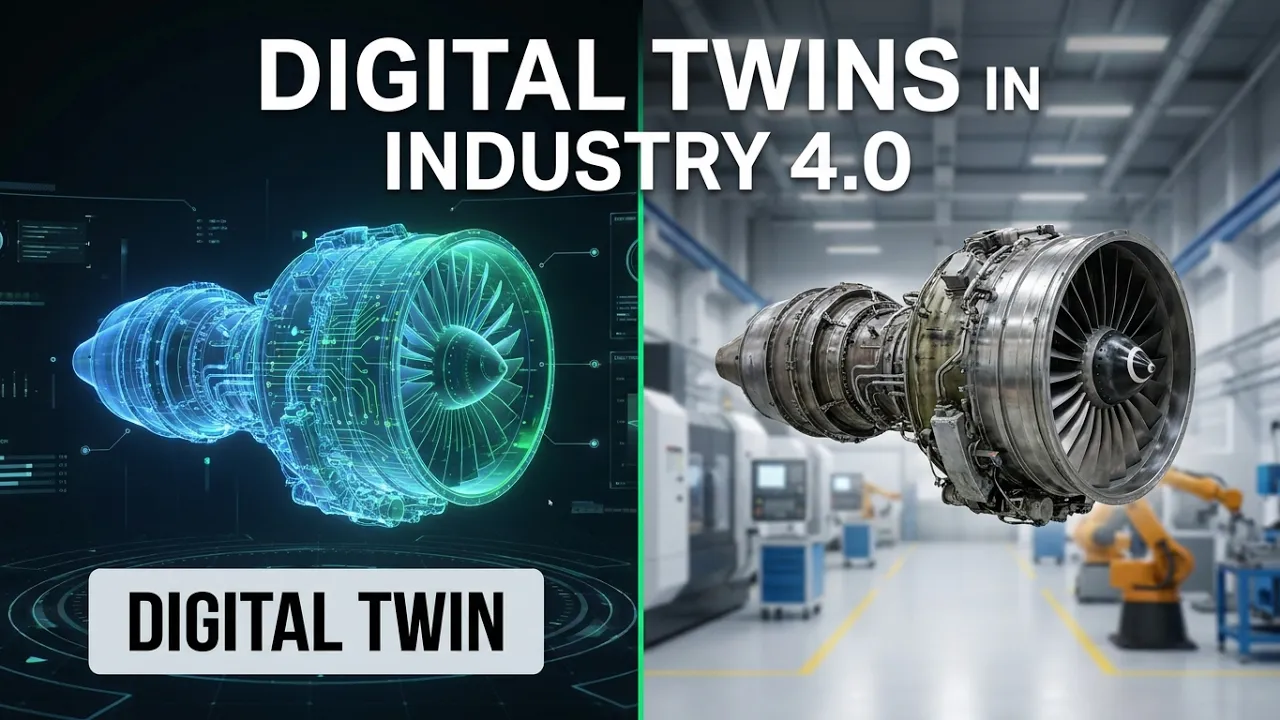
A digital twin is a virtual model of a physical asset or process, continuously updated with real-time data from its physical counterpart. GaugeHow's Digital Twins course covers building and maintaining this kind of model.
It lets engineers simulate changes, predict failures, or optimize performance without risking the actual equipment.
Q10. What's the difference between a digital twin and a traditional simulation model?
A traditional simulation model is typically static, built and used once during design, then set aside. A digital twin remains continuously connected to real operational data, evolving alongside the physical asset it represents throughout its lifecycle.
That ongoing connection is what makes a digital twin useful for real-time decisions, not just upfront design validation.
Q11. How can a digital twin support predictive maintenance in a manufacturing context?
A digital twin can simulate expected equipment behavior and compare it against actual real-time performance, flagging deviations that suggest developing wear or failure. This lets maintenance teams intervene before an actual breakdown occurs, rather than reacting after the fact.
The accuracy of this prediction depends heavily on the quality of both the model and the incoming sensor data.
Q12. What data is needed to build an accurate digital twin of a production process?
Accurate process parameters, equipment specifications, and historical performance data all feed into building the initial model. Ongoing real-time sensor data keeps the twin synchronized with actual conditions as they change over time.
A digital twin built on incomplete or outdated data quickly becomes misleading rather than useful.
IIoT and Connected Data Questions
Q13. How does IIoT support digital manufacturing initiatives?
IIoT provides the connected sensor infrastructure that feeds real-time data into MES, digital twins, and analytics platforms throughout a digital manufacturing system.
GaugeHow's IIoT course covers how this sensor layer is built and integrated. Without reliable IIoT data collection, most digital manufacturing tools have little real-time information to actually work with.
Q14. What is edge computing, and why does it matter for digital manufacturing?
Edge computing processes data locally, close to where it's generated, reducing latency for time-sensitive decisions compared to sending everything to a centralized server first.
It's especially important for real-time control applications that can't tolerate the delay of a round trip to the cloud. Many digital manufacturing architectures combine edge processing for speed with cloud analytics for broader trend analysis.
Q15. How do manufacturers ensure data quality from connected sensors across a plant?
Regular sensor calibration and validation checks catch drift before it corrupts downstream analytics or decisions. Establishing clear data standards and formats across different equipment vendors prevents inconsistency that complicates integration.
Data quality problems traced back to sensor issues are common, but often overlooked compared to software-side troubleshooting.
Simulation and Analytics Questions
Q16. How is simulation used within a digital manufacturing workflow?
Simulation validates process designs, robot paths, or production line layouts before physical commissioning, catching costly errors early when they're cheap to fix.
It's also used ongoing, through digital twins, to test process changes against a virtual model before applying them live. This "test before you touch it" approach reduces risk throughout the manufacturing lifecycle, not just at initial design.
Q17. What role does data analytics play in a digital manufacturing environment?
Analytics turns the large volume of data collected across production into actionable insight, identifying patterns like recurring quality issues or capacity bottlenecks that manual review would likely miss.
Predictive analytics extends this further, forecasting problems before they occur based on historical patterns. The value of digital manufacturing's data collection depends heavily on the analytics layer turning it into real decisions.
Q18. How do manufacturers use dashboards and visualization tools in digital manufacturing?
Dashboards translate raw production data into visual formats that let managers and operators quickly spot trends or abnormalities without digging through raw numbers.
Well-designed dashboards prioritize the metrics that actually drive decisions, rather than displaying everything available. Poorly designed dashboards, overloaded with data, often get ignored despite the underlying data being valuable.
Additive Manufacturing and Product Lifecycle Questions
Q19. How does additive manufacturing fit into a digital manufacturing strategy?
Additive manufacturing is inherently digital, building parts directly from a 3D model without traditional tooling, which aligns naturally with digital manufacturing's data-driven approach.
GaugeHow's 3D Printing / Additive Manufacturing course covers the technology behind this connection. It also supports rapid iteration cycles that fit well with digital manufacturing's emphasis on continuous data-driven improvement.
Q20. What is Product Lifecycle Management, and how does it connect to digital manufacturing?
PLM manages a product's data from initial design through production and eventual service or retirement, forming a core part of the digital thread. It ensures design changes flow consistently into manufacturing processes and that field performance data can trace back to specific design decisions.
Without solid PLM integration, digital manufacturing's data connections tend to break down at the design-to-production handoff.
Q21. How does digital manufacturing support faster new product introduction?
Simulation and digital validation catch design and process issues before physical prototyping, cutting iteration time significantly. Connected data between design and production teams reduces the miscommunication that traditionally slows new product ramp-up.
Faster feedback loops throughout the process are what ultimately compress the overall timeline from concept to production.
Cybersecurity and Data Governance Questions
Q22. Why does cybersecurity matter more in a highly connected digital manufacturing environment?
Connecting previously isolated shop floor systems to broader networks for data sharing significantly expands the potential attack surface. A breach in this context risks not just data loss but actual physical process disruption.
Security needs to be built into the connectivity architecture from the start, not added as an afterthought once systems are already connected.
Q23. What is data governance, and why does it matter for digital manufacturing?
Data governance establishes clear ownership, quality standards, and access policies for data flowing across a digital manufacturing system. Without it, data quality and consistency issues tend to accumulate as more systems and data sources get connected over time.
Good governance is often what separates a digital manufacturing initiative that scales successfully from one that becomes unmanageable.
Q24. How do you balance data accessibility for decision-making against security restrictions?
I'd apply role-based access, giving people the data they actually need for their function without unnecessarily broad access across the whole system.
Segmenting critical control systems from general reporting and analytics platforms limits exposure without blocking legitimate data use. Overly restrictive access policies often push people toward risky workarounds, so the balance matters practically, not just on paper.
Implementation and Change Management Questions
Q25. What are common barriers to successfully implementing digital manufacturing initiatives?
Legacy equipment lacking native connectivity is a frequent technical barrier, often requiring costly retrofits. Organizational resistance, especially from teams comfortable with existing manual processes, is just as common a barrier as any technical challenge.
Underestimating the data integration work between systems is another frequent cause of delayed or stalled projects.
Q26. How would you approach getting buy-in from a plant floor team skeptical of a new digital manufacturing initiative?
I'd start with a focused pilot addressing a specific problem the team already cares about, rather than a broad rollout that feels imposed from outside.
Demonstrating a concrete, measurable result from that pilot builds far more trust than an upfront explanation of the technology's theoretical benefits. Involving floor-level staff in the pilot design also surfaces practical concerns early, before a larger rollout.
Q27. How do you measure the ROI of a digital manufacturing investment?
I'd tie the investment to specific, measurable outcomes defined before the project starts, like reduced downtime hours, improved first-pass yield, or faster new product introduction time.
Comparing before-and-after data over a sustained period, not just immediately after implementation, confirms whether the improvement actually held. A digital manufacturing project without defined success metrics upfront is hard to evaluate honestly afterward.
Scenario and Behavioral Questions
Q28. A digital manufacturing rollout is behind schedule due to legacy equipment integration issues. How do you respond?
I'd reassess the integration scope honestly, sometimes narrowing the initial rollout to equipment that's actually ready rather than forcing a full rollout on the original timeline.
Communicating the revised, realistic timeline early prevents bigger trust issues later if the delay continues to compound. Legacy integration challenges are common enough that flexibility in scope, not just schedule, often matters more.
Q29. Describe a time you used data from a digital manufacturing system to solve a real production problem.
A strong answer names a specific data source, like MES cycle time records or sensor data from a digital twin, and explains how it led to identifying and fixing a real issue. It should also mention the measurable result, like reduced downtime or improved yield.
Interviewers want to see the connection between data access and a concrete outcome, not just a description of the tools involved.
Q30. How do you stay current with digital manufacturing technology and best practices?
I follow industry publications and vendor documentation for platforms relevant to my work, and I try to get hands-on exposure through pilot projects rather than only reading about new tools.
Digital manufacturing technology evolves quickly enough that practical exposure catches details that documentation alone misses. Building small test integrations is often the fastest way to actually understand a new tool's real capabilities.
FAQ
What's the difference between digital manufacturing and smart manufacturing?
The terms are often used interchangeably, though "smart manufacturing" sometimes emphasizes autonomous decision-making more specifically, while "digital manufacturing" more broadly covers the overall digitization of the manufacturing lifecycle.
Do I need programming skills for a digital manufacturing role?
Not always required, but familiarity with data analysis tools and basic scripting helps significantly, since much of the role involves working with data across multiple connected systems.
What's the most commonly asked digital manufacturing interview question?
Explaining the digital thread concept, and describing how MES and ERP systems work together, come up frequently across different companies and roles.
Is digital manufacturing only relevant for large manufacturers with big budgets? No, though large manufacturers often move faster due to available resources. Smaller manufacturers increasingly adopt individual digital manufacturing elements, like an MES system or connected sensors, without a full-scale transformation at once.
How does digital manufacturing relate to Industry 4.0 in an interview context?
Interviewers often expect you to explain digital manufacturing as a core part of the broader Industry 4.0 framework, particularly overlapping with the integration, IIoT, and simulation pillars.
Conclusion
Digital manufacturing interviews reward candidates who can explain how data actually connects design, production, and service into one coherent system, not just define individual tools. Prepare a specific example involving MES or ERP integration, a digital twin project, and a real decision you made using connected production data.
To build the technical foundation behind these interview topics, GaugeHow's Digital Manufacturing course covers these concepts in practical depth, while IIoT and Digital Twins build the connected-systems skills these interviews increasingly test for.