Aerospace Quality (AS9100) Interview Questions and Answers


Deepak S Choudhary
Learn More in This Video
Subscribe to GaugeHow for More
AS9100 interviews test something specific: can you connect a quality clause to a real shop-floor decision, not just recite the standard's numbering.
Whether you're interviewing for a quality engineer, auditor, or supplier quality role, expect questions that move quickly between standard requirements, risk thinking, and how a nonconformance actually gets handled on the floor.
AS9100 Fundamentals Questions
1. What is AS9100, and how is it different from ISO 9001?
AS9100 is the quality management standard for the aviation, space, and defense industry, built on top of ISO 9001 with additional aerospace-specific requirements.
It adds clauses covering configuration management, risk management, counterfeit parts prevention, and product safety that ISO 9001 doesn't require.
Any organization certified to AS9100 is also effectively meeting ISO 9001, but not the other way around. Interviewers ask this early to confirm you understand it's an addition, not a replacement.
2. Who typically requires AS9100 certification, and why does it matter for suppliers?
Aerospace OEMs and prime contractors, like Boeing and Airbus, typically require their suppliers to hold AS9100 certification as a condition of doing business. It gives customers confidence that a supplier's quality system meets aerospace-specific risk and traceability expectations, not just general manufacturing quality.
Losing certification can mean losing aerospace contracts almost immediately, since many customers won't source from uncertified suppliers. This is why quality roles in this industry carry real business weight, not just compliance paperwork.
3. What is the significance of AS9100's focus on risk-based thinking?
Risk-based thinking requires organizations to proactively identify risks to product conformity and customer satisfaction, not just react to problems after they occur. It applies across the whole quality system, from design and planning through production and delivery.
This shifts quality from a purely reactive, inspection-driven function to one involved early in decision-making. Interviewers look for candidates who can give a real example of catching a risk before it became a nonconformance.
4. What is a Certificate of Conformance (CoC), and why is it important in aerospace supply chains?
A CoC is a document certifying that a delivered part or lot meets all specified requirements, often accompanying every aerospace shipment. It creates a traceable link between the physical part and the paperwork proving it was made and inspected correctly.
A missing or inaccurate CoC can halt a shipment or trigger a supplier corrective action request. This document is often the first thing an auditor checks during a supplier quality review.
5. What does "special requirements" mean in the context of AS9100?
Special requirements are those with high risk of not being met, or requiring additional controls due to product complexity, past nonconformance history, or customer specification. They often require enhanced verification, such as first article inspection or additional in-process checks.
Identifying special requirements is a proactive risk-management step, not just a checkbox exercise. Organizations are expected to have a documented method for how they flag and manage these requirements.
6. What role does top management play under AS9100 requirements?
Top management is required to demonstrate active leadership and commitment to the quality management system, not just approve it on paper. This includes ensuring quality objectives align with business strategy and that resources are actually available to meet them.
Auditors specifically interview management during audits to confirm this involvement is real, not just documented. A quality system with disengaged leadership is one of the most common findings in aerospace audits.
Quality Management System Requirements Questions
7. What is First Article Inspection (FAI), and when is it required?
FAI is a complete, documented inspection of a first production part to verify it meets all design and specification requirements before full production begins. It's typically required for new parts, design changes, process changes, or after a break in production.
AS9102 is the standard form most commonly used to document FAI results in the aerospace industry. A properly done FAI catches design or process issues early, before they multiply across a full production run.
8. What is configuration management, and why does AS9100 require it?
Configuration management ensures a product's design, documentation, and physical build stay aligned throughout its lifecycle, even as changes occur. It matters in aerospace because a part built to an outdated revision could fail in ways that are difficult to trace back to the root cause.
AS9100 requires organizations to have a documented process for controlling and tracking configuration changes. Without it, two "identical" parts could actually differ in ways that affect safety or performance.
9. What is the purpose of a Supplier Quality Requirements document?
It defines specific quality expectations a customer imposes on a supplier, beyond the general AS9100 requirements, such as special processes or additional inspection criteria.
It ensures suppliers understand and agree to requirements before production begins, reducing disputes later. These requirements often flow down through multiple tiers of the supply chain. Failing to properly flow down these requirements to sub-tier suppliers is a common audit finding.
10. What is counterfeit parts prevention, and why is it an AS9100 requirement?
Counterfeit parts prevention requires organizations to have controls in place to detect and prevent counterfeit or fraudulent parts from entering the supply chain. This became a formal AS9100 requirement after several high-profile incidents of counterfeit electronic components reaching aerospace and defense products.
Controls typically include approved supplier lists, incoming inspection, and traceability documentation review. It reflects how seriously the industry treats even a small compromised component given the potential safety consequences.
11. What is internal audit, and how does it differ from a customer or certification audit?
Internal audits are conducted by an organization's own trained personnel to verify the quality system is being followed and is effective. Customer audits are conducted by a specific customer to verify compliance with their particular requirements, while certification audits are conducted by an accredited third party to verify AS9100 compliance overall.
Internal audits are meant to catch and fix issues before an external audit ever finds them. A strong internal audit program is often what separates a smoothly certified organization from one that struggles every audit cycle.
12. What is management review, and what is typically covered in it?
Management review is a scheduled meeting where leadership evaluates the quality management system's performance, typically covering audit results, customer feedback, nonconformance trends, and progress toward quality objectives. It's meant to ensure the system stays effective and aligned with business needs, not just compliant on paper.
Outputs usually include decisions on resource needs, process improvements, or quality objective adjustments. Auditors check that management review actually drives action, not just documentation of a meeting that happened.
Risk and Configuration Management Questions
13. How would you identify and assess risk in a new aerospace production process?
I'd start by mapping the process steps and identifying where variation, human error, or equipment failure could affect product conformity. I'd then assess each identified risk based on severity, likelihood, and detectability, often using a tool like Failure Mode and Effects Analysis.
High-risk steps would get additional controls, like added inspection points or poka-yoke error-proofing. This structured approach ensures risk management is proactive and documented, not just based on gut feeling.
14. What is FMEA, and how is it used in aerospace quality management?
FMEA, or Failure Mode and Effects Analysis, is a structured method for identifying potential failure modes in a process or design and evaluating their severity, likelihood, and detectability.
Each failure mode gets a risk score, helping teams prioritize which risks need controls first. It's used both in design, to catch issues before a part is built, and in process planning, to catch manufacturing risks. AS9100's risk-based thinking requirement often gets demonstrated through documented FMEA work during audits.
15. What is the difference between corrective action and preventive action?
Corrective action addresses the root cause of a nonconformance that has already occurred, aiming to prevent it from happening again. Preventive action identifies potential nonconformances before they occur and addresses the underlying risk proactively.
AS9100's risk-based thinking has shifted more emphasis toward preventive action rather than only reacting after a defect appears. A mature quality system show evidence of both, with a clear root cause process behind each.
16. What is root cause analysis, and what methods are commonly used in aerospace quality investigations?
Root cause analysis is the process of identifying the true underlying cause of a nonconformance, rather than just addressing its symptoms. Common methods include the 5 Whys, fishbone diagrams, and more structured approaches like 8D problem solving for significant issues.
A good root cause analysis prevents recurrence, while a shallow one often leads to the same nonconformance appearing again later. Auditors specifically look for evidence that corrective actions are tied to a properly identified root cause, not a guess.
17. What is a Supplier Corrective Action Request (SCAR), and when is one issued?
A SCAR is a formal request sent to a supplier requiring them to investigate and correct a nonconformance found in delivered parts or services. It typically requires the supplier to identify root cause, implement corrective action, and provide evidence the issue won't recur.
Repeated SCARs against the same supplier can affect their approved supplier status or sourcing decisions. It's one of the primary tools used to hold the extended supply chain accountable to quality requirements.
Auditing and Nonconformance Questions
18. What is the difference between a major and minor nonconformance in an AS9100 audit?
A major nonconformance indicates a systemic failure or complete breakdown of a quality system requirement, often putting certification at immediate risk. A minor nonconformance indicates an isolated instance where a requirement wasn't fully met, but the overall system is otherwise functioning.
Multiple related minor nonconformances can sometimes be escalated to a major finding if they point to a broader systemic issue. Understanding this distinction matters because it directly affects how quickly and thoroughly a response is required.
19. What is a nonconformance report (NCR), and what should it typically include?
An NCR documents a product or process that doesn't meet specified requirements, including a description of the nonconformance, its cause, and the disposition decision. It typically includes containment actions taken immediately, along with a plan for corrective action to prevent recurrence.
Aerospace NCRs also often require a Material Review Board decision on disposition, such as use-as-is, rework, or scrap. A well-written NCR gives a clear enough trail that someone unfamiliar with the issue could understand what happened and why.
20. What is a Material Review Board (MRB), and what is its role?
An MRB is a cross-functional team, typically including quality, engineering, and sometimes customer representatives, that reviews nonconforming material and decides its disposition.
Disposition options usually include use-as-is, repair, rework, or scrap, depending on whether the nonconformance affects form, fit, or function.
MRB decisions must be documented and justified, since they directly affect whether a nonconforming part ships to a customer. This process ensures nonconformance decisions aren't made unilaterally by a single person under production pressure.
21. How do you prepare for an AS9100 surveillance or recertification audit?
I'd start by reviewing findings from the previous audit to confirm all corrective actions were properly closed and verified as effective. I'd also review recent internal audit results, customer complaints, and nonconformance trends to identify any areas likely to draw auditor attention.
Ensuring documentation, like training records and calibration certificates, is current and accessible speeds up the audit significantly. A quick pre-audit walkthrough of the shop floor often catches easy-to-fix issues before the actual auditor does.
22. What is objective evidence, and why does an auditor always ask for it?
Objective evidence is documented or observable proof that a process or requirement was actually followed, rather than just verbal assurance that it was. Auditors rely on it because a quality system's credibility depends on demonstrable compliance, not just stated intentions.
Examples include signed inspection records, calibration certificates, and training completion records. A candidate who understands this concept well typically gives specific, evidence-based examples rather than general statements during interviews.
Documentation and Traceability Questions
23. Why is traceability such a heavily emphasized requirement in aerospace quality systems?
Traceability allows a part to be linked back to its raw material, manufacturing process, and inspection records, which is critical if a defect or failure is later discovered. Without it, identifying the full scope of an affected part population during a recall or investigation becomes extremely difficult.
AS9100 requires documented traceability throughout the manufacturing and supply chain process, not just at final inspection. This requirement often drives significant recordkeeping and barcode or serial number tracking systems in aerospace manufacturing.
24. What is calibration, and why is it a critical requirement under AS9100?
Calibration ensures measurement equipment produces accurate, traceable results by comparing it against a known reference standard at regular intervals. Using out-of-calibration equipment can mean parts were accepted or rejected based on inaccurate measurements, which is a serious quality risk.
AS9100 requires documented calibration records, including intervals, results, and corrective actions if equipment is found out of tolerance. Auditors frequently check calibration records as one of the first objective evidence items during an audit.
25. What is the purpose of a Quality Manual under AS9100, and what does it typically contain?
A Quality Manual describes how an organization's quality management system meets AS9100 requirements, including scope, process interactions, and references to detailed procedures. It serves as the top-level document that ties together all the more detailed work instructions and procedures used across the organization.
While AS9100's most recent revision reduced strict formatting requirements for the manual, most organizations still maintain one for clarity and audit readiness. It's often the first document an auditor reviews to understand how the overall system is structured.
26. How does document control support AS9100 compliance?
Document control ensures the correct, current version of a procedure or drawing is available to the people who need it, while outdated versions are removed from use. Poor document control can lead to production using an obsolete work instruction or specification, creating serious nonconformance risk.
AS9100 requires a defined process for document approval, revision, and distribution control. Auditors often spot-check the shop floor to confirm the documents in use match the latest approved revision.
Advanced and Scenario-Based Questions
27. During an audit, you discover a calibration record is missing for a gauge used on a shipped lot. How would you handle it?
I'd first contain the issue by identifying exactly which lots were inspected using that gauge during the period it lacked valid calibration. Next, I'd assess whether the gauge was found in or out of tolerance once it was calibrated, since that determines the actual risk to the shipped parts.
If the gauge was out of tolerance, I'd escalate to determine if a customer notification or product recall is required. Finally, I'd document the root cause and corrective action to prevent a calibration record from being missed again.
28. A supplier keeps submitting late Certificates of Conformance, but their part quality is consistently good. How would you address this as a quality engineer?
I'd start by understanding why the CoCs are late, since it could be a simple administrative delay rather than a quality system failure. I'd communicate the impact clearly to the supplier, since a missing CoC can hold up shipment acceptance even if the physical parts are fine.
If it continues after initial communication, I'd consider issuing a formal corrective action request, since consistent documentation compliance is still a real AS9100 requirement. Good part quality doesn't excuse a documentation gap, since traceability and paperwork are part of the deliverable too.
29. How would you approach implementing a new inspection process for a high-risk aerospace component?
I'd start by reviewing the design requirements and any customer special requirements tied to that specific component. I'd then use risk-based thinking to determine appropriate inspection frequency and methods, potentially informed by past nonconformance history on similar parts.
I'd validate the inspection method itself, ensuring gauges and equipment are properly calibrated and capable of detecting the relevant defects. Documentation and training for the inspection team would be finalized before the process goes live in production.
30. Where do you see aerospace quality management evolving with more digital and automated inspection tools?
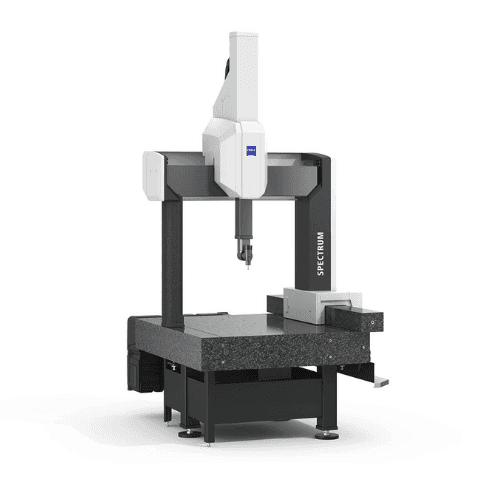
Expect wider adoption of automated optical and dimensional inspection systems that reduce reliance on manual measurement and improve traceability through automatic data capture. Digital quality management systems are also making document control, nonconformance tracking, and audit trail management faster and less error-prone than paper-based systems.
Statistical process control tools are becoming more real-time, catching process drift before it produces a nonconformance rather than after. Quality engineers who combine strong fundamentals, like those built through a 7 QC Tools course, with comfort using digital quality platforms will be well positioned for where the field is heading.
FAQ
Is AS9100 the same as ISO 9001?
No, AS9100 is built on top of ISO 9001 with additional aerospace-specific requirements around risk, configuration management, and traceability. Being AS9100 certified automatically satisfies ISO 9001, but the reverse isn't true.
Do I need aerospace industry experience to get an entry-level AS9100-related quality role?
Not always, but understanding core quality tools and root cause methods gives you a strong foundation to build aerospace-specific knowledge quickly. A background using tools like 5 Whys, FMEA, or basic statistical process control transfers well into this environment.
What's the biggest mistake candidates make in AS9100 interviews?
Reciting clause numbers from the standard without connecting them to a real example of how it plays out on the shop floor. Interviewers want to see practical understanding, not memorized terminology.
How much detail should I give about specific past nonconformances in an interview?
Enough to show you understand root cause analysis and corrective action, without disclosing confidential details from a previous employer. Focus on the process you followed and what you learned, rather than specific proprietary numbers.
Is Lean or Six Sigma knowledge relevant to an AS9100 quality role?
Yes, many aerospace quality roles value Lean and Six Sigma thinking for reducing variation and waste alongside formal AS9100 compliance work. A foundation in Basics of 6 Sigma or Lean Manufacturing Tools is a common and valued complement to AS9100 knowledge.
Conclusion
AS9100 interviews reward candidates who can tie standard requirements to real quality decisions, whether that's disposing of a nonconforming part, tracing a calibration gap, or catching risk before it becomes a defect.
Use these 30 questions to build a working understanding of how fundamentals, risk management, auditing, and documentation all connect in a real aerospace quality system.
If you want to strengthen your foundational quality tool knowledge before your next interview, the 7 QC Tools course is a practical next step to build hands-on, interview-ready skills.