Machining Interview Questions and Answers (Turning, Milling, Tooling)


Deepak S Choudhary
Learn More in This Video
Subscribe to GaugeHow for More
Walking into a machining interview and getting asked "what's the difference between climb milling and conventional milling" is not the moment to start guessing. Shops hire on fundamentals spindle speed math, tool wear, workholding, and the judgment to fix a bad cut before it becomes scrap.
This guide collects 30 real interview questions and answers on turning, milling, and tooling, organized the way an interviewer actually asks them, so you walk in ready instead of rehearsed.
Whether you're a fresh graduate prepping for a machinist role or a hiring manager building a technical screen, these questions cover the concepts that separate someone who's read about machining from someone who's stood at a lathe.
Turning and Lathe Interview Questions
Q1. What is turning, and how is it different from milling?
Turning is a machining process where the workpiece rotates against a stationary single-point cutting tool, typically on a lathe. It's used for cylindrical features like shafts, bores, and threads.
Milling reverses this: the cutter rotates and the workpiece stays fixed, which makes it better suited for flats, slots, pockets, and complex 3D surfaces.
Q2. What are the main parts of a lathe machine?
A lathe consists of a bed, headstock, tailstock, carriage, cross-slide, and lead screw. The headstock holds the spindle and drive gearing, the tailstock supports the far end of long workpieces, and the carriage moves the cutting tool along and across the bed. Interviewers ask this to confirm you can name components, not just operate buttons.
Q3. What is the difference between facing and turning? Facing removes material from the end face of a workpiece to create a flat surface perpendicular to the axis of rotation. Turning removes material from the outer diameter to reduce it to a target size.
Both use the same lathe setup, but the tool travels in different directions facing moves across the face, turning moves along the length.
Q4. What is a chuck, and what types are commonly used?
A chuck is the workholding device that clamps the workpiece to the spindle. The three-jaw self-centering chuck is the most common for round stock because all jaws move together.
A four-jaw independent chuck adjusts each jaw separately, which is slower to set up but allows off-center or irregular workholding.
Q5. What is thread cutting on a lathe, and what controls the pitch?
Thread cutting uses a single-point tool that traverses along the workpiece in sync with spindle rotation, guided by the lead screw. The pitch of the thread is set by the gear ratio between the spindle and the lead screw, which most modern lathes select through a gearbox rather than manual change gears.
Q6. What is taper turning, and what methods produce it?
Taper turning produces a workpiece with a gradually changing diameter along its length. Common methods include offsetting the tailstock, using a taper attachment, swiveling the compound slide for steep short tapers, or programming a linear interpolation on a CNC lathe.
The method chosen depends on taper length and required accuracy.
Q7. What is the purpose of a center in lathe work?
A center supports long or slender workpieces at the tailstock end to prevent deflection and chatter during turning.
A live center rotates with the workpiece on bearings, reducing friction and heat, while a dead center is fixed and requires lubrication. Live centers are preferred for higher speeds and production work.
Q8. What causes chatter during turning, and how do you fix it?
Chatter is vibration between the tool and workpiece caused by insufficient rigidity, excessive overhang, worn bearings, or incorrect speed and feed.
Fixing it usually means reducing tool overhang, increasing workholding rigidity, lowering spindle speed, or changing the tool's approach angle to reduce cutting forces.
Q9. What is the difference between roughing and finishing passes?
Roughing passes remove material quickly using higher feed rates and depth of cut, accepting a rougher surface finish and looser tolerance.
Finishing passes use lighter cuts and slower feeds to achieve the final dimension and surface quality. Separating the two protects the finish pass from tool deflection built up during roughing.
Q10. What is spindle speed, and how do you calculate it for turning?
Spindle speed is the rotational speed of the workpiece, measured in RPM. It's calculated from the recommended cutting speed (in surface feet or meters per minute) for the material and tool combination, divided by the workpiece diameter, using the formula RPM = (Cutting Speed × 1000) / (π × Diameter) in metric units.
Milling Interview Questions
Q11. What is milling, and what are its two broad categories?
Milling is a machining process that uses a rotating multi-point cutter to remove material from a stationary or fed workpiece.
It splits broadly into peripheral (slab) milling, where cutting happens on the cutter's circumference, and face milling, where the flat end of the cutter produces a surface perpendicular to its axis.
Q12. What is the difference between climb milling and conventional milling? In climb milling, the cutter rotates in the same direction as the table feed, so chip thickness starts thick and ends thin this gives a better finish and less tool wear but requires a rigid, backlash-free machine.
In conventional milling, the cutter rotates against the feed direction, starting with a thin chip that thickens, which is more forgiving on older machines.
Q13. What are the common types of milling machines?
The main types are horizontal, vertical, and universal milling machines, classified by spindle orientation.
Column-and-knee machines are common in job shops, while bed-type machines offer more rigidity for production work. CNC machining centers combine milling with automatic tool changing and multi-axis movement.
Q14. What is an end mill, and how does it differ from a face mill?
An end mill is a cutting tool with teeth on both its end and its sides, allowing it to plunge into material and cut along a path useful for slots, pockets, and profiles.
A face mill only cuts on its periphery-facing teeth and is designed to machine large flat surfaces efficiently, usually with multiple inserts.
Q15. What is indexing on a milling machine?
Indexing is the process of dividing the workpiece into equal angular divisions using a dividing head, commonly for cutting gear teeth, splines, or hexagonal features.
Simple indexing uses a crank and index plate with a fixed ratio, while differential indexing handles divisions that simple indexing can't produce exactly.
Q16. What is the difference between up milling and down milling in terms of surface finish?
Down milling (climb milling) generally produces a smoother surface finish because the chip thins toward the end of the cut, reducing rubbing.
Up milling (conventional) tends to leave a slightly rougher finish and can cause work-hardening on some materials because the tool rubs before it bites.
Q17. What is gang milling?
Gang milling uses two or more cutters mounted on the same arbor to machine multiple surfaces simultaneously in a single pass.
It's a production technique that saves cycle time on repetitive parts, though it requires careful cutter selection so all cutters wear at a compatible rate.
Q18. What is the purpose of a vise or fixture in milling?
A vise or fixture holds the workpiece securely and repeatably so cutting forces don't shift its position during machining. Fixtures also reference the part to known datums, which is critical when a job needs multiple setups to hit tolerances called out on the print.
Q19. What is cutter runout, and why does it matter?
Runout is the deviation of a rotating cutter from a true circular path, usually caused by tool holder wear, poor tool seating, or an out-of-balance assembly.
Excess runout causes uneven tooth loading, poor surface finish, premature tool wear, and oversized or tapered features on the part.
Q20. What is the difference between a slot mill and a slitting saw?
A slot mill is a solid end mill designed to cut full-width slots by plunging and traversing.
A slitting saw is a thin, disc-shaped cutter with teeth around its edge, mounted on an arbor, used for narrow deep slots or parting off material where a solid end mill would deflect or overheat.
Tooling, CNC, and Machining Parameters
Q21. What is tooling, and why do interviewers ask about it? Tooling refers to the cutters, holders, fixtures, and gauges used to hold and shape the workpiece. Interviewers ask about it because tool selection directly drives cycle time, tool life, and whether a required tolerance is achievable at all — a wrong tool choice can make a good process plan fail.
Q22. What is tool life, and what factors affect it?
Tool life is the length of time or number of parts a cutting tool can produce before it wears past an acceptable limit, usually flank wear. It's affected by cutting speed, feed rate, depth of cut, workpiece material hardness, coolant use, and tool material cutting speed has the strongest effect of the three main parameters.
Q23. What is the relationship between speed, feed, and depth of cut?
These three parameters together control cutting force, heat generation, surface finish, and tool wear.
Speed affects heat and tool life the most, feed affects surface finish and chip load, and depth of cut affects cutting force and the risk of chatter. Interviewers expect you to know which one to adjust for which symptom.
Q24. What are common cutting tool materials, and how do you choose between them?
Common tool materials include high-speed steel (HSS), carbide, ceramics, and cubic boron nitride (CBN). HSS is tough and inexpensive but loses hardness at high temperatures.
Carbide holds hardness at higher speeds and dominates production work. Ceramics and CBN handle hardened steels and high-speed finishing where wear resistance matters more than toughness.
Q25. What is a work offset in CNC machining?
A work offset tells the CNC controller where the part's coordinate origin sits relative to the machine's home position. Setting it correctly, usually by probing or touching off the part, ensures the program's coordinates match the physical part location a wrong offset is one of the most common causes of a crash on first run.
Q26. What is the difference between G-code and M-code?
G-code controls geometric motion rapid moves, linear and circular interpolation, and cycle calls. M-code controls miscellaneous machine functions like spindle start/stop, coolant on/off, and tool changes. A program combines both: G-code tells the machine where to go, M-code tells it what auxiliary function to perform.
Q27. What causes tool chipping versus tool wear, and how do you tell them apart?
Tool wear is gradual material loss at the cutting edge from abrasion and heat, visible as a worn flank or crater. Chipping is sudden loss of a piece of the cutting edge, usually from impact, interrupted cuts, or excessive feed.
Wear calls for adjusting speed or coolant; chipping calls for reducing feed or checking for vibration and workpiece rigidity.
Q28. What is GD&T, and why does it matter to a machinist?
Geometric Dimensioning and Tolerancing (GD&T) is a symbolic language on engineering drawings that defines allowable variation in a part's form, orientation, and location relative to datums. A machinist who reads GD&T correctly knows which features actually control fit and function, so setup and inspection effort goes where it matters instead of chasing tolerances that don't matter.
Anyone weak on this should work through a structured <a href="https://gaugehow.com/course/gd-t-geometric-dimension-and-tolerancing">GD&T and Engineering Graphics course</a> before the interview.
Q29. How do you measure and inspect a machined part for accuracy?
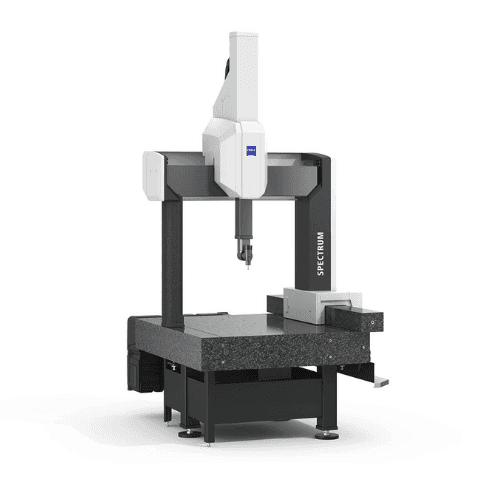
Common tools include calipers and micrometers for quick checks, height gauges and surface plates for flatness and step dimensions, and a coordinate measuring machine (CMM) for complex geometric tolerances.
The right tool depends on the tolerance band a caliper is fine for ±0.1 mm but not for a true-position callout in microns.
Q30. How do you approach troubleshooting when a machine starts producing out-of-tolerance parts?
Start by isolating whether the cause is the machine, the tool, the fixture, or the program check tool wear and offsets first since they're the most common culprits.
Re-measure the last known-good part, review recent changes (new tool, new material batch, coolant change), and narrow down with one variable at a time rather than adjusting everything at once.
Quick Reference: Turning vs. Milling
Aspect | Turning | Milling |
|---|---|---|
What rotates | Workpiece | Cutting tool |
Typical features | Diameters, bores, threads, tapers | Flats, slots, pockets, contours |
Machine | Lathe | Milling machine / machining center |
Tool type | Single-point tool | Multi-point rotating cutter |
Best for | Cylindrical, axisymmetric parts | Prismatic and complex-surface parts |
FAQ
Q: How do I prepare for a machinist interview with no CNC experience?
Focus on manual machining fundamentals first workholding, speeds and feeds, and basic G-code concepts since most shops will train you on their specific controller. Being able to explain why a parameter matters carries more weight than memorizing button sequences on a machine you've never touched.
Q: What's the most commonly asked question in a machining interview?
Explaining the difference between turning and milling comes up in nearly every interview because it tests whether a candidate understands the underlying physics, not just machine names. Questions on tool wear and speed/feed/depth of cut are close behind.
Q: Do I need to know GD&T for an entry-level machinist role?
Basic GD&T literacy reading datums and common symbols like flatness and true position is expected even at entry level, since it directly affects how you set up and inspect a part.
Deeper GD&T knowledge becomes more important as you move into CNC programming or quality roles.
Q: What's the difference between a machinist interview and a CNC programmer interview?
A machinist interview leans on hands-on skills setup, workholding, inspection, and troubleshooting on the floor.
A CNC programmer interview adds CAM software, toolpath strategy, and G-code/M-code fluency on top of the same machining fundamentals. Strong candidates for either role are expected to know both.
Q: How important is speeds and feeds knowledge in an interview?
It's central. Nearly every technical machining interview tests whether you understand how speed, feed, and depth of cut affect tool life, surface finish, and cycle time, because getting this wrong on the floor causes scrap and broken tools.
Conclusion
These 30 questions cover what really gets tested in an assembly line engineer interview: turning customer demand into a takt time, splitting work across stations the right way, and fixing a line using real data instead of guesswork. Knowing the formulas gets you in the door. Explaining the trade-offs behind your answers is what gets you the job.
Want to study further before your interview? Start here:
Lean Manufacturing Tools course — line balancing, Kaizen, and standard work, explained step by step
Basics of 6 Sigma course — root-cause analysis and data skills for process engineering interviews
Full GaugeHow course catalog — browse everything and build your own study plan