How to Become a Quality Engineer: A Complete Guide
Want to move into quality engineering but not sure whether to start with inspection tools, statistics, or process auditing? You are not alone. Most mechanical engineers understand design well but have never had to defend a root cause analysis, calibrate a measurement system, or prove a process is actually in control.
This roadmap breaks the career down into clear, ordered stages. No vague advice like "learn quality control." Just the tools, standards, and skills that actually show up in real quality engineering job postings, in the order you should learn them.
What Does a Quality Engineer Actually Do?
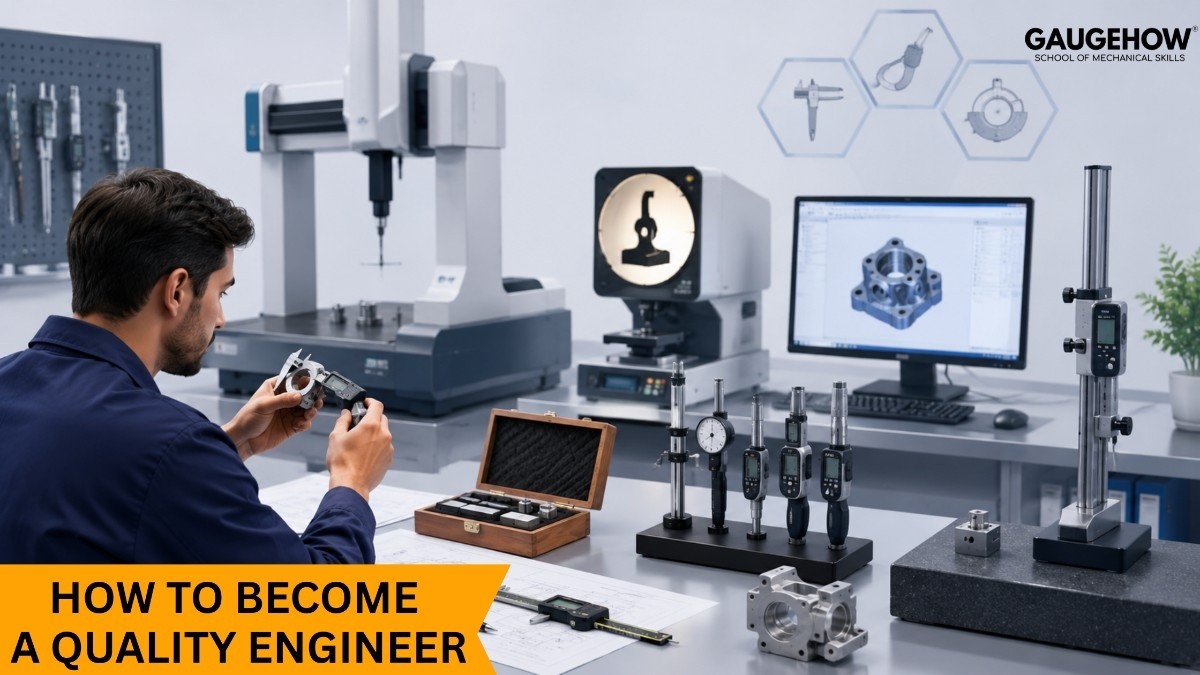
A quality engineer makes sure finished parts and processes meet specification, safety, and reliability standards before they reach a customer. In practice, this means:
Reading engineering drawings and interpreting tolerance requirements correctly
Running inspections using tools ranging from basic gauges to CMMs
Investigating defects and finding the actual root cause, not just the symptom
Tracking process data to catch drift before it produces bad parts
Auditing processes against quality standards like ISO 9001 or ISO 17025
Working closely with design and production teams to prevent recurring issues
It's a role built on precision and pattern recognition. You will spend as much time interpreting data and asking "why did this happen" as you will physically inspecting parts.
How to Become a Quality Engineer: Step by Step
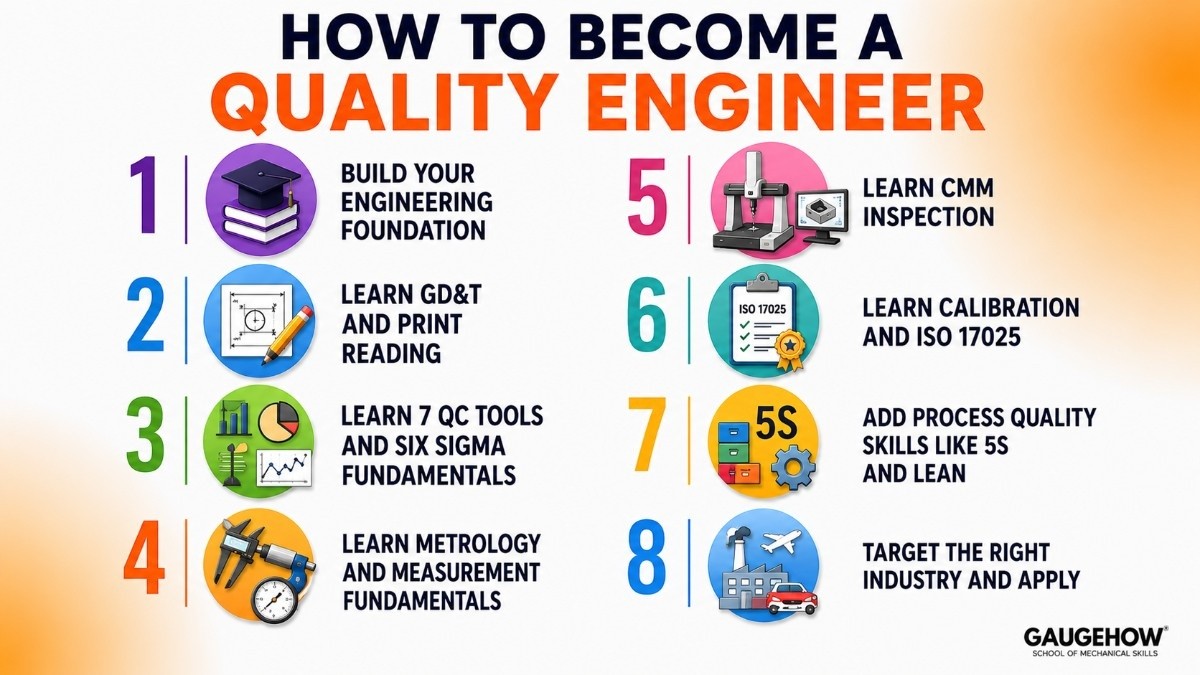
Step 1: Build Your Engineering Foundation
Most quality engineering roles ask for a bachelor's degree in mechanical, industrial, or manufacturing engineering.
If you are still studying, prioritize electives in statistics, manufacturing processes, and materials science. If you already have the degree, this step is done. Move on.
Step 2: Learn GD&T and Print Reading
You cannot inspect a part correctly if you cannot read its tolerances correctly. This is the single most fundamental skill in quality engineering, and it shows up on day one of almost every job in the field.
The GD&T and Engineering Graphics course covers exactly the symbols and logic used on real production drawings.
Step 3: Learn the 7 QC Tools and Six Sigma Fundamentals
Once you can read a drawing, you need the analytical toolkit to investigate problems when parts do not match it. Pareto charts, fishbone diagrams, and control charts come up constantly in real quality work, and Six Sigma thinking gives you a structured way to reduce variation rather than just reacting to defects one at a time. The 7 QC Tools course and Basics of 6 Sigma course both build this foundation.
Step 4: Learn Metrology and Measurement Fundamentals
Quality decisions are only as good as the measurements behind them. You need to understand measurement systems, gauge accuracy, and basic measurement uncertainty before you can trust any inspection result you produce.
The Engineering Metrology & 3D Measurement course and Uncertainty Measurement course both cover this exact foundation.
Step 5: Learn CMM Inspection
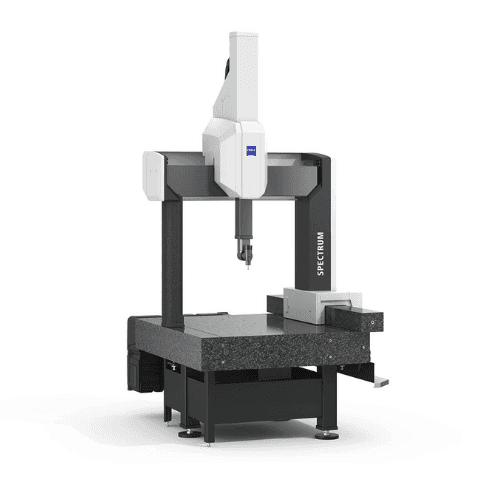
Coordinate measuring machines are the standard tool for verifying complex geometry against a drawing, and knowing how to program and interpret CMM results is expected in most quality roles above entry level.
The CMM Inspection & ISO 10360 course covers this exact skill, following the international standard most companies inspect against.
Step 6: Learn Calibration and ISO 17025
Every measurement tool needs to be trusted, and that trust comes from proper calibration. Understanding calibration processes and the ISO/IEC 17025 standard that governs testing and calibration labs sets you apart in regulated industries where this knowledge is not optional.
The Calibration Process (ISO/IEC 17025) course and ISO 17025:2017 & Internal Audit course both build this compliance-focused skill set.
Step 7: Add Process Quality Skills Like 5S and Lean
Quality is not only about catching bad parts, it is about designing processes that produce fewer of them in the first place. Understanding workplace organization and waste reduction helps you contribute to prevention, not just detection.
The 5S System course and Lean Manufacturing Tools course both build this process-improvement mindset that strong quality engineers bring to the table.
Step 8: Target the Right Industry and Apply
Quality hiring looks different by sector. Aerospace and medical device manufacturing demand strict traceability and documentation discipline.
Automotive wants high-volume statistical process control and fast root cause turnaround. The Aerospace industry page and Automotive industry page are good places to see what skills each sector emphasizes before you apply.
Before interviews, review common technical questions so a root cause or measurement system scenario does not catch you off guard.
The Interview Q&A Hub has role-specific practice questions, and the Practice / MCQ Tests section is useful for a quick knowledge check before a technical round.
🔧 Trusted by 23,000+ Happy Learners
Industry-Ready Skills for Mechanical Engineers
Upskill with 40+ courses in Design/CAD, Simulation, FEA/CFD, Manufacturing, Robotics & Industry 4.0.
Quality Engineer Skills Checklist
Skill Area | Beginner | Job Ready |
|---|---|---|
GD&T and print reading | Recognizes basic symbols | Can interpret full feature control frames |
Quality tools and Six Sigma | Knows the 7 QC tools by name | Can run a root cause investigation using them |
Metrology and measurement | Knows what a gauge does | Can evaluate measurement uncertainty on a result |
CMM inspection | Aware CMMs exist | Can program and interpret a CMM inspection routine |
Calibration and ISO 17025 | Knows calibration is required | Can explain how a lab maintains ISO 17025 compliance |
Process quality (5S, Lean) | Knows the basic concepts | Can identify where a process change would prevent defects |
Quality Engineer vs Production Engineer vs Metrology Engineer
These three roles overlap constantly on the shop floor, and job postings often blend them together.
Role | Main Focus | Typical Tools |
|---|---|---|
Quality Engineer | Ensuring parts and processes meet spec and standards | GD&T, 7 QC tools, CMM, root cause analysis |
Production Engineer | Running and improving day to day manufacturing output | Lean tools, process design, line management |
Metrology Engineer | Specializing specifically in measurement systems and calibration | CMM, calibration standards, measurement uncertainty |
A strong quality engineer usually understands enough production and metrology fundamentals to work across all three without needing a specialist for every small issue.
If measurement and calibration interest you more than the broader quality role, it's worth reviewing the Metrology learning path alongside the Quality Engineer career track before committing to one direction.
Frequently Asked Questions
Q: Do I need a specific degree to become a quality engineer?
A: Most employers prefer a bachelor's degree in mechanical, industrial, or manufacturing engineering, though candidates from technician or inspection backgrounds are also hired regularly with the right hands-on experience and certifications.
Q: Is Six Sigma certification required to work in quality engineering?
A: Not always required, but a Green Belt or equivalent understanding of root cause analysis and statistical process control is expected in most postings above entry level.
Q: What is the difference between quality engineering and metrology?
A: Quality engineering covers the broader responsibility of ensuring parts and processes meet specification and standards. Metrology focuses specifically on measurement systems, calibration, and measurement uncertainty, which is one important piece of the quality role.
Q: How long does it take to become job ready as a quality engineer?
A: With an engineering degree already in hand, most people reach job ready in six months to a year by learning GD&T, the 7 QC tools, basic metrology, and completing one hands-on inspection or root cause project they can walk through in an interview.
Q: Which industries hire the most quality engineers?
A: Aerospace, automotive, medical device, and pharmaceutical manufacturing all hire heavily for this role, since each depends on strict, well-documented quality control.
Conclusion
Becoming a quality engineer is less about memorizing standards and more about being able to read a drawing, trust your measurements, and track a defect back to its actual root cause. Follow the roadmap in order: engineering foundation, GD&T, the 7 QC tools and Six Sigma, metrology fundamentals, CMM inspection, calibration and ISO 17025, then process quality skills like 5S and Lean.
Ready to build the skill set? Start with the Quality Engineer career track on GaugeHow to see the full course sequence mapped to this exact roadmap.