Kinaxis
what is Kinaxis
What Is Kinaxis? A Complete Guide to Kinaxis Software for Supply Chain Planning
Overview
Kinaxis is a cloud-based supply chain planning platform that helps businesses plan, monitor, and optimize their supply chain operations in real time.
Developed by Kinaxis, it is widely used by global manufacturers and large enterprises to manage supply chain planning, inventory, demand forecasting, and production scheduling.
The platform is best known for helping companies respond quickly to disruptions by giving planners real-time visibility and faster decision-making tools.
The company’s latest platform, Kinaxis Maestro, expands on the capabilities of Kinaxis RapidResponse by offering stronger AI-driven automation, scenario planning, and connected supply chain orchestration.
This Kinaxis Maestro platform guide explains what Kinaxis software does, its features, pricing, pros and cons, deployment options, and how it compares to competitors.
What Does Kinaxis Software Do?
Kinaxis software helps companies manage supply chain decisions across procurement, manufacturing, inventory, logistics, and demand planning.
Instead of working with disconnected spreadsheets or delayed ERP reports, planners use Kinaxis to view live data and make faster adjustments. If demand changes or a supplier delay occurs, the system instantly shows the impact across the supply chain.
This makes Kinaxis especially valuable for businesses with complex global operations.
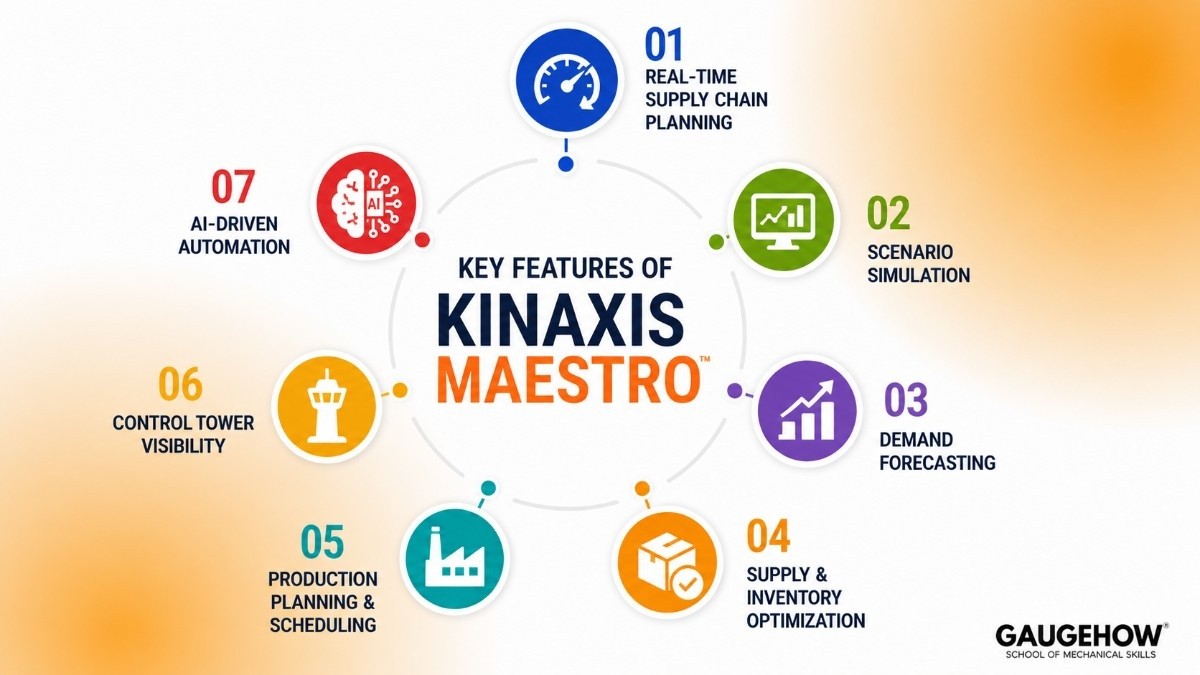
Key Features of Kinaxis Maestro
1. Real-Time Supply Chain Planning
Kinaxis updates planning data instantly across the system.
When one part of the supply chain changes, all connected plans update automatically, helping planners react quickly without manual recalculations.
2. Scenario Simulation
Users can create multiple planning scenarios to test decisions before applying them.
For example, businesses can evaluate supplier delays, sudden demand spikes, or factory downtime without affecting live operations.
3. Demand Forecasting
The platform uses historical data and analytics to predict future demand.
This helps companies improve inventory planning and reduce stock shortages or excess inventory.
4. Supply and Inventory Optimization
Kinaxis balances inventory levels across the network.
It ensures materials are available where needed while minimizing unnecessary stock costs.
5. Production Planning and Scheduling
The software supports manufacturing planning by aligning production schedules with supply constraints and demand requirements. Similar to PlanetTogether, Kinaxis helps manufacturers balance capacity, materials, and customer demand to improve production performance and delivery reliability.
6. Control Tower Visibility
Kinaxis provides end-to-end visibility across suppliers, plants, warehouses, and distribution networks.
This allows teams to identify risks and act faster.
7. AI-Driven Automation
Kinaxis Maestro features machine learning and automation tools that recommend actions based on changing supply chain conditions.
This reduces manual planning effort.
Kinaxis Maestro vs RapidResponse:
Feature | Kinaxis RapidResponse | Kinaxis Maestro |
|---|---|---|
Platform Type | Original supply chain planning platform | Newer advanced platform built on RapidResponse |
Main Focus | Real-time planning and scenario analysis | End-to-end supply chain orchestration with AI |
AI Capabilities | Basic analytics and planning intelligence | Stronger AI-driven recommendations and automation |
Automation | Limited workflow automation | Advanced automated workflows |
User Experience | Traditional planning interface | More modern and improved interface |
Analytics | Standard reporting and planning insights | Advanced analytics with deeper decision support |
Orchestration Tools | Basic planning coordination | Better cross-functional orchestration |
Best For | Companies focused on core supply chain planning | Enterprises needing advanced automation and connected planning |
Technology Level | Foundation platform | Next-generation upgraded platform |
Simple Difference
Think of RapidResponse as the core planning engine that made Kinaxis popular.
Maestro is the modern, upgraded platform that adds stronger AI, automation, better analytics, and smarter supply chain orchestration.
Kinaxis Pricing
Kinaxis does not publicly list pricing.
Pricing usually depends on:
Number of users
Supply chain complexity
Modules selected
Deployment scale
Implementation requirements
Kinaxis mainly follows an enterprise subscription model.
There is no free public version, and trials are generally available only through direct sales engagement.
Because of implementation and consulting costs, Kinaxis is usually a premium enterprise solution.
Pros and Cons
Pros
Excellent real-time planning capabilities
Strong scenario simulation tools
Cloud-native architecture
Good visibility across complex supply chains
Scalable for global enterprises
Cons
Expensive for small businesses
Requires implementation expertise
Learning curve for new users
Best suited for large-scale operations
These limitations are common in enterprise-level planning systems.
Best For
Kinaxis is best for:
Large Enterprises:
Companies with multi-site operations and global supply chains.
Industries:
Electronics, automotive, aerospace, pharmaceuticals, consumer goods, and industrial manufacturing.
Use Cases:
Demand planning, supply planning, inventory optimization, and disruption management.
It is generally less suitable for small manufacturers with simple planning needs.
Integrations
Kinaxis integrates with major enterprise systems, including:
SAP
Oracle
Microsoft Dynamics
ERP and MES systems
Data lakes and analytics tools
Supplier collaboration platforms
These integrations help maintain synchronized planning data.
Deployment Options
Kinaxis is primarily cloud-based.
It is delivered as SaaS, which means businesses do not need on-premise infrastructure.
This makes deployment faster compared to traditional planning software and supports easier updates.
It is also suitable for companies modernizing legacy planning systems.
Alternatives to Kinaxis
1. SAP IBP
Strong for businesses already using SAP ERP.
2. Blue Yonder
Known for AI-driven supply chain planning.
3. Oracle Fusion Cloud SCM
Good for Oracle-based enterprise environments.
4. DELMIA Quintiq
Strong for advanced scheduling and optimization.
5. o9 Solutions
Popular for integrated business planning.
Asprova
A specialist advanced planning and scheduling (APS) platform widely used in manufacturing. Asprova focuses on detailed production scheduling, finite-capacity planning, and factory-level optimization for manufacturers looking to improve shop-floor efficiency.
Kinaxis RapidResponse Tutorial: How It Works
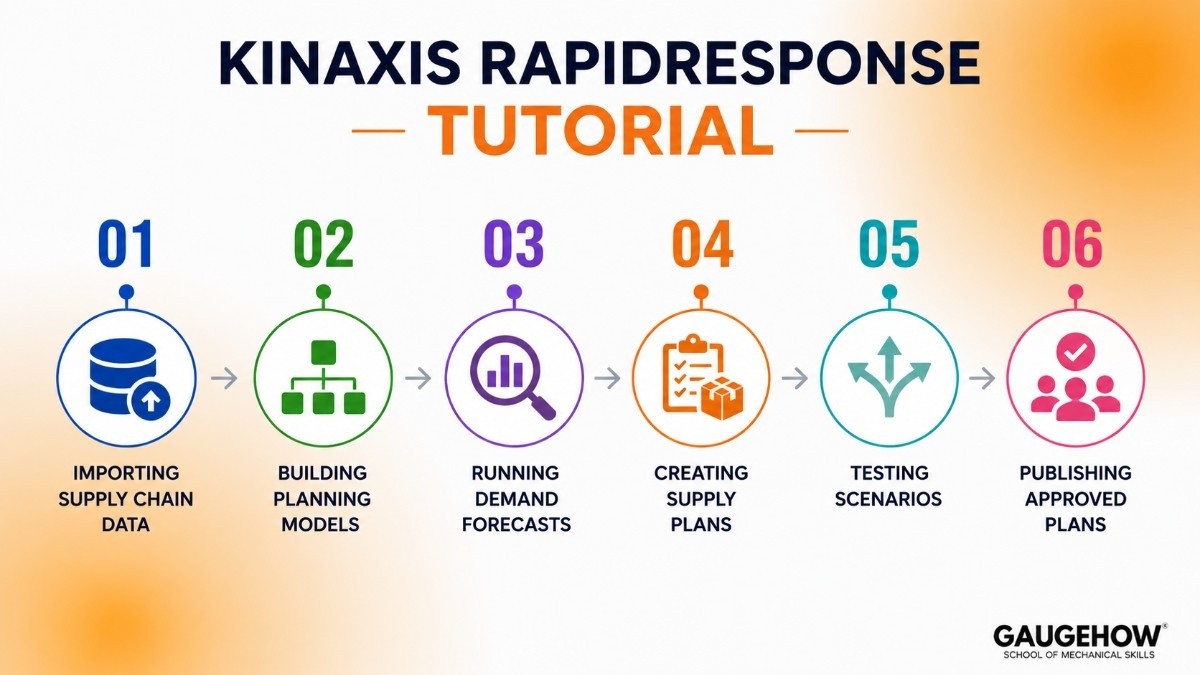
1. Importing Supply Chain Data
The first step is importing business data such as inventory levels, supplier details, customer demand, production capacity, and order information. This gives the platform a complete view of the supply chain for accurate planning.
2. Building Planning Models
Users create digital planning models that represent their real supply chain structure. These models connect suppliers, factories, warehouses, and distribution networks to simulate actual business operations.
3. Running Demand Forecasts
Kinaxis analyzes historical sales data and market trends to predict future demand. This helps businesses prepare inventory and production plans more accurately.
4. Creating Supply Plans
The platform generates supply plans by matching demand with available resources, inventory, and production capacity. This ensures materials and products are available when needed.
5. Testing Scenarios
Planners can test different “what-if” situations like supplier delays, demand spikes, or machine downtime. This helps businesses prepare better responses before problems happen.
6. Publishing Approved Plans
Once planners review and approve a scenario, the final plan is shared across teams. This ensures all departments work with the same updated supply chain plan.
The platform is built for fast decision-making and real-time supply chain response.
Frequently Asked Questions
Is Kinaxis cloud-based?
Yes, Kinaxis is a fully cloud-based platform delivered as Software-as-a-Service (SaaS). This means companies can access it online without managing physical servers or complex infrastructure.
What is Kinaxis used for?
Kinaxis is used for supply chain planning, demand forecasting, inventory optimization, production planning, and scenario analysis. It helps businesses make faster and smarter planning decisions.
Is Kinaxis better than SAP IBP?
It depends on business needs. Kinaxis is stronger for real-time concurrent planning, while SAP IBP is often preferred by companies already using SAP systems.
Companies focused on detailed factory scheduling may also evaluate Opcenter APS (Preactor), which is designed specifically for production planning and finite-capacity scheduling within manufacturing environments.
What is the difference between Kinaxis Maestro and RapidResponse?
RapidResponse is the original planning engine focused on supply chain planning. Kinaxis Maestro is the newer platform that adds stronger AI, automation, analytics, and orchestration tools.
Is Kinaxis suitable for small businesses?
Usually not. Kinaxis is mainly designed for medium and large enterprises with complex global supply chains that need advanced planning capabilities.
Final Thoughts
If you are asking “what is Kinaxis?”, the simplest answer is this:
Kinaxis is an advanced supply chain planning platform that helps large businesses make faster, smarter planning decisions in real time.
For students learning supply chain technology, understanding Kinaxis software, Kinaxis Maestro features, and how it compares with other planning platforms is valuable knowledge for modern operations and manufacturing careers.
Kinaxis is a supply chain planning software that helps businesses improve forecasting, scheduling, inventory control, and faster decision-making.