SAP DM
SAP DM

SAP DM Tutorial: Complete Beginner’s Guide to SAP Digital Manufacturing
Manufacturing today depends on real-time visibility, connected systems, and faster production decisions. This is where SAP Digital Manufacturing (SAP DM) becomes important.
If you are exploring smart factory solutions, this SAP DM tutorial will help you understand what it is, how it works, and whether it fits your manufacturing environment.
What Is SAP DM?
SAP Digital Manufacturing (SAP DM) is a cloud-based manufacturing execution platform developed by SAP that helps manufacturers manage production, monitor shop-floor operations, and improve factory performance in real time.
It combines manufacturing execution, analytics, and production orchestration into a single system.
Built by SAP, it connects factory operations directly with enterprise systems like SAP S/4HANA, giving manufacturers better visibility from planning to execution.
In simple terms, SAP DM helps factories become more connected, efficient, and data-driven.
SAP DM Tutorial: How It Works
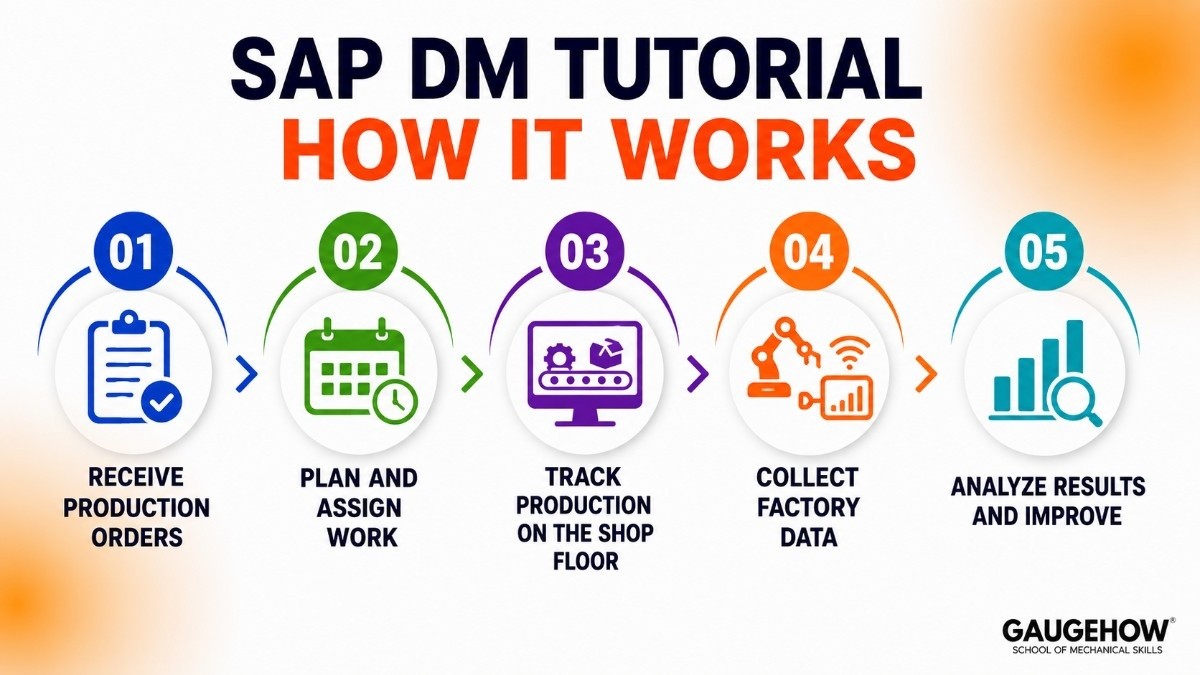
A typical SAP Digital Manufacturing workflow is easy to understand when broken into simple steps:
Step 1: Receive Production Orders
SAP DM receives production orders from ERP systems like SAP S/4HANA. These orders tell the factory what product needs to be made and in what quantity.
Step 2: Plan and Assign Work
The system schedules tasks by checking machine availability, worker capacity, and production deadlines. This helps the factory run smoothly without delays.
Step 3: Track Production on the Shop Floor
Operators can monitor every stage of production in real time. They can quickly identify issues such as machine stoppages or process delays.
Step 4: Collect Factory Data
SAP DM gathers data from machines, sensors, and operators automatically. This gives accurate information about production performance.
Step 5: Analyze Results and Improve
Managers review dashboards showing production speed, downtime, and quality levels. They use this data to improve efficiency and reduce errors.
Key Features of SAP Digital Manufacturing
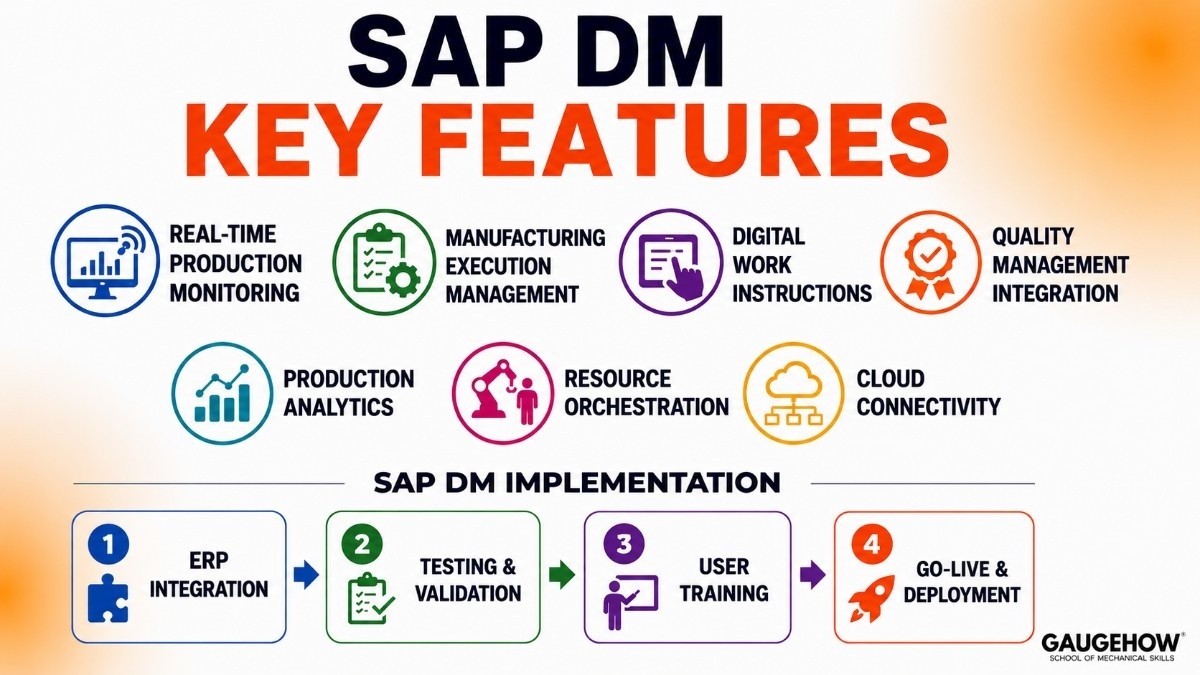
Real-Time Production Monitoring
SAP DM tracks machine status and production progress as work happens. This helps managers quickly identify delays or operational issues.
Manufacturing Execution Management
It manages work orders and controls production workflows. This ensures tasks are completed in the correct sequence.
Digital Work Instructions
Operators receive clear digital instructions on-screen. This reduces mistakes and improves process consistency.
Quality Management Integration
The system records inspection data during production. It helps maintain product quality and compliance.
Production Analytics
SAP DM provides dashboards for performance metrics like downtime and output. These insights support better decisions.
Resource Orchestration
It assigns machines, labor, and materials efficiently. This improves production planning and reduces waste.
Cloud Connectivity
Data from multiple plants is available in one system. This improves visibility across factory operations.
SAP DM Implementation
A successful SAP DM implementation usually follows these phases:
ERP Integration
Connect SAP DM with SAP S/4HANA or other enterprise systems.
Testing and Validation
Verify process accuracy before full deployment.
User Training
Provide SAP DM training online or internal workshops for operators and administrators.
Implementation timelines depend on plant complexity and integration scope.
SAP DM Pricing
SAP Digital Manufacturing typically follows a subscription-based cloud pricing model.
Pricing depends on:
Number of users
Connected production lines
Deployment scale
Integration complexity
Required SAP modules
Free Trial
SAP occasionally provides demos or limited trial access through SAP partner programs.
Because enterprise pricing is customized, businesses usually need direct consultation with SAP for accurate quotes.
SAP DM vs SAP ME
One of the most searched comparisons is sap dm vs sap me.
Feature | SAP DM | SAP ME |
|---|---|---|
Deployment | Cloud-native | Primarily on-premise |
Analytics | Built-in advanced dashboards | More limited |
Scalability | Designed for modern multi-site operations | Traditional enterprise MES |
Integration | Strong with SAP cloud ecosystem | Legacy SAP integration |
Best For | Smart factories and digital transformation | Existing SAP ME users |
If your company is moving toward cloud manufacturing, SAP DM is the stronger choice.
Pros and Cons of SAP DM
Pros
Strong SAP ecosystem integration
Cloud-native deployment
Real-time production visibility
Scalable across multiple sites
Advanced analytics
Cons
Can be complex for first-time users
Implementation may require SAP expertise
Less flexible outside SAP-heavy environments
Pricing may be high for smaller manufacturers
Best For
SAP DM works best for:
Plant Size
Medium to large manufacturing operations
Industries
Automotive
Electronics
Consumer goods
Pharmaceutical
Industrial equipment
Use Cases
Smart factory transformation
Multi-site production management
Real-time manufacturing analytics
Integrations
SAP DM integrates with:
SAP S/4HANA
SAP ERP
SAP BTP
IoT devices and edge systems
MES data sources
Industrial sensors
PLC controllers
Third-party manufacturing platforms
Deployment Options
Cloud Deployment
The primary deployment option for modern manufacturing environments.
Edge Integration
Supports local edge connectivity for low-latency production environments.
Brownfield Readiness
Can connect to existing factory infrastructure without complete replacement.
Alternatives to SAP DM
If SAP DM does not fit your environment, consider:
Siemens Opcenter
Strong for regulated manufacturing industries.
Rockwell Plex
Cloud MES with strong factory-floor management.
AVEVA MES
Ideal for industrial automation-heavy environments.
Tulip
No-code manufacturing operations platform.
GE Proficy MES
Strong industrial data and production monitoring capabilities.
SAP DM Training Online
Learning SAP DM usually involves:
SAP Learning Hub
Official SAP certification paths
Partner-led implementation workshops
Manufacturing simulation labs
Hands-on practice is essential because configuration and workflow setup are practical skills.
Frequently Asked Questions
Is SAP Digital Manufacturing cloud-based?
Yes, SAP DM is mainly a cloud-based platform. This means manufacturers can access production data online from anywhere without needing heavy local server setup.
Is SAP DM replacing SAP ME?
SAP is gradually moving toward SAP DM as its modern manufacturing solution. It offers more advanced cloud features compared to the older SAP ME platform.
How difficult is SAP DM implementation?
Implementation depends on the size of the factory and system complexity. Companies with existing SAP systems usually find the setup easier and faster.
Does SAP DM work with non-SAP systems?
Yes, SAP DM can connect with some non-SAP systems and factory devices. However, it works best when fully integrated with SAP products.
How does SAP Digital Manufacturing compare to DELMIA Apriso?
SAP Digital Manufacturing and DELMIA Apriso are both manufacturing platforms used by large manufacturers. SAP DM works best for companies already using SAP ERP and other SAP products. DELMIA Apriso is popular with manufacturers that need production management, quality control, and standardized processes across multiple factories.
Is SAP DM suitable for small manufacturers?
SAP DM is usually better for medium and large manufacturers. Smaller businesses may find it expensive or more advanced than their current needs.
Where can I get SAP DM training online?
You can learn SAP DM through SAP Learning Hub, online training platforms, and certified SAP partner courses that provide practical tutorials and exercises.
Final Thoughts
This SAP DM tutorial shows why SAP Digital Manufacturing has become a major platform for connected manufacturing.
For organizations already invested in SAP, it offers a practical path toward smarter production, better visibility, and stronger operational control.
The key to success is careful planning, proper SAP DM implementation, and strong operator training.
SAP DM helps manufacturers improve production, visibility, and efficiency. Explore its key features and role in smart factory digital transformation.