SparkCognition
SparkCognition

SparkCognition: Complete Guide to the Industrial AI Platform
Artificial intelligence is becoming a major part of modern manufacturing, energy, and industrial operations. Companies are using AI to predict equipment failures, improve efficiency, reduce downtime, and make faster decisions from operational data.
One company that has helped drive this shift is SparkCognition.
Whether you're a student exploring industrial AI or a business evaluating AI software, this guide explains what SparkCognition is, how it works, its features, pricing, deployment options, integrations, and alternatives.
What Is SparkCognition?
SparkCognition is an industrial AI platform that helps organizations use artificial intelligence to improve operations, predict failures, and make better business decisions.
Founded in Austin, Texas, SparkCognition develops AI software for industries such as manufacturing, energy, utilities, oil and gas, aviation, and defense.
The platform analyzes machine, sensor, and operational data to identify patterns, detect risks, and provide actionable recommendations before problems occur.
What Is Industrial AI?
Industrial AI refers to the use of artificial intelligence in factories, plants, utilities, and industrial operations.
Instead of focusing on chatbots or consumer applications, Industrial AI helps companies:
Predict equipment failures
Improve production efficiency
Reduce downtime
Optimize maintenance schedules
Improve product quality
Increase operational visibility
SparkCognition is one of the companies focused specifically on these industrial use cases.
How Does SparkCognition Work?
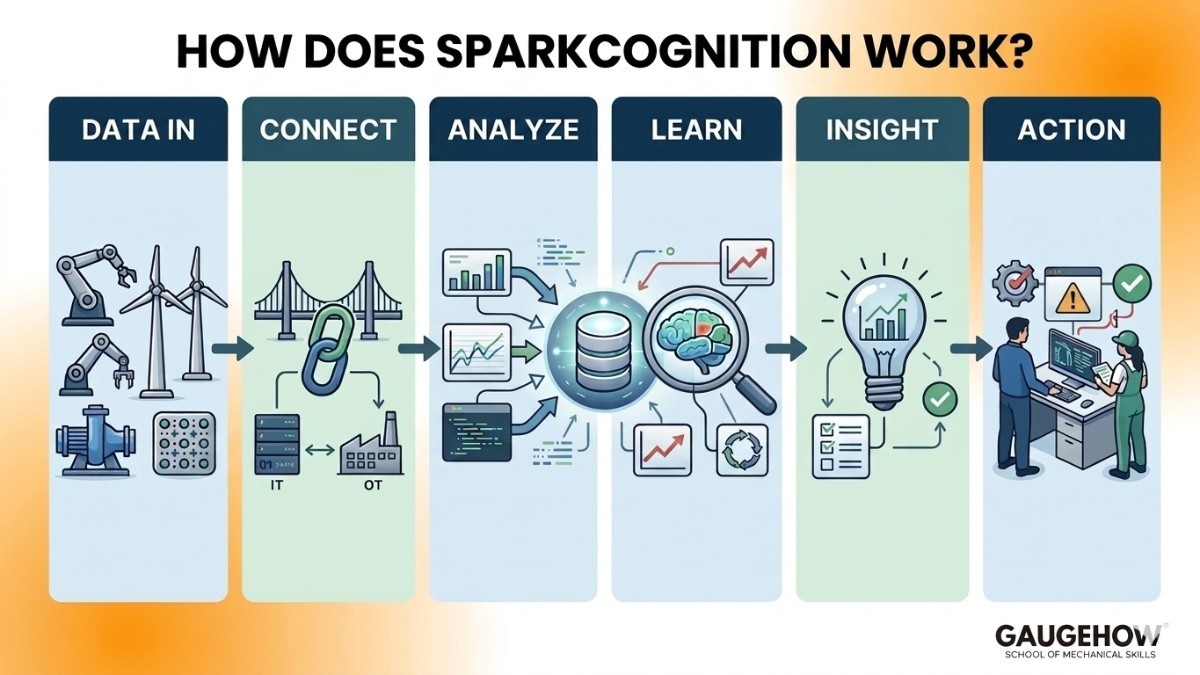
The platform follows a simple workflow:
Collect data from machines and sensors.
Connect operational and business systems.
Analyze historical and real-time data.
Use AI models to identify patterns.
Generate insights and recommendations.
Help teams take action before problems occur.
For example, if a machine begins operating outside normal conditions, SparkCognition can identify the issue early and alert maintenance teams.
Key Features of SparkCognition
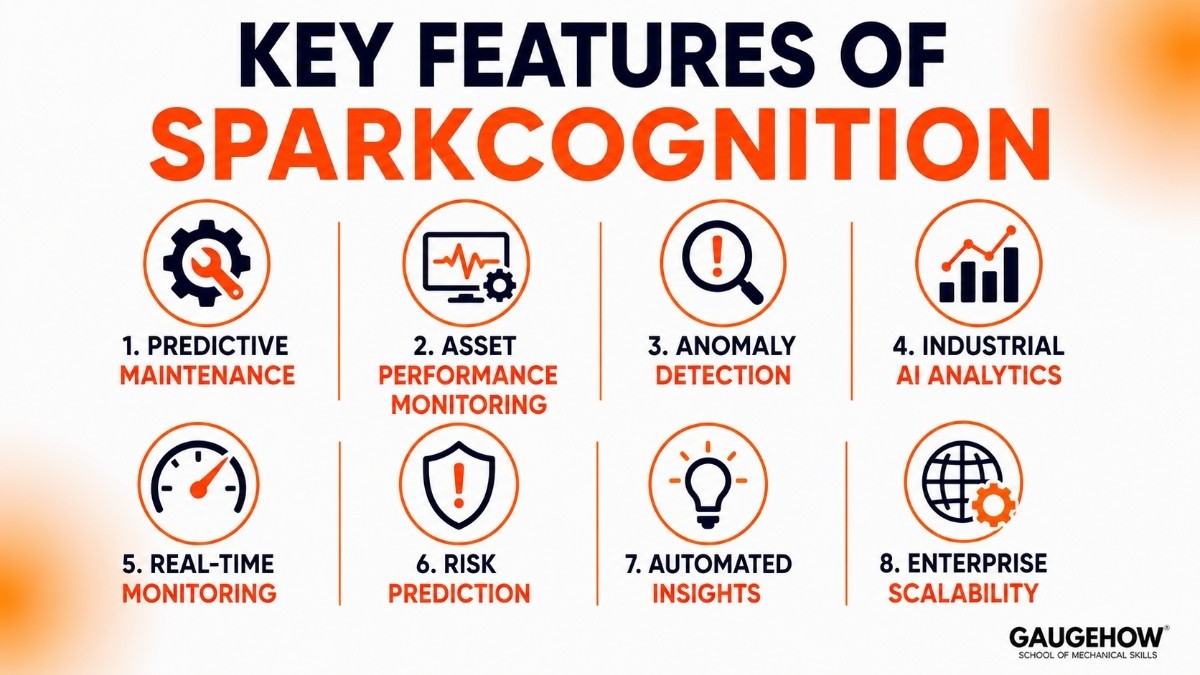
1. Predictive Maintenance
Identify equipment issues before they lead to failures or downtime.
2. Asset Performance Monitoring
Monitor the health and performance of critical equipment.
3. Anomaly Detection
Automatically identify unusual operating conditions.
4. Industrial AI Analytics
Analyze large amounts of operational data without requiring extensive manual analysis.
5. Real-Time Monitoring
Track machine performance continuously.
6. Risk Prediction
Detect potential operational and equipment risks early.
7. Automated Insights
Generate recommendations that help teams make faster decisions.
8. Enterprise Scalability
Deploy AI across multiple facilities and business units.
SparkCognition Darwin
One of the most well-known products from the company is SparkCognition Darwin.
Darwin is an AI-powered solution designed to help organizations improve asset reliability and operational performance.
It uses machine learning to:
Predict failures
Detect abnormal behavior
Monitor equipment health
Support maintenance planning
Darwin is commonly used in manufacturing, energy, and industrial operations where equipment uptime is critical.
SparkCognition Pricing
Many organizations search for SparkCognition pricing before evaluating the platform.
Like most enterprise AI vendors, SparkCognition does not publicly publish detailed pricing plans.
Pricing generally depends on:
Number of assets monitored
Number of users
Data volume
Deployment requirements
AI applications used
Support services
Typical Pricing Structure
Component | Pricing Basis |
|---|---|
Platform License | Subscription |
Users | User-based |
Assets | Equipment monitored |
Deployment | Customized |
Support | Optional |
Free Trial Availability
Public free trials are uncommon. Most organizations start with a product demonstration, pilot project, or consultation.
Pros and Cons of SparkCognition
Pros
✅ Strong industrial AI capabilities
✅ Predictive maintenance features
✅ Scalable for enterprise deployments
✅ Supports multiple industries
✅ Easy-to-understand dashboards
✅ Helps reduce equipment downtime
Cons
❌ Pricing is not publicly available
❌ Enterprise deployments can take time
❌ Advanced use cases may require AI expertise
❌ Smaller businesses may find it expensive
❌ Success depends heavily on data quality.
SparkCognition Integrations
The platform is designed to work with existing industrial systems.
ERP Integrations
SAP
Oracle ERP
Microsoft Dynamics 365
MES Integrations
Siemens Opcenter
AVEVA MES
Rockwell FactoryTalk
Industrial Systems
SCADA systems
Industrial historians
PLCs
Industrial Protocols
OPC UA
MQTT
Modbus
Sensor Connectivity
Temperature sensors
Vibration sensors
Pressure sensors
Flow meters
Energy meters
These integrations help companies use existing operational data without replacing infrastructure.
Deployment Options
Cloud Deployment
Supports deployment through cloud infrastructure for easier scalability.
On-Premise Deployment
Available for organizations with strict security requirements.
Hybrid Deployment
Combines cloud and local infrastructure.
Brownfield Readiness
SparkCognition can connect with existing factory systems, including:
Legacy PLCs
Existing SCADA systems
Industrial historians
Older production equipment
This makes adoption easier for organizations with established operations.
SparkCognition AI and User Access
Users access SparkCognition applications through secure web-based interfaces.
Access can be configured for:
Operators
Engineers
Maintenance teams
Supervisors
Executives
Role-based permissions help protect operational and business data.
Alternatives to SparkCognition
If SparkCognition is not the right fit, consider these alternatives.
C3 AI
Enterprise AI platform focused on predictive maintenance and operational analytics.
Falkonry
Industrial AI platform specializing in anomaly detection and time-series analysis.
Seeq
Process analytics and industrial data investigation platform.
Siemens Insights Hub
Industrial IoT and analytics platform.
Sight Machine
Manufacturing analytics platform focused on production performance.
Frequently Asked Questions
What is SparkCognition used for?
SparkCognition helps companies use AI to analyze machine and operational data. It is commonly used for predictive maintenance, anomaly detection, asset monitoring, and operational optimization.
Is SparkCognition cloud-based?
Yes. SparkCognition supports cloud, on-premise, and hybrid deployments. Organizations can choose the deployment model that best fits their security and operational needs.
What is Industrial AI?
Industrial AI applies artificial intelligence to manufacturing and industrial operations. It helps organizations predict failures, improve efficiency, reduce downtime, and optimize performance.
What is SparkCognition Darwin?
SparkCognition Darwin is the company's predictive maintenance and asset performance solution. It uses AI and machine learning to detect equipment issues before failures occur.
Does SparkCognition work with existing factory systems?
Yes. The platform integrates with ERP, MES, SCADA systems, industrial historians, PLCs, and sensors, making it suitable for existing manufacturing environments.
SparkCognition Careers
SparkCognition careers typically focus on areas such as:
Artificial Intelligence
Machine Learning
Data Science
Industrial Analytics
Software Engineering
Customer Success
The company often attracts professionals interested in applying AI to real-world industrial challenges.
Final Thoughts
SparkCognition has become one of the leading names in Industrial AI by helping organizations turn machine and operational data into actionable insights.
Its strengths in predictive maintenance, anomaly detection, and asset performance monitoring make it valuable for manufacturers, utilities, energy companies, and other asset-intensive industries.
For students learning about Industrial AI, SparkCognition provides a practical example of how artificial intelligence is being used to solve real-world operational problems and improve business performance.
SparkCognition is an AI platform that analyzes data to predict equipment issues, reduce downtime, improve efficiency, and support smarter decisions.