Sight Machine
Sight Machine

Sight Machine: Complete Guide to the Manufacturing Analytics Platform
Manufacturers generate massive amounts of production data every day. The challenge is not collecting the data—it's turning that data into useful insights that improve efficiency, quality, and profitability. This is where Sight Machine comes in.
Whether you're a student learning about smart manufacturing or a professional evaluating industrial analytics software, this guide explains what Sight Machine is, how it works, its pricing model, features, deployment options, integrations, and alternatives.
What Is Sight Machine?
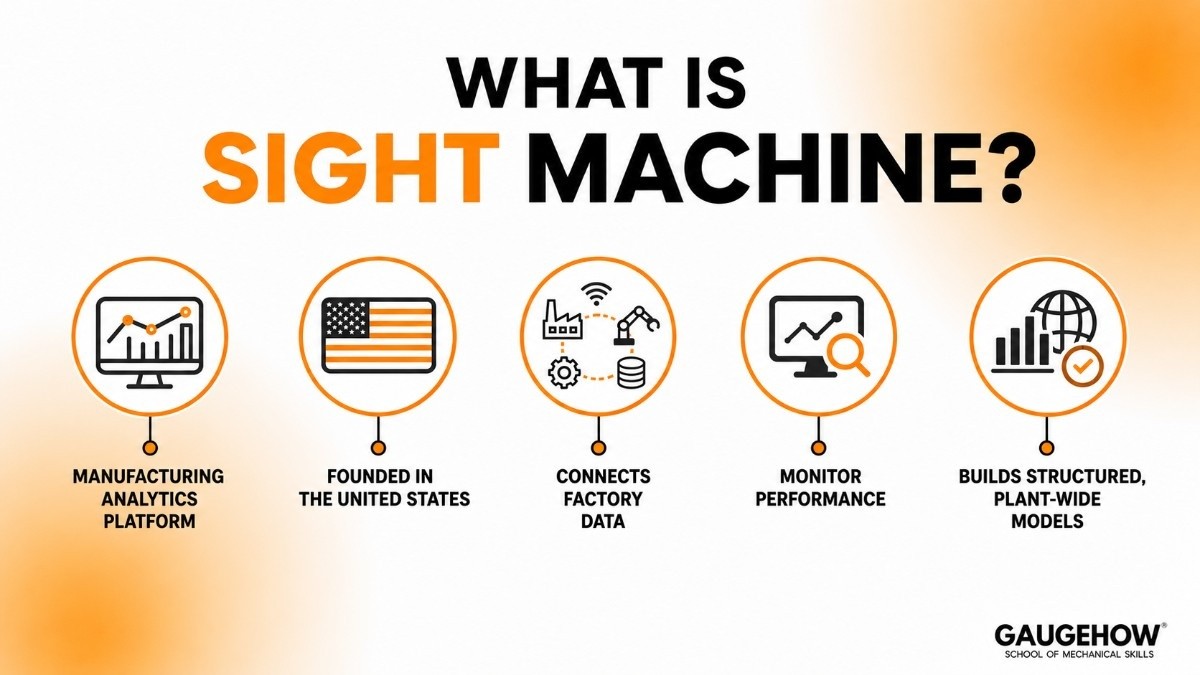
Sight Machine is a manufacturing analytics platform that helps factories collect, analyze, and visualize production data in real time.
Founded in the United States, Sight Machine was built specifically for manufacturing environments.
The platform connects data from machines, sensors, MES systems, ERP software, and production lines to create a complete view of factory operations.
Instead of viewing data in separate systems, manufacturers can monitor performance, identify inefficiencies, and make data-driven decisions from a single platform.
While enterprise platforms like C3 AI look globally, and seeq masters rapid trend diagnostics, Sight Machine builds structured, plant-wide data models.
Key Features of Sight Machine
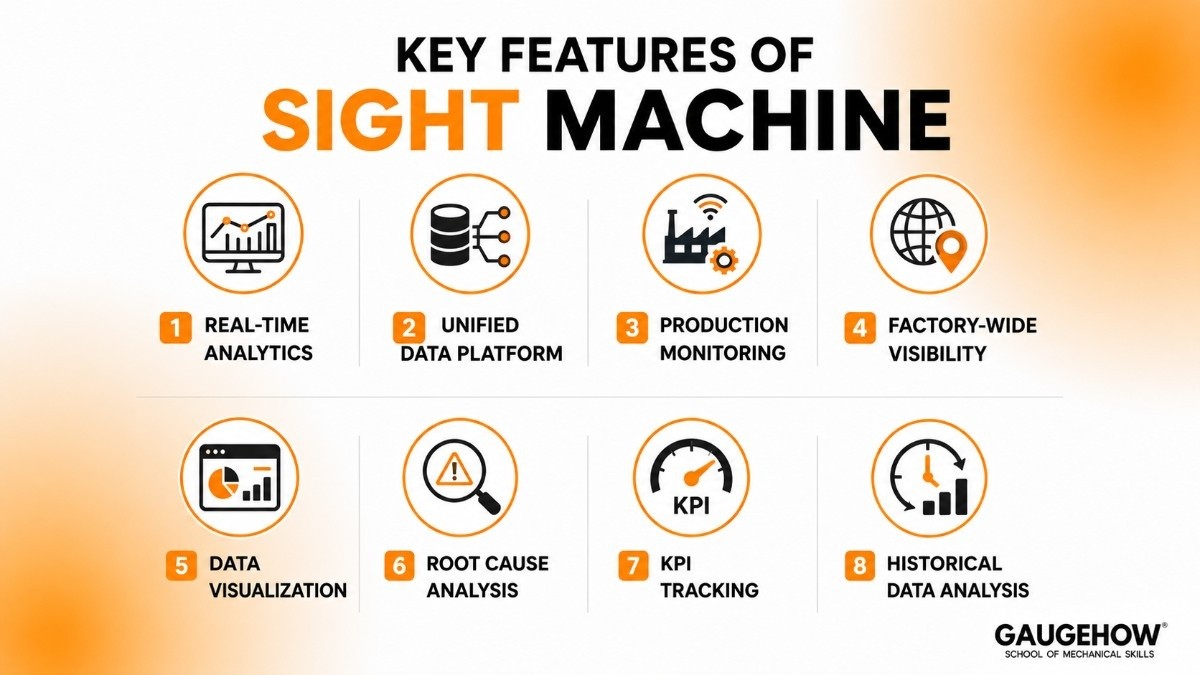
1. Real-Time Manufacturing Analytics
Monitor production performance as it happens rather than waiting for end-of-shift reports.
2. Unified Data Platform
Combine machine, process, quality, and business data into a single system.
3. Production Monitoring
Track throughput, cycle times, downtime, and overall equipment effectiveness (OEE).
4. Factory-Wide Visibility
Compare performance across multiple production lines and facilities.
5. Data Visualization Dashboards
Create customizable dashboards for operators, engineers, and plant managers.
6. Root Cause Analysis
Investigate production issues and identify the factors affecting performance.
7. KPI Tracking
Monitor critical manufacturing metrics in one place.
8. Historical Data Analysis
Analyze trends over time to support continuous improvement initiatives.
Sight Machine Pricing
Sight Machine does not publish pricing on its website. This is standard practice for enterprise manufacturing software at this level of complexity, but it does create friction for buyers doing early-stage research. Here is what is known.
Pricing model
Sight Machine sells on an annual subscription basis. Pricing scales based on the number of connected assets, data volume, and the number of plant sites included in the deployment.
There is no per-seat model in the traditional SaaS sense.
Free trial
There is no self-serve free trial or freemium tier. Evaluation typically happens through a scoped proof-of-concept engagement, usually focused on a single production line or specific use case.
The POC is designed to demonstrate value in your specific environment before you commit to a broader rollout.
Cost context
Based on user-reported figures on G2 and Gartner Peer Insights, annual contracts typically start in the low six figures for single-site deployments and scale significantly for multi-plant global rollouts.
Implementation and professional services are priced separately and can be a meaningful portion of the total first-year cost.
Sight Machine vs Siemens Insights Hub
Feature | Sight Machine | Siemens Insights Hub |
Manufacturing Analytics | Strong | Strong |
Industrial IoT | Moderate | Extensive |
Multi-Site Visibility | Yes | Yes |
ERP Integration | Yes | Yes |
Cloud Deployment | Yes | Yes |
Manufacturing Focus | High | High |
Plant investments dictate your tech stack. If you need ad-hoc anomaly hunting rather than factory-floor modeling, point solutions like Falkonry or SparkCognition provide an easier starting point.
Sight Machine Integrations
A major strength of the platform is its ability to connect multiple industrial systems.
ERP Integrations
SAP
Oracle ERP
Microsoft Dynamics 365
MES Integrations
Siemens Opcenter
Rockwell FactoryTalk
Critical Manufacturing
AVEVA MES
Industrial Systems
SCADA platforms
PLCs
Historians
Industrial Protocols
OPC UA
MQTT
Modbus
Sensor and Device Connectivity
Temperature sensors
Vibration sensors
Flow meters
Energy meters
Industrial gateways
This allows manufacturers to create a unified view of production operations.
Deployment Options
Cloud Deployment
Most new implementations use cloud-based deployment for scalability and easier management.
Hybrid Deployment
Supports a combination of local and cloud infrastructure.
Edge Connectivity
Can collect and process data close to production equipment before sending it to central systems.
Brownfield Readiness
One of Sight Machine's strengths is its ability to work with existing manufacturing environments.
It can connect to:
Legacy PLCs
Existing SCADA systems
Older production equipment
Existing ERP and MES platforms
This reduces the need for expensive equipment replacement projects.
Pros and Cons of Sight Machine
Pros
✅ Built specifically for manufacturing
✅ Real-time operational visibility
✅ Supports multiple facilities
✅ Strong data integration capabilities
✅ Scalable for large enterprises
✅ Helps improve production efficiency
Cons
❌ Limited public pricing transparency
❌ May require integration support
❌ Enterprise-focused pricing
❌ Learning curve for new users
❌ Smaller manufacturers may not use all available features
Best For
Sight Machine is not the right tool for every manufacturer. Here is an honest breakdown of where it excels.
Ideal profile
• Enterprise and large mid-market manufacturers with 5 or more plants, dedicated OT/IT staff, and complex data environments. The platform’s production modeling pays off most at scale.
• Discrete and process manufacturing — Sight Machine has validated models for both. Documented industries include automotive, food and beverage, packaging, pharmaceuticals, tires and rubber, and electronics.
• Companies on Microsoft Azure or Databricks who want their manufacturing data inside the same data estate as supply chain, finance, and logistics analytics.
• Brownfield environments where data is inconsistent, siloed, or poorly labeled. Sight Machine’s ingestion layer handles legacy equipment that was never designed for IIoT.
• Organizations investing in AI for manufacturing and who want a validated data foundation to build on, not raw sensor exports fed into a generic model.
Probably not the right fit
• Small manufacturers (under 200 employees) without a dedicated data or engineering team.
• Plants that need fast-deploy OEE dashboards within days rather than weeks — lighter tools like MachineMetrics will serve you better to start.
• Companies that need fully on-premises deployment with no cloud component.
Sight Machine Reviews
Sight Machine reviews are generally positive among manufacturers looking for factory-wide visibility and analytics.
Common Positive Feedback
✅ Strong manufacturing focus
✅ Good visualization tools
✅ Helps connect data from multiple systems
✅ Useful for production optimization
✅ Supports digital transformation initiatives
Common Challenges Reported
❌ Pricing may be difficult for smaller manufacturers
❌ Implementation can require significant planning
❌ Advanced analytics may require specialized expertise
❌ Full value depends on data quality and system integration
Like most industrial software platforms, success often depends on implementation quality rather than the software alone.
Frequently Asked Questions
Is Sight Machine cloud-based?
Yes. Sight Machine is primarily a cloud-based platform, but it can also support hybrid deployments for manufacturers with on-site systems.
What is Sight Machine used for?
Sight Machine helps manufacturers collect and analyze production data to improve efficiency, reduce downtime, and monitor factory performance.
Does Sight Machine integrate with ERP and MES systems?
Yes. It connects with popular ERP, MES, SCADA, and industrial data systems to provide a unified view of operations.
Is Sight Machine suitable for small manufacturers?
It can be used by smaller companies, but it is generally best suited for mid-sized and large manufacturing operations.
Is Sight Machine an IoT platform?
Not directly. It is a manufacturing analytics platform that uses data from machines, sensors, and connected industrial systems.
Sight Machine helps manufacturers collect and analyze factory data in real time to improve production, efficiency, and decision-making.